

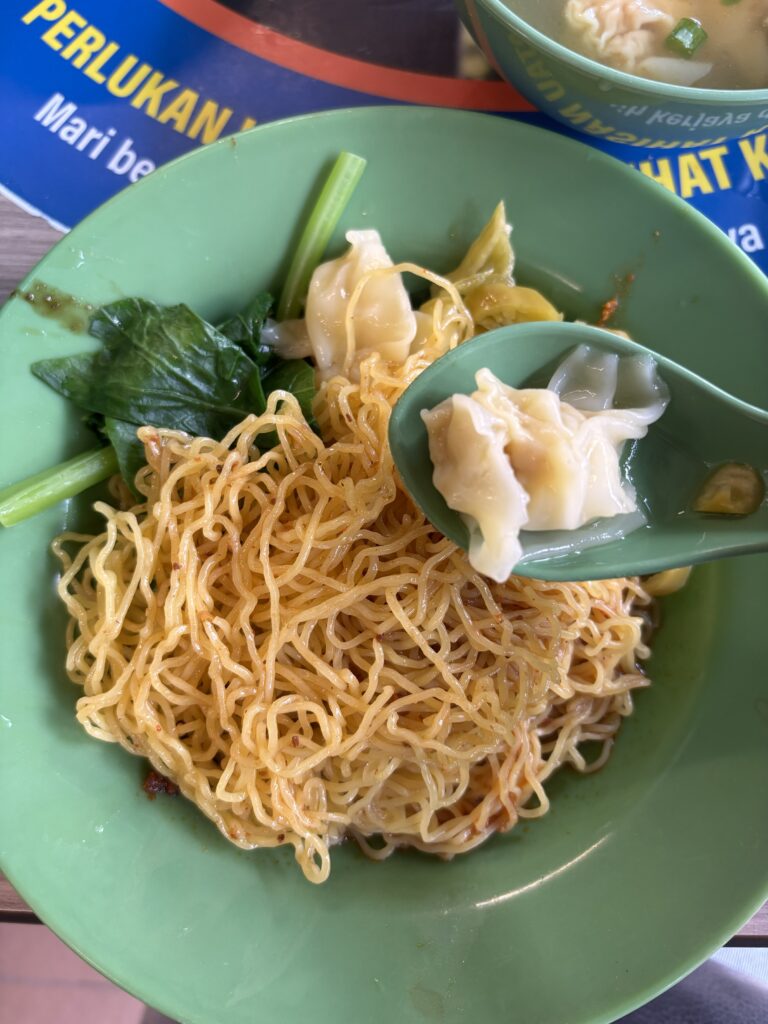
If it’s your first time in Singapore, stepping into a hawker centre can feel a little overwhelming.
There are so many food stalls and no clear system telling you what to do. You might find yourself wondering: Why are there tissue packets on empty tables? Where do I sit? Do I order first?
This guide breaks down how hawker centres work in Singapore, from how to order food in Singapore to understanding local habits like “chope”.
What Is a Hawker Centre?
At the heart of Singapore food culture are hawker centres.
Hawker centres didn’t always exist in this form. In the past, many street food vendors in Singapore were roadside hawkers, selling food from pushcarts along busy streets. In the 1960s and 1970s, the government moved these hawkers into organised centres to improve hygiene and cleanliness.
Our hawker scene has definitely evolved into what you see now — clean and regulated but still deeply rooted in everyday life. In fact, Singapore’s hawker culture is so unique that it was recognised by UNESCO as an intangible cultural heritage.
Hawker centres reflect Singapore’s multicultural identity, where you might find Chinese, Malay and Indian stalls come together in one shared space. It’s casual, affordable, authentic and represents the best of Singapore’s food culture.
Eating at hawker centres with my family since young is one of my oldest memories and is something I still do. When relatives fly in or old friends are back in town, we almost always end up in a hawker centre. It’s how we reconnect and catch up whenever someone comes home.
How Hawker Centres Work in Singapore (Step-by-Step)
Yes, there’s actually a system to it. If you’re unsure what to do, just follow this simple guide.
Step 1: “Chope” Your Seat
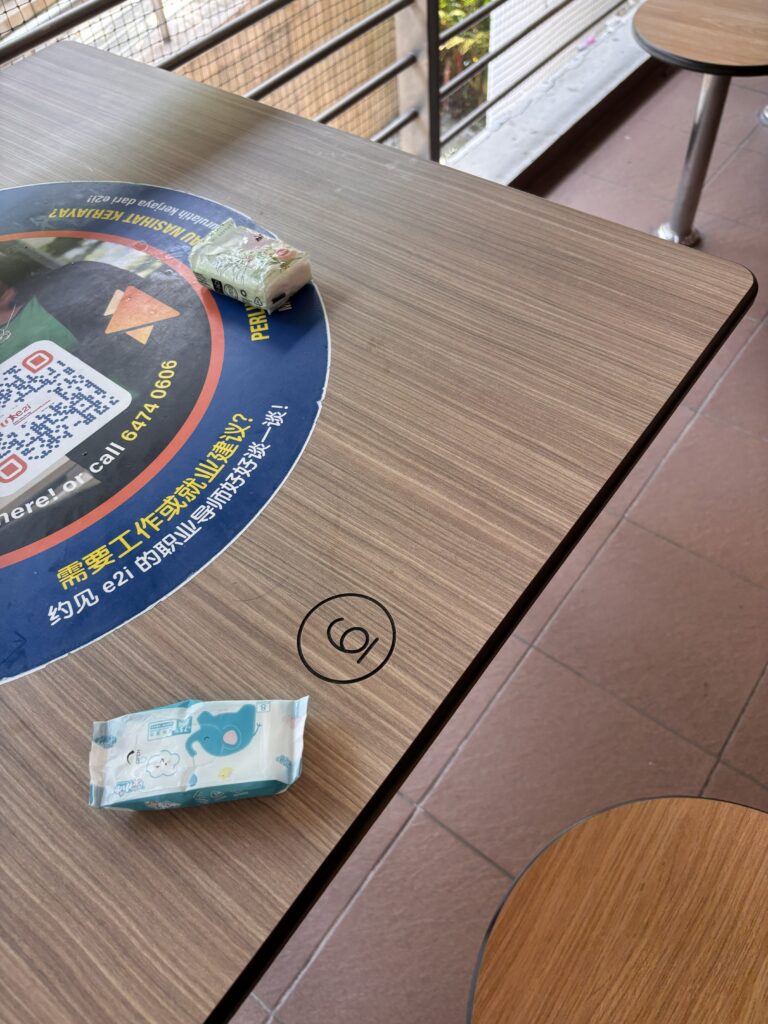
The first thing you should do is look for an empty table. During peak hours (like lunch and dinner), seats can be hard to find. You might find it odd to see empty tables with items like tissue packets, umbrellas, water bottles or even name cards on them. Do not remove the items or sit at the table. This is called “choping”.
“Chope” is a Singlish word and by Singapore’s definition, it is the act of reserving a seat. It is a local habit where people reserve a table by leaving a personal item on it. So, if you see personal items on a table, move on and find another table.
How to Pronounce “Chope“
- “Chope“ rhymes with “hope” or “rope”.
- It is a single, punchy syllable.
- Usage: “Let’s go chope a seat” or “This table is already choped”
How to “chope” like a local:
- Place a small non-value item, like a tissue packet or a bottle of hand sanitiser on the table
- If you are a party of 4, simply place 4 items on the table.
- Then go order your food
It may feel unusual for you to do this at first but it’s completely normal in Singapore. You can take your time getting your food because your choped table will still be there when you return. Choping didn’t always exist, I certainly didn’t remember choping tables at hawker centres when I was a child, you just grab whatever available table there was — it only caught on as hawker centres got busier, especially around office areas like Shenton Way. Now it’s second nature to every Singaporean, myself included. I never once had my choped table taken by someone else. It’s an unspoken, efficient and practical system that everyone respects.
Sharing Tables with Strangers
It’s also completely normal to sit with people you don’t know. Hawker centres are communal spaces. If a table is half occupied and not choped, you can ask to share the table.
Sharing a table with strangers at a hawker centre isn’t just practical — it’s a habit that goes back to kampung (Malay for village) days, when different ethnic groups lived and ate side by side. Hawker centres carry that same kampung spirit.
Step 2: Walk Around
Once your seat is secured, now go explore. Take a walk around before you commit to anything — there are dozens of stalls and you don’t want to miss a good one. Look at what other people are eating, check the photos and prices displayed at each stall and follow the queues. Long lines usually mean the food is worth it.
A few things to look out for: most hawker centres have dedicated halal-certified and vegetarian stalls. Each stall also displays a hygiene grade issued by the Singapore Food Agency — here’s what they mean:
A — Excellent. The stall has maintained a clean record for over three years
B — Good. Clean record between one to three years
C — Warning sign. The stall has had its licence suspended or been convicted of a food safety offence
NEW — The stall has been open less than a year, so no grade yet
Each stall operates independently, so walk up, queue if there’s a line, and order directly.
Step 3: Order Your Food
Once you’ve decided what you want, join the queue if there is one. When you reach the front of the line, be ready. Hawkers work fast and appreciate directness.
Know Your Order
- Identify the dish: Use the name or the number on the menu board.
- Specify “Having here” or “dabao“: “Having here” means you want to dine in at the hawker centre. “Dabao” means to take away or pack food to-go.
- Customise: If you don’t want spicy food, state “No chili” or “less spicy”
This is the standard way of how to order food in Singapore at hawker centres.
Payment
You’ll notice a lot of stalls displaying PayNow QR codes — that’s Singapore’s version of instant bank transfer. As a visitor you likely won’t be able to use it without a local bank account, so keep cash handy to pay your food.
Tipping Is Not Expected
Tipping at hawker centres is not a local custom. Also, the prices you see are the prices you pay and there’s no “++” that is, service tax or GST, unlike at restaurants or cafes.
Step 4: Wait or Return Later
There are two common scenarios after ordering:
a. Wait at the stall
Some stalls will prepare your food immediately and you can wait there to collect it.
b. Get a buzzer or be told a number
Some stalls give you a buzzer or ask you to come back later.
c. Table delivery (less common but exists)
At certain stalls, you might be asked for your table number and the food will be brought to you.
Step 5: Return to Your Seat or Order More
Bring your food back to your “choped” table and enjoy your meal or get more food.
A fun local habit in Singapore is to order more than one meal from different stalls. Often, one of the dishes is meant to share with friends or family. Or, you may just grab a dessert or drink to go with your meal.
Step 6: Tray Return is Mandatory
You’re also expected to leave the table clean for the next person. This practice became mandatory in June 2021 as part of Singapore’s efforts to keep shared dining spaces clean and sustainable, especially in busy hawker centres where many people dine daily.
Return Your Tray: When you’re done, return your tray and crockery to the designated tray return station. The tray return area is clearly signposted with halal and non-halal section. It’s mandatory by law and non-compliance can result in a fine.
Keep Your Table Clean: Don’t leave a messy table behind. It is considered ‘table ‘littering’ if you leave used tissues, wet wipes, drink cans, shells or bones on the table. Diners are required to return their litter together with the used crockery at tray and crockery return stations.
So remember it’s not enough to just return your crockery but clear the table of litter too.
You’re All Set
At first glance, hawker centres might seem confusing especially during peak hours. But once you understand how hawker centres work in Singapore, everything becomes simple.
Find a seat, chope it, order your food and enjoy. It’s a uniquely local experience — and one that gives you a real taste of Singapore food culture.