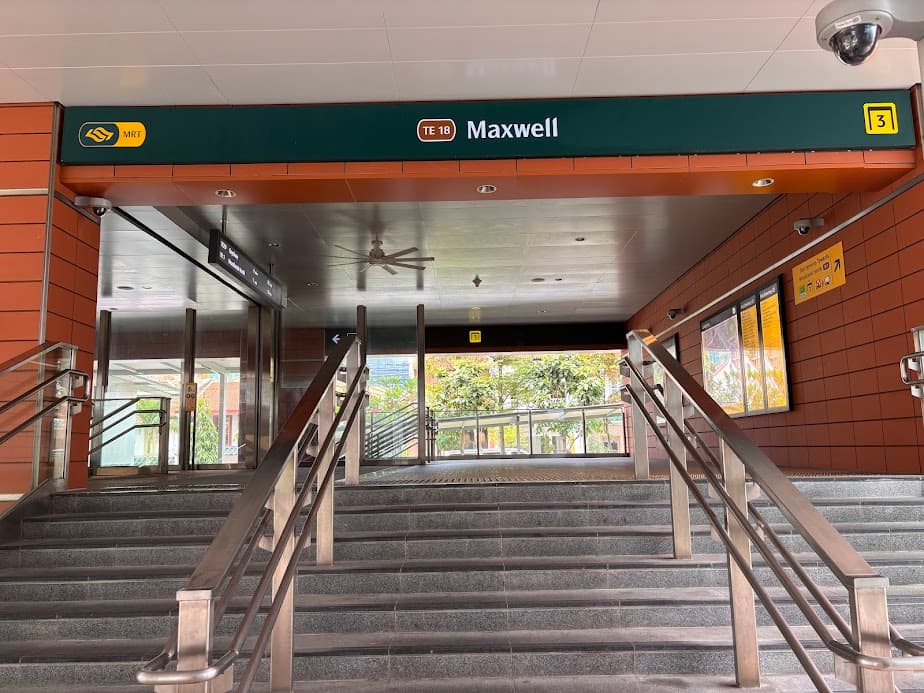
Start: Maxwell MRT Exit 3 | End: Maxwell MRT Exit 2
This is perhaps the most comprehensive Singapore’s Chinatown self-guided walking trail you’ll ever need which covers the 18 murals and all of what you need to see and do in Chinatown.
Every time I stand before a mural in Chinatown I feel transported back in time. To me, these artworks act as a personal portal into the ‘Old Singapore,’ making me feel a deep connection to the past and bringing back the feeling of the old days, even though I didn’t live through those days myself.
I find it incredibly enriching to look at them. They provide a visual education on the grit, traditions and daily lives of the people who built this city. I believe these murals are the best way for any visitor to understand Singapore’s roots.
I’ve put in map markers to clearly pinpoint exactly where these murals are located, so you won’t waste any time walking in circles trying to find them and I’ve also strategically planned this route so you get the “best of both worlds.” You’ll not only photograph the most murals in a single trip but the trail also leads you to the heritage sights and hawker centres as well as the streets of Chinatown so I believe this is the ULTIMATE Chinatown Guide you’ll ever need.
The trail begins at Maxwell MRT Exit 3 and concludes at Maxwell MRT Exit 2. This is a list of murals that you will uncover during this comprehensive Chinatown Trail walk:
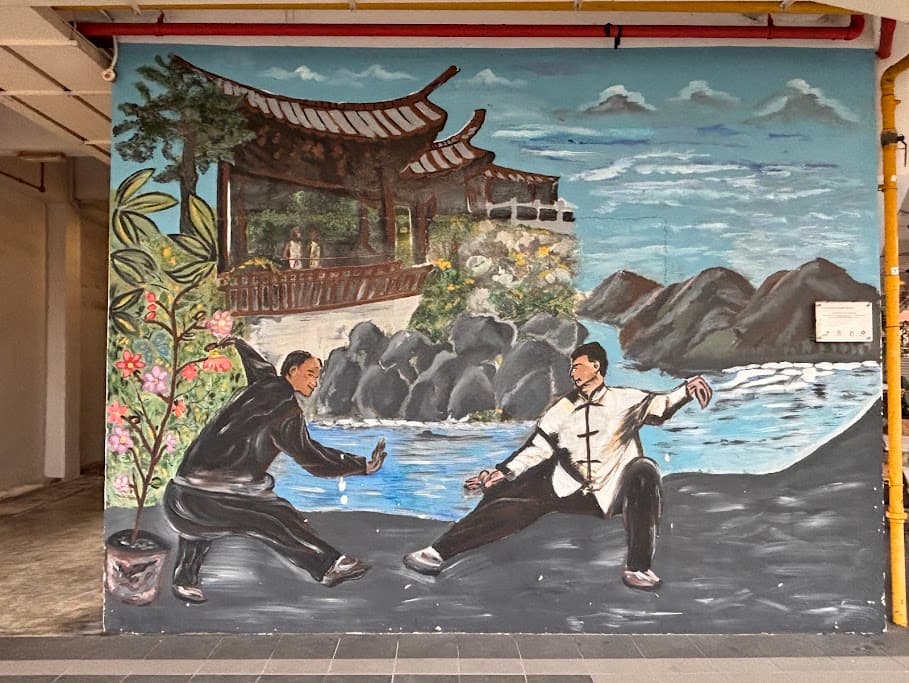
- Everybody is Kungfu Fighting
- Little Guilin
- Labour of Love
- Keong Saik Rd Murals
- National Day (2022)
- Bridge Over Calm Waters & The Back Lane
- Welcome To Our World
- Bruce Lee Mural
- Detective Conan in Chinatown
- My Chinatown Home (我家牛车水)
- Letter Writer
- Mid-Autumn Festival
- Chinatown Mural
- Chinatown Market (Dreams of Chinatown)
- The Old Clogmaker & Kitchenware Shop
- Cantonese Opera
- Paper Mask, Mamashop, Lion dance headmaker
- Samsui Woman at Rest
Beyond the murals, this route is strategically planned so you can experience these heritage places and hawker centres:
- Kreta Ayer Heritage Gallery
- Chinatown Hawker Centre
- Buddha Tooth Relic Temple
- Chinatown Heritage Centre
- Sri Mariamman Temple
- Maxwell Food Centre
To ensure you can see every detail of the route clearly, I have split the trail map into two segments. Coincidentally, this split highlights the two distinct artistic voices:
- Map 1 covers the vibrant, celebratory works of Belinda Low.
- Map 2 is mostly works by Yip Yew Chong — richly detailed scenes painted straight from his own memory of these streets.
Starting Point: Maxwell MRT Station Exit 3
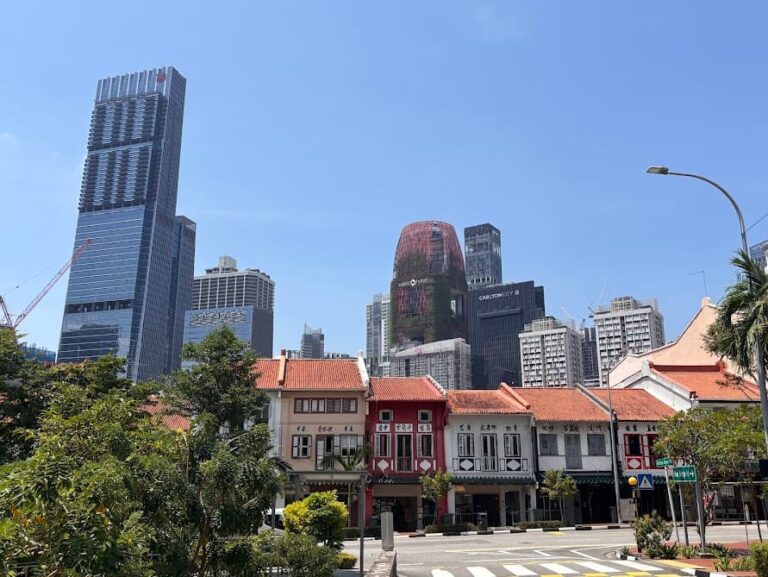
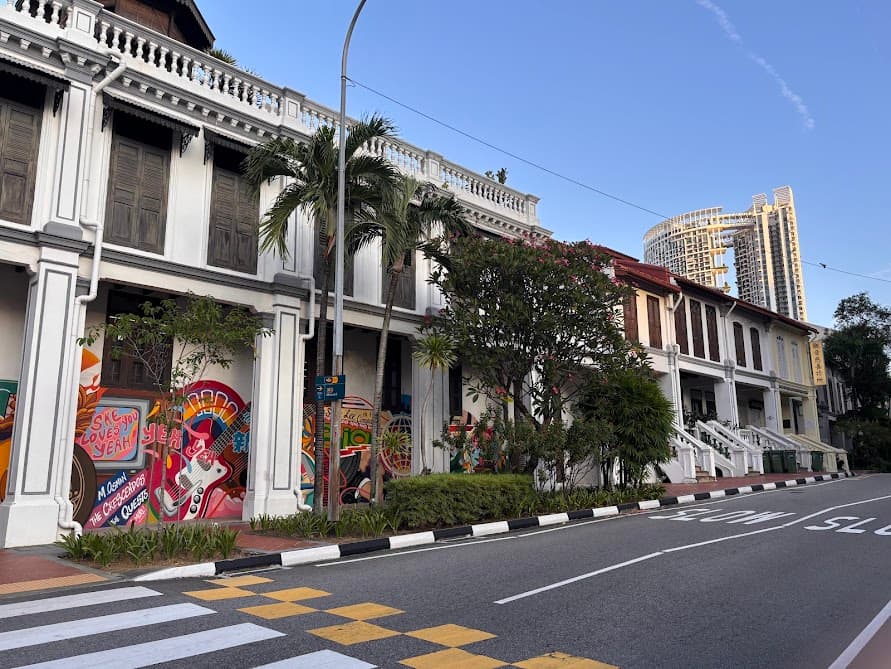
Arrive via the Thomson-East Coast Line (TE18) and head to Exit 3. As you come up to the surface, you’ll see a HDB (public housing) on your right, go down the short flight of stairs and walk along Kreta Ayer Road to bring you right to the start of the mural trail. I recommend this specific path because it allows you to see the heritage shophouses that line this charming street.
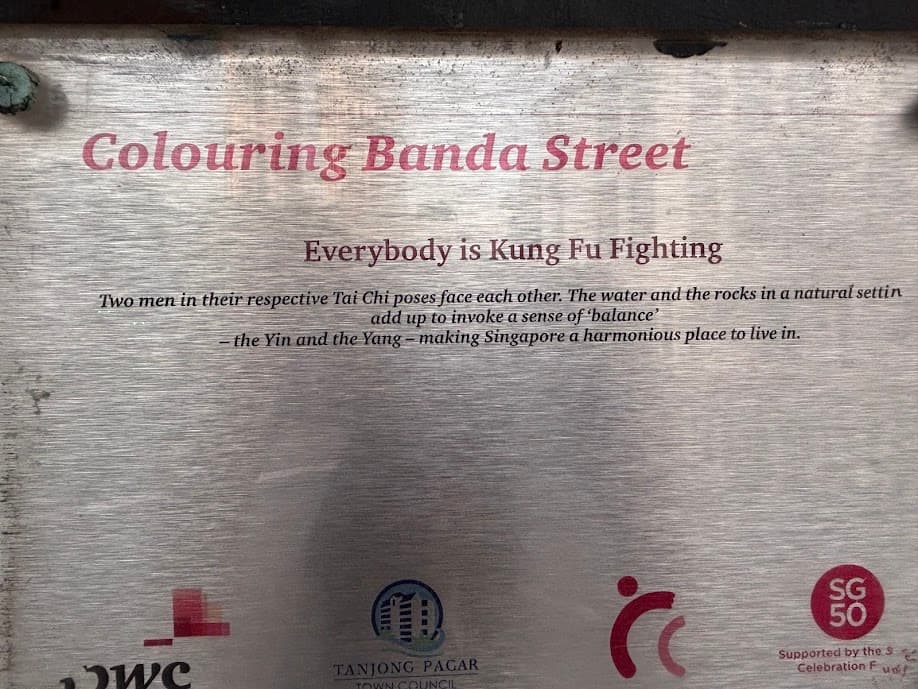
Stop 1. Everybody is Kungfu Fighting
Located near the foot of the long flight of stairs leading up to Kreta Ayer People’s Theatre, this mural captures the energy of traditional martial arts. It serves as a tribute to the cultural performances that historically defined the Kreta Ayer area.
Stop 2. Little Guilin
This mural depicts the limestone formations of Guilin, China, honoring the ancestral roots of early Chinese migrants. It offers a moment of tranquility amidst the dense shophouse architecture.
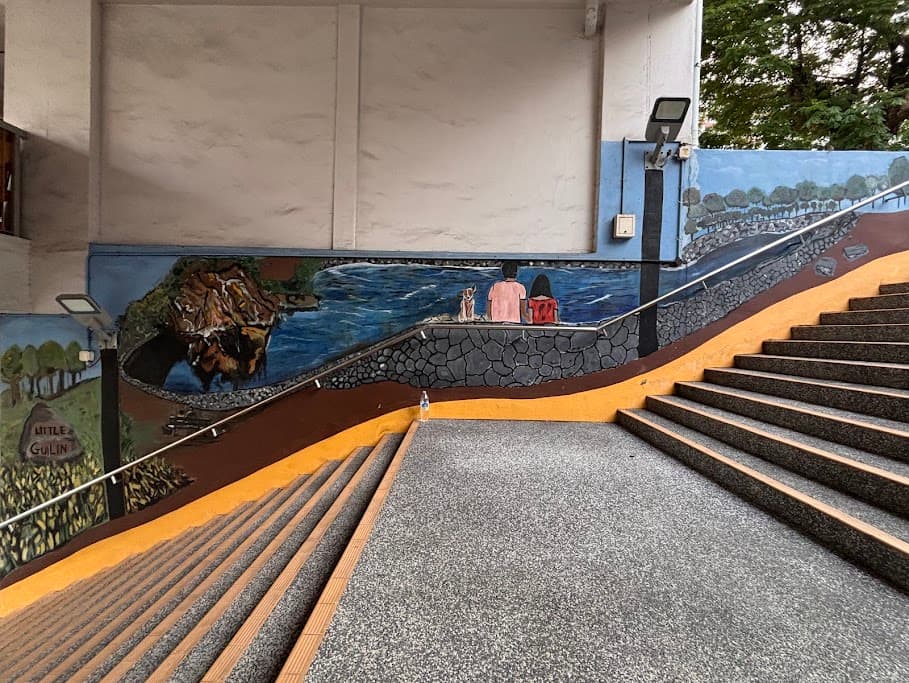
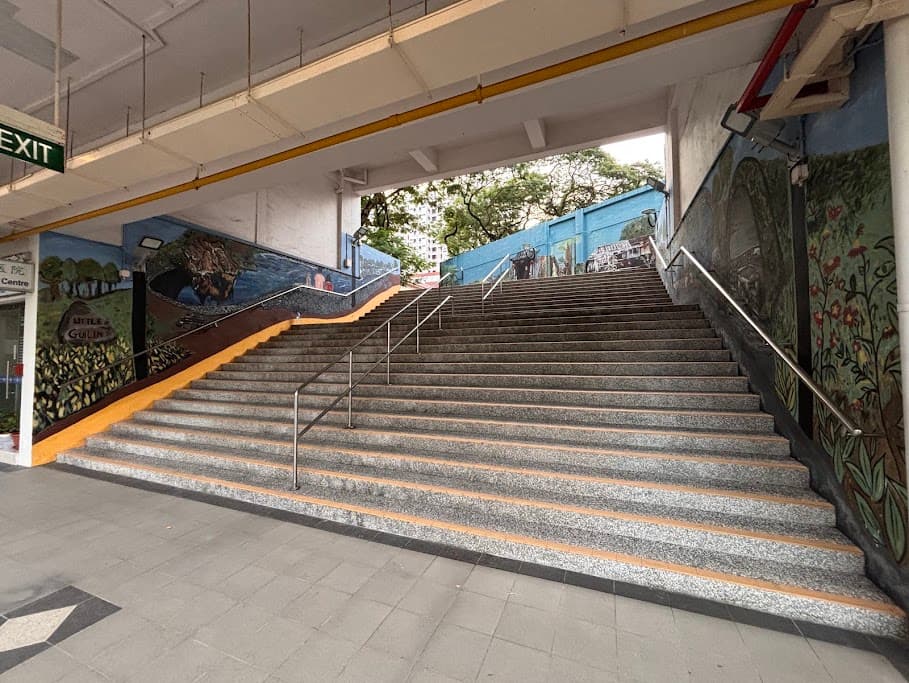
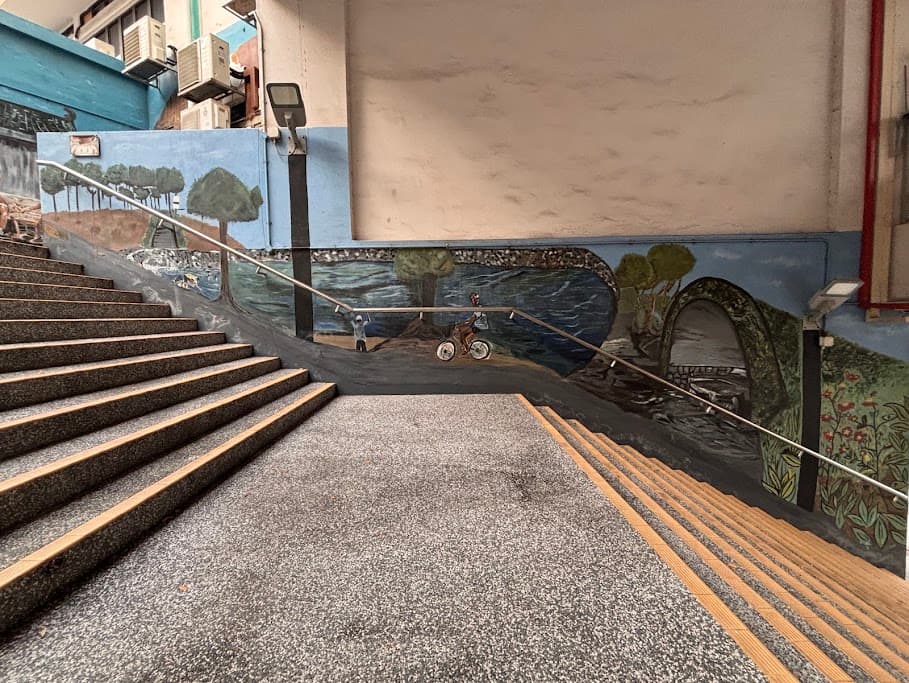
Stop 3. Labour of Love
This stop is a curated collection of vignettes by Belinda Low that celebrate the simple joys and resilience of the elderly in Chinatown. Rather than one single image, this wall features several heartfelt scenes:
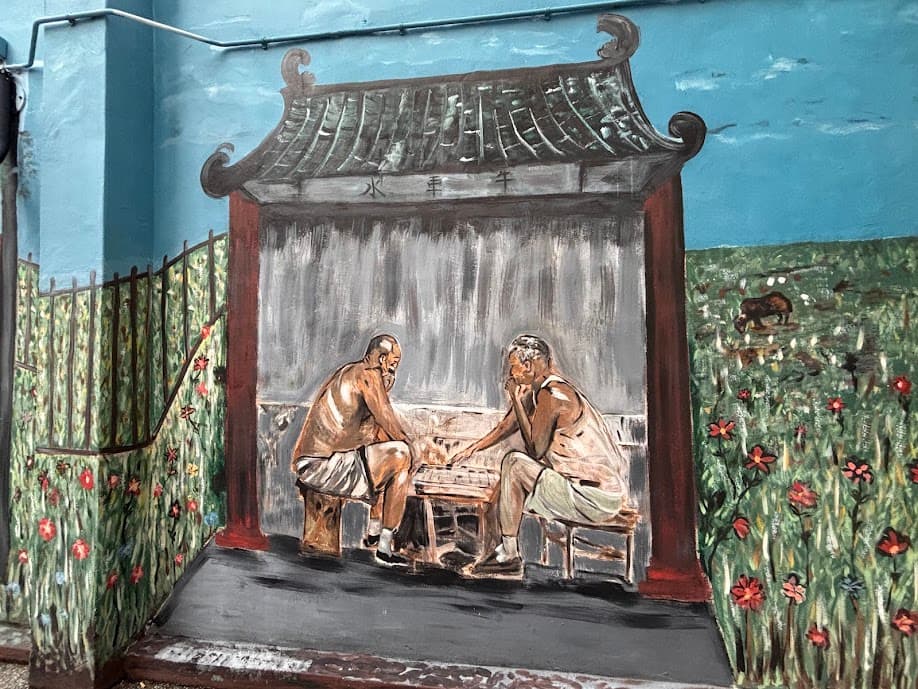
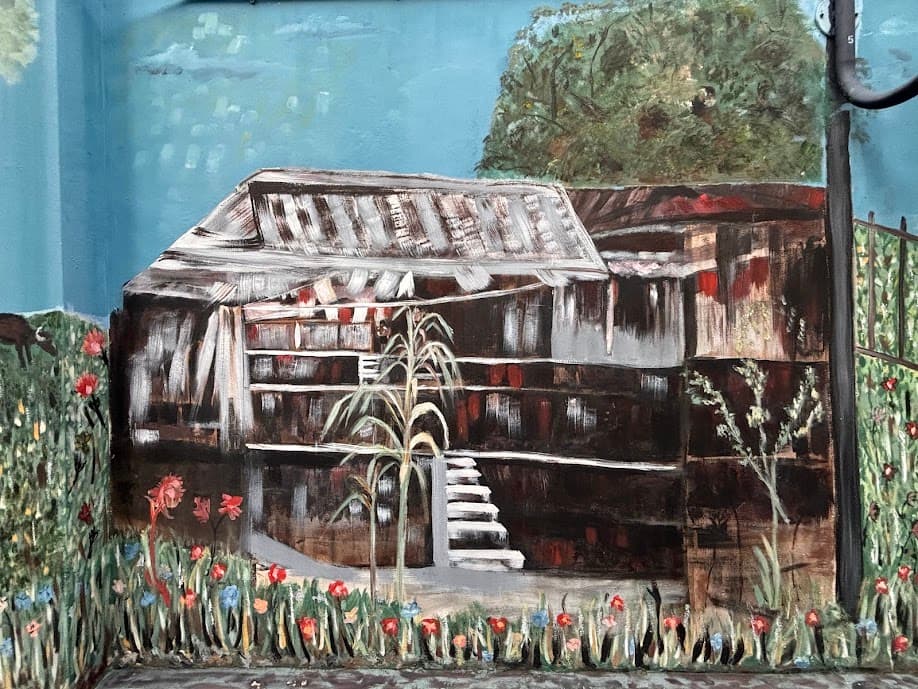
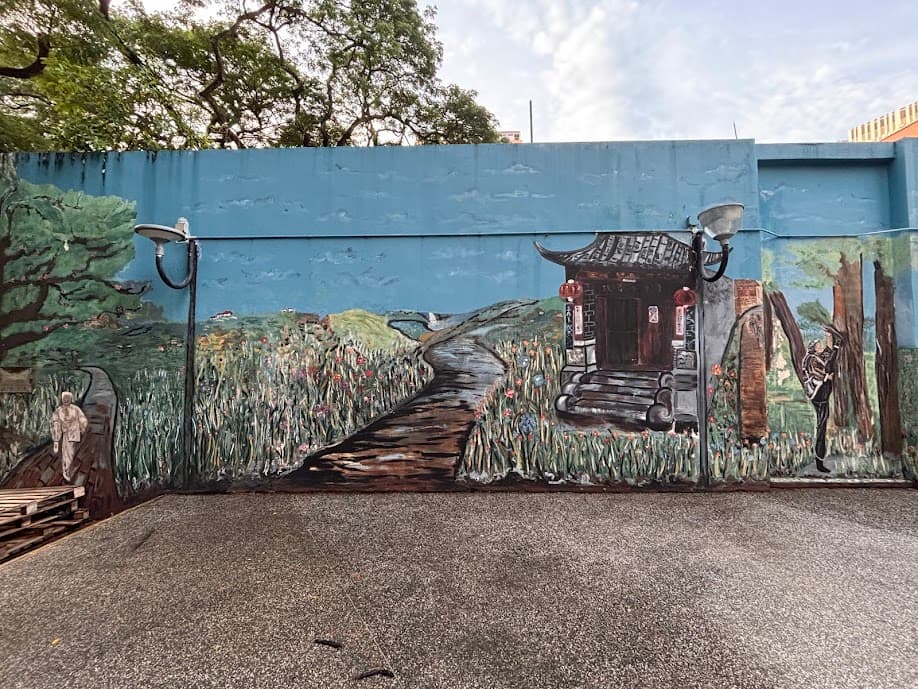
Tai Chi Uncle and The Path to Peace and Serenity, The Way We Were, Ageing Gracefully and Chess Mates: Depicting the morning rituals of wellness and movement as well as the Older Generation.
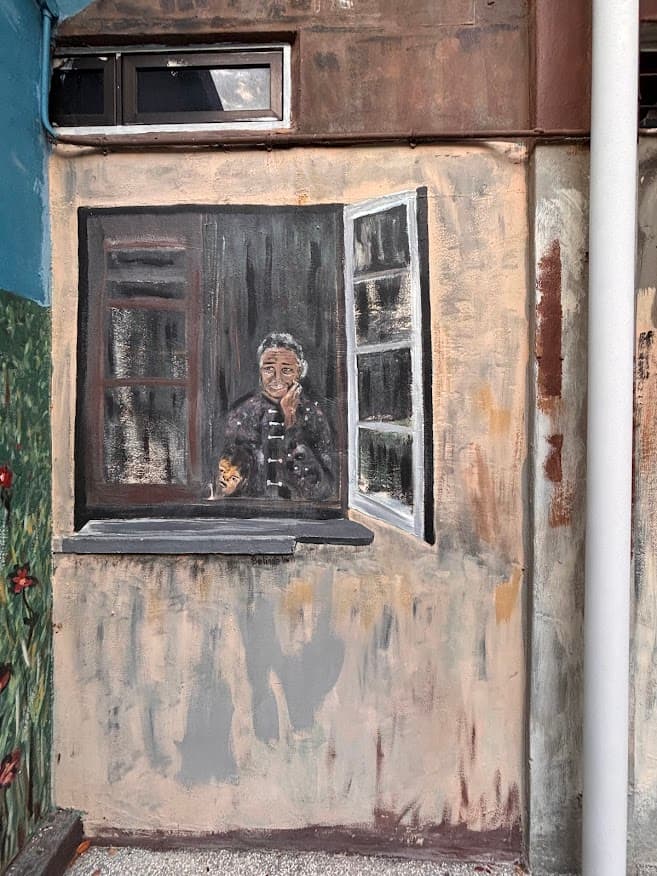
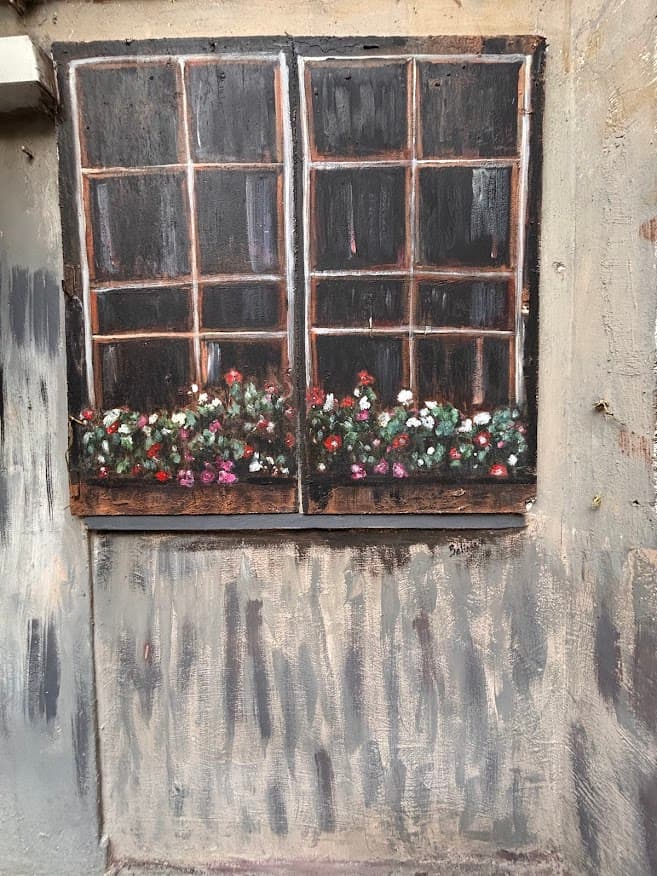
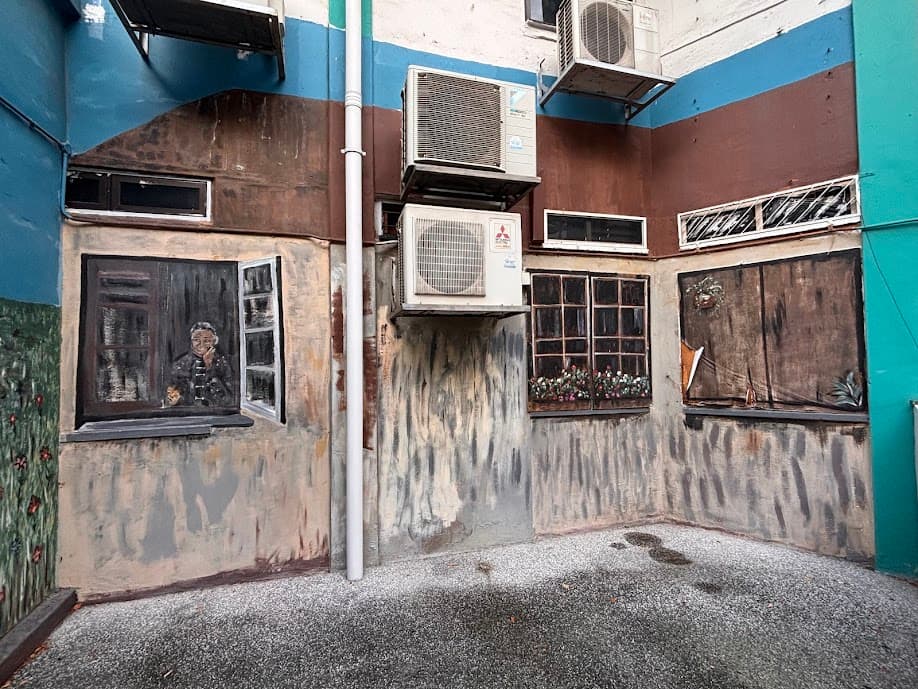
Grandma & I and The Window: Highlighting the social bonds and intergenerational love found in the heart of the community.
Kreta Ayer Heritage Gallery
Tucked inside the Kreta Ayer Community Club at 30 Kreta Ayer Road, I feel this gallery complements the mural trail. It focuses on the cultural soul of Chinatown—things like Chinese opera, puppetry, and calligraphy. It uses community-donated objects and old photographs to trace how these art forms evolved from the early migrant days to now.
It’s a quiet, air-conditioned small gallery that helps you “see” the people behind the art. If you want to understand the why behind the opera murals, this is the place to do it.
Entrance is free. It’s opened from Tuesday to Sunday, 10am–6pm. Closed on Mondays and also take note that during school term period, it is only open on weekends.
Stop 4. Keong Saik Rd Murals
These contemporary murals are a highlight of Keong Saik Road, adding a splash of modern energy and vibrancy to the street, a living canvas where traditional heritage meets modern chic.
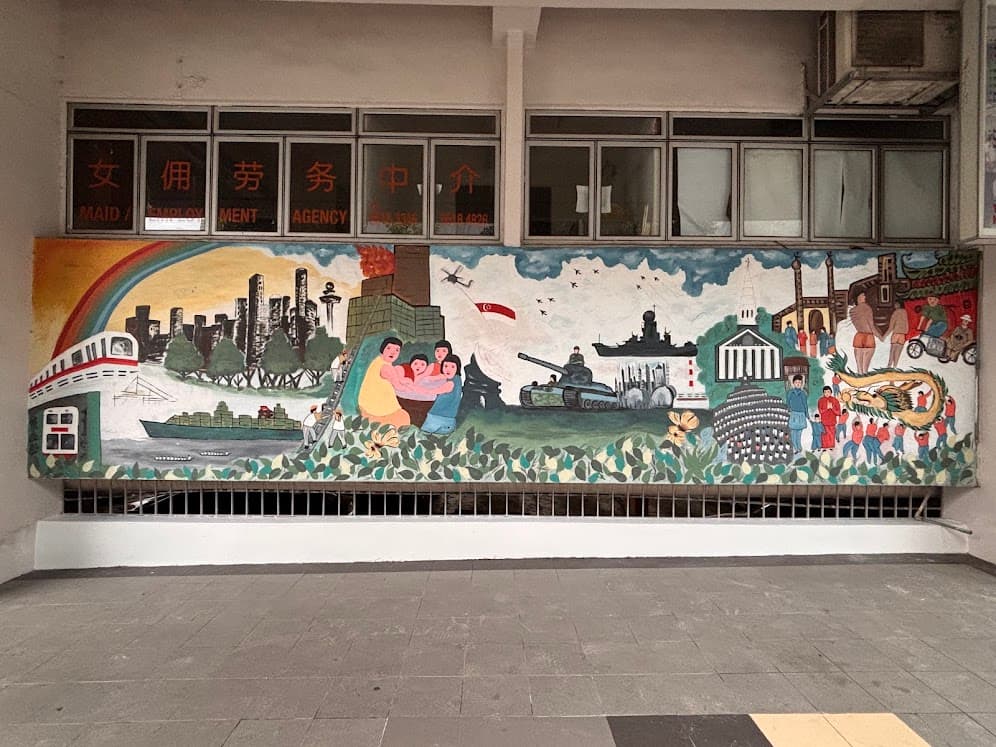
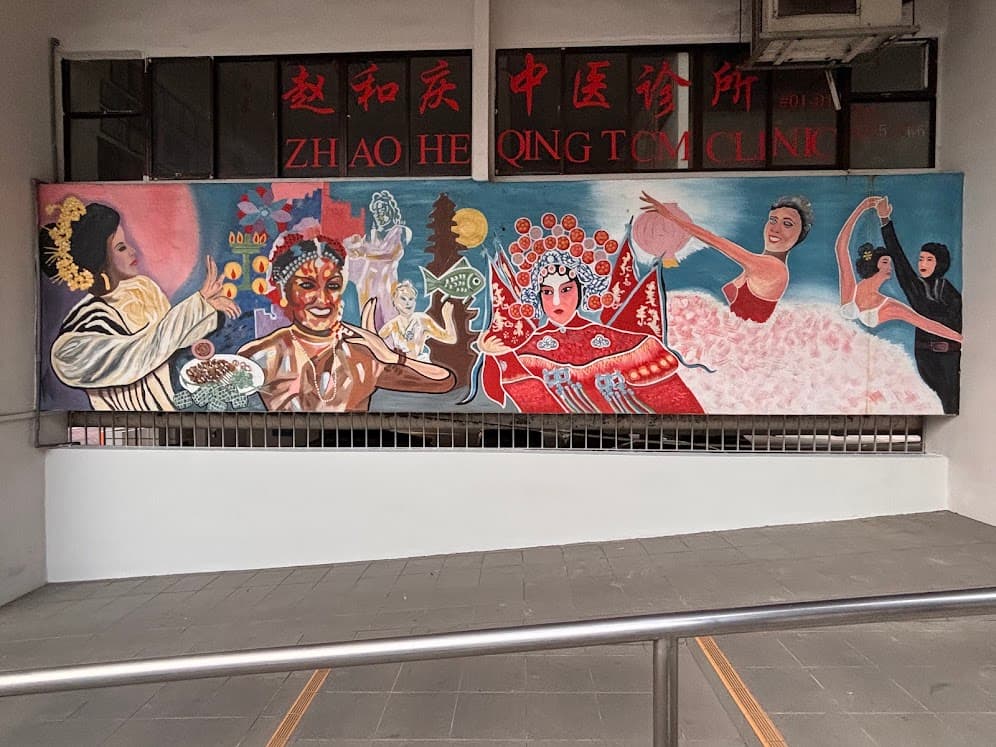
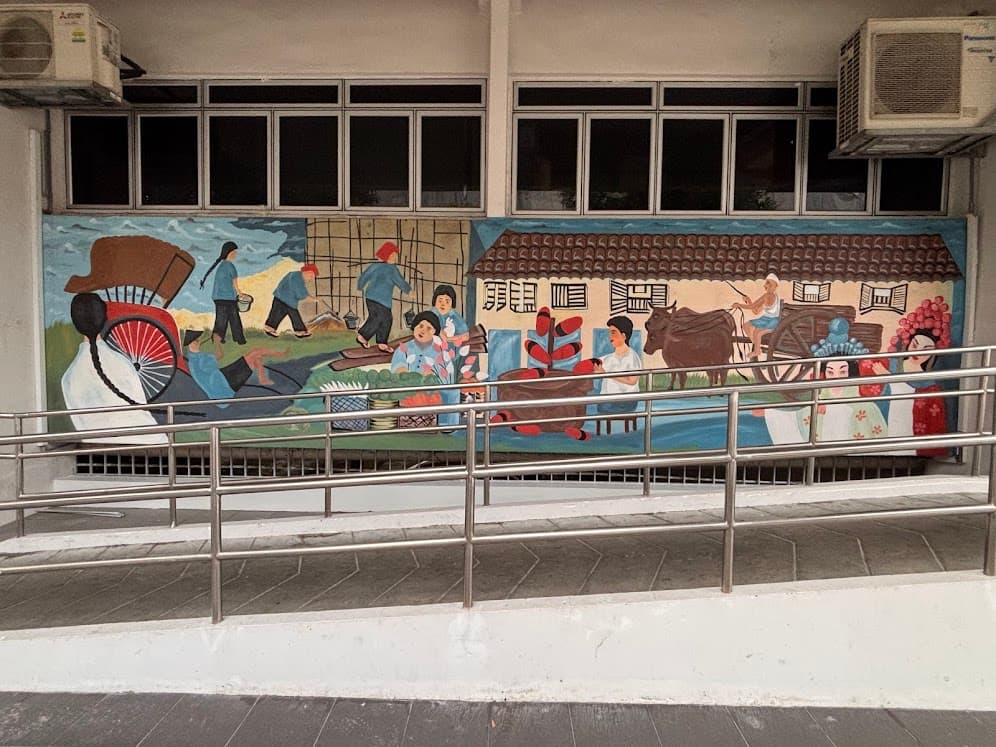
I haven’t been able to identify the specific artist behind these works yet—if you happen to know who they are, please leave a comment below so I can give them proper credit! Regardless of who held the brush, these pieces are a “must-see” for anyone exploring the neighbourhood.
Stop 5. National Day (2022)
Further along Keong Saik Road, this signature vibrant work by Belinda Low celebrates Singapore’s early independence and the “kampung spirit”. It features nostalgic scenes of community celebrations and children playing, designed to preserve and honour Singapore’s heritage.
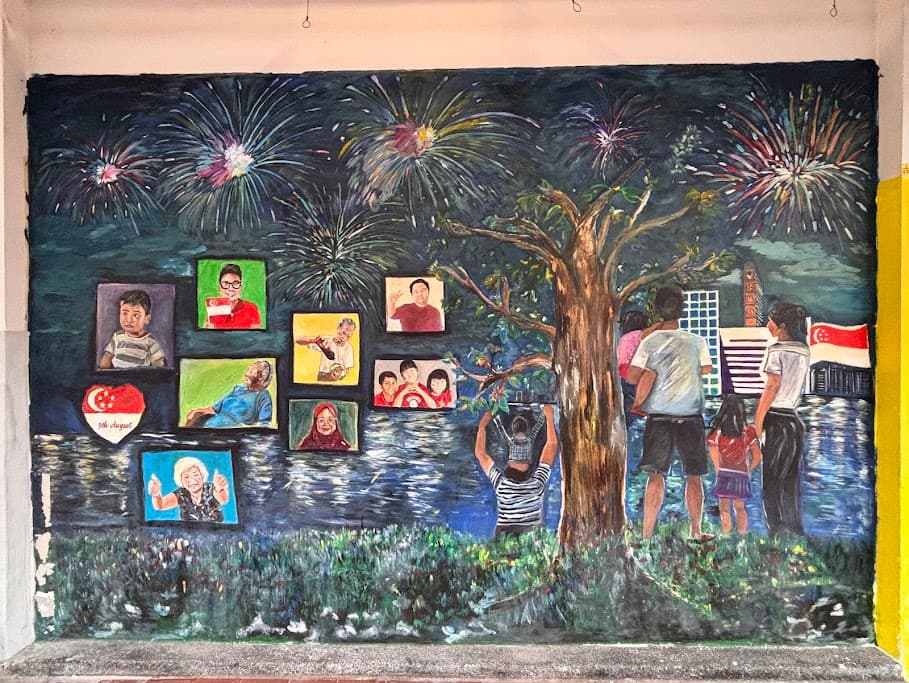
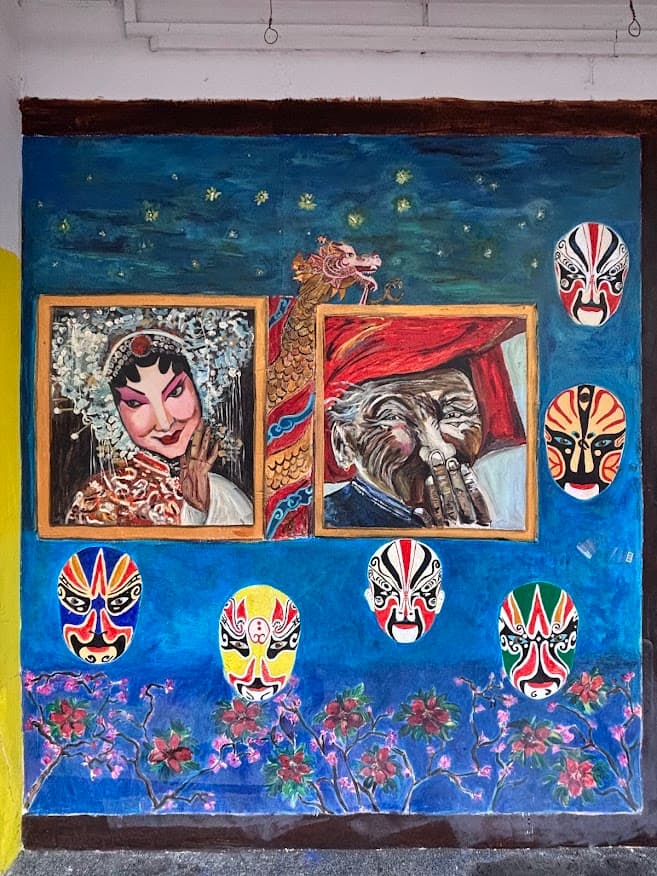
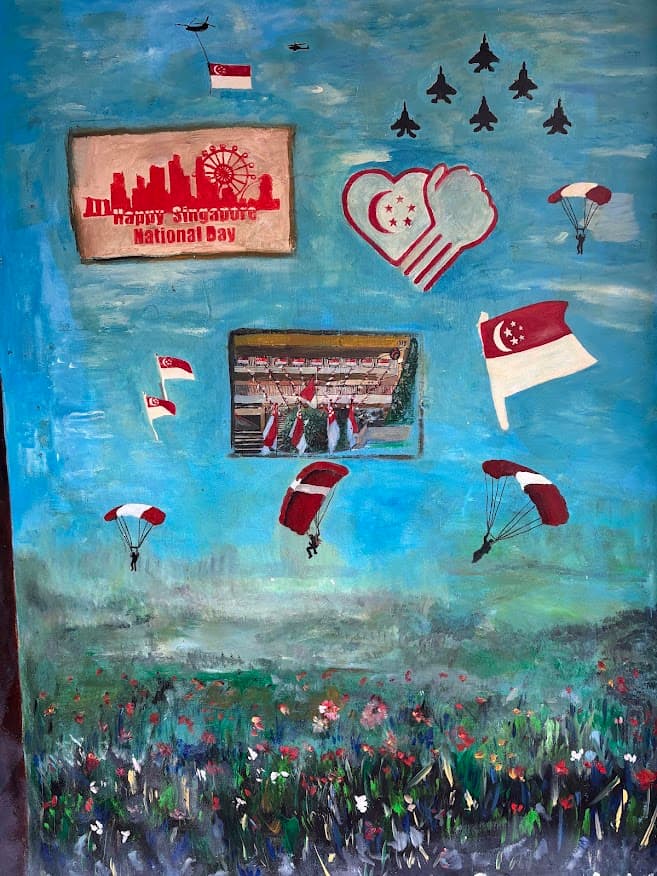
Look for the festive community scenes that capture the heart of Singapore’s early years.
Stop 6. Bridge Over Calm Waters & The Back Lane
There are 2 murals here which celebrates both the resilience of the human spirit and the warmth of traditional family life.
Bridge Over Calm Waters: This piece pays tribute to those who remain steady and courageous during life’s most difficult challenges. It features a tranquil lake where an elderly couple watches a group of nine koi fish, a number chosen to represent permanence and endurance. The turtle and the koi symbolise longevity, prosperity and harmony.
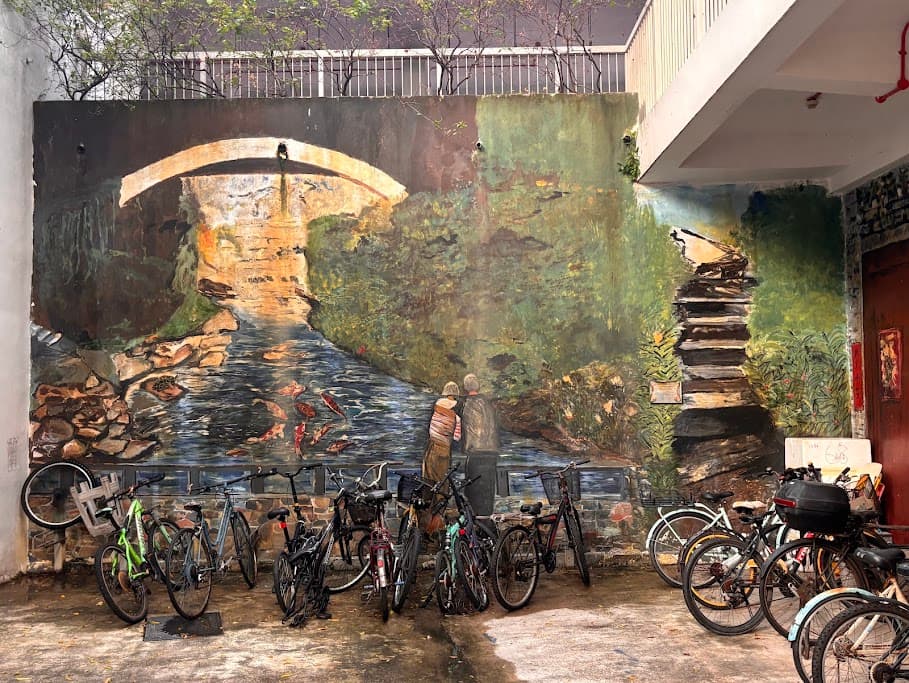
The Back Lane: The scene captures a family preparing for the Lunar New Year, featuring a grandmother teaching her grandchildren the tradition of pasting “Fu” (good luck) symbols on the wall. Nearby, the grandfather adds to the festive atmosphere by playing the erhu, a traditional Chinese string instrument.
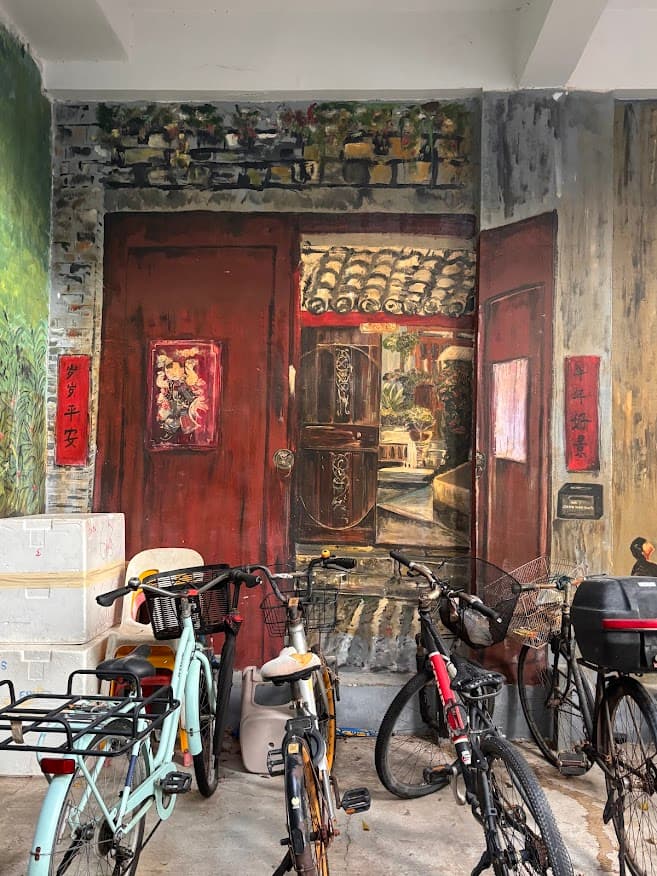
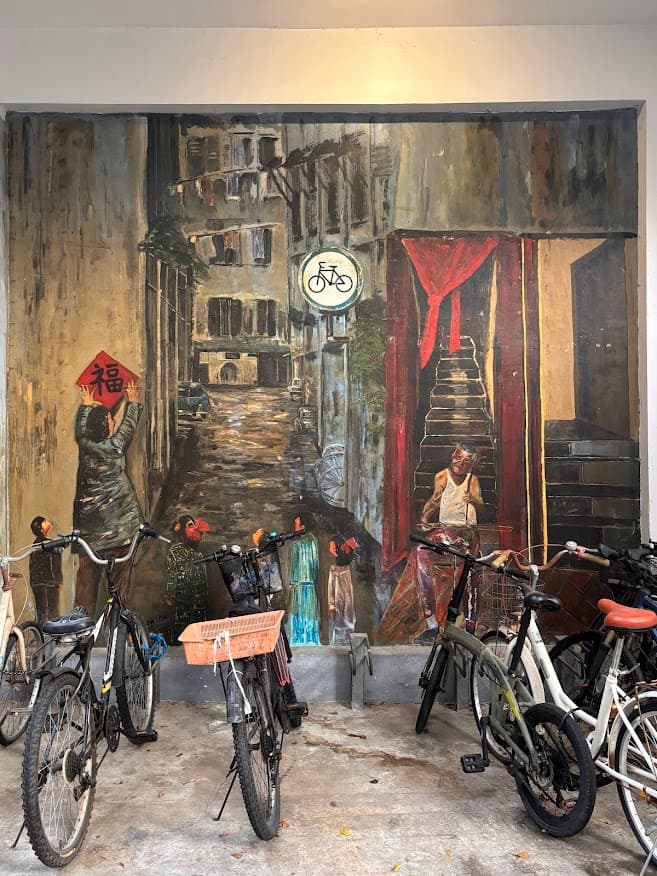
It is interesting how these bicycles just blend into the artwork or is it the artwork blending with the bicycles. Whichever it is, it looks just great!
Stop 7. Welcome to Our World
This is one of Belinda Low’s most famous works. Located at Block 5, Banda Street, it features a striking depiction of a Samsui woman. A powerful portrait capturing the resilience of the women who lived through Singapore’s early years of independence.
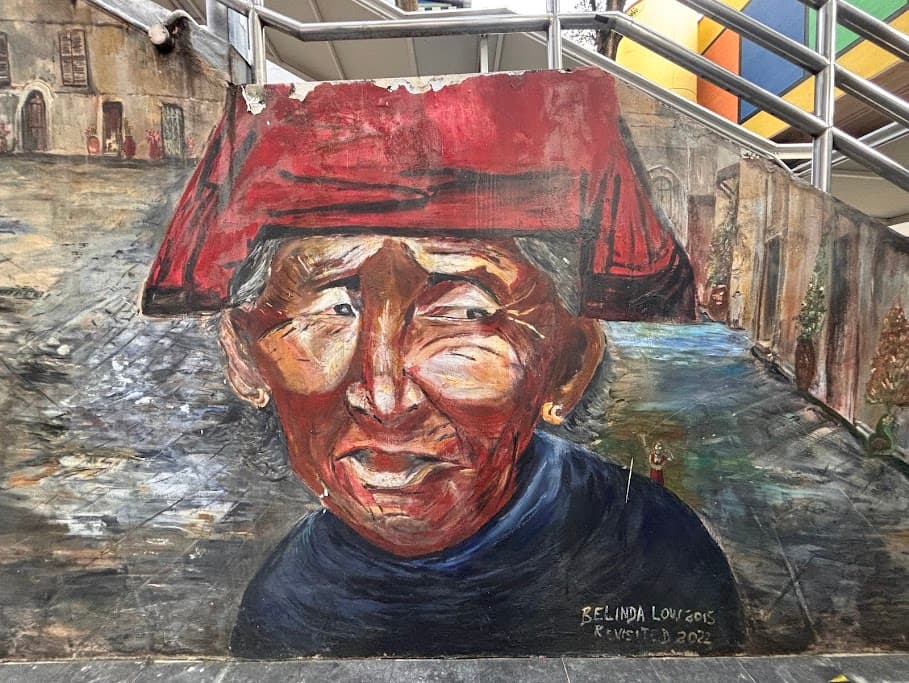
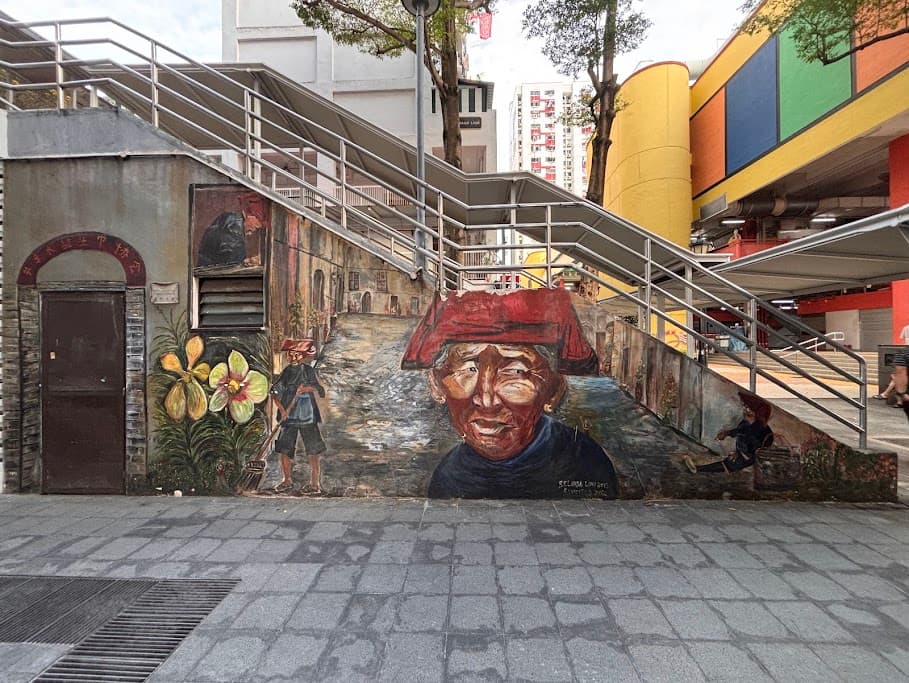
Look for the two orchids in the mural. These were added as a special tribute in remembrance of Singapore’s founding Prime Minister Lee Kuan Yew and his wife.
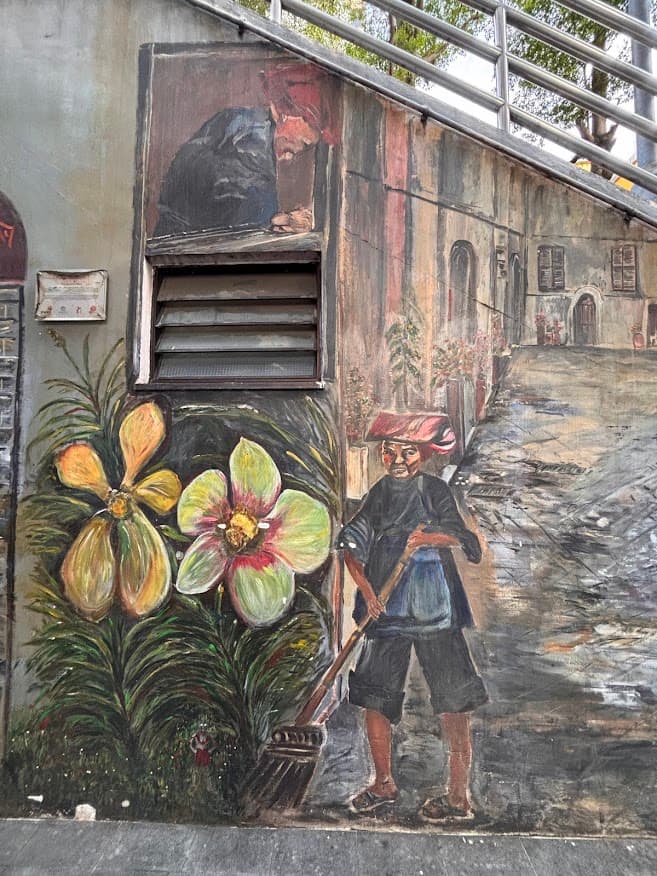
Who were the Samsui women?
They came from Sanshui district in Guangdong, southern China — “Samsui” being the Cantonese pronunciation, meaning “three waters.” Between the 1920s and 1940s, they emigrated to Singapore driven by economic hardship, digging holes, carrying building materials, and mixing cement alongside men. They earned 50 to 60 cents a day, lived in shared cubicles above Chinatown shophouses, and sent most of what they earned back to family in China. Many took a vow of chastity and supported themselves entirely through manual labour.
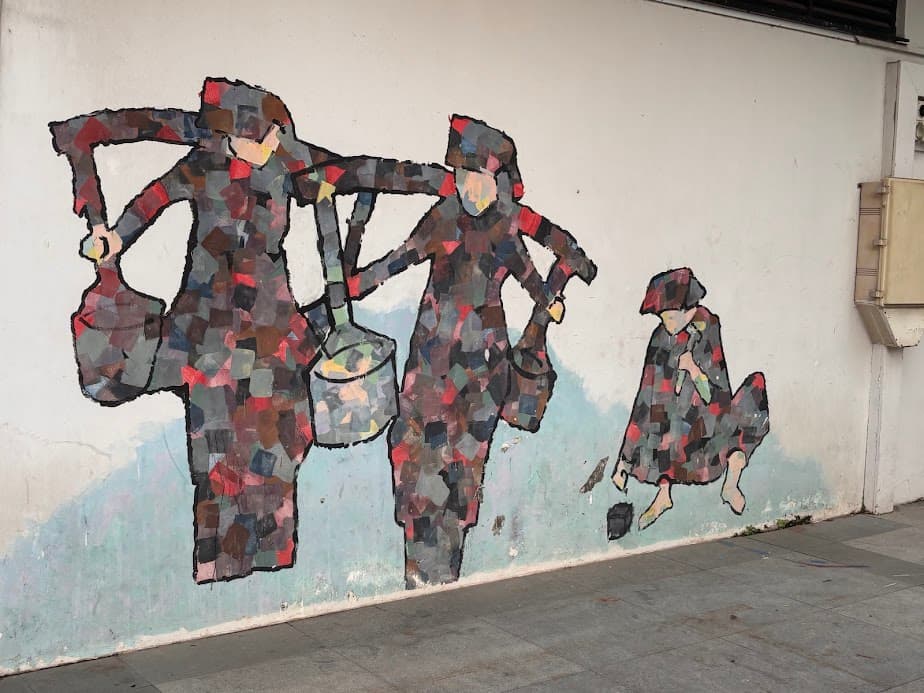
They’re recognisable in their dark blue or black samfoo paired with their trademark red headscarf, the hong tou jin (红头巾) — bright enough to reduce accident risks on construction sites and handy for storing cigarettes, matches, and money.
The generation is now gone. These heritage murals are the last visible reminders of women who are no longer here to speak for themselves.
Stop 8. Bruce Lee Mural
You’ll find martial arts legend Bruce Lee making a surprising appearance on the walls of Chinatown Complex but with a distinctly Singaporean twist. This cheeky mural was actually painted by students from the School of Design at Temasek Polytechnic, who chose to blend global pop culture with quirky local elements.
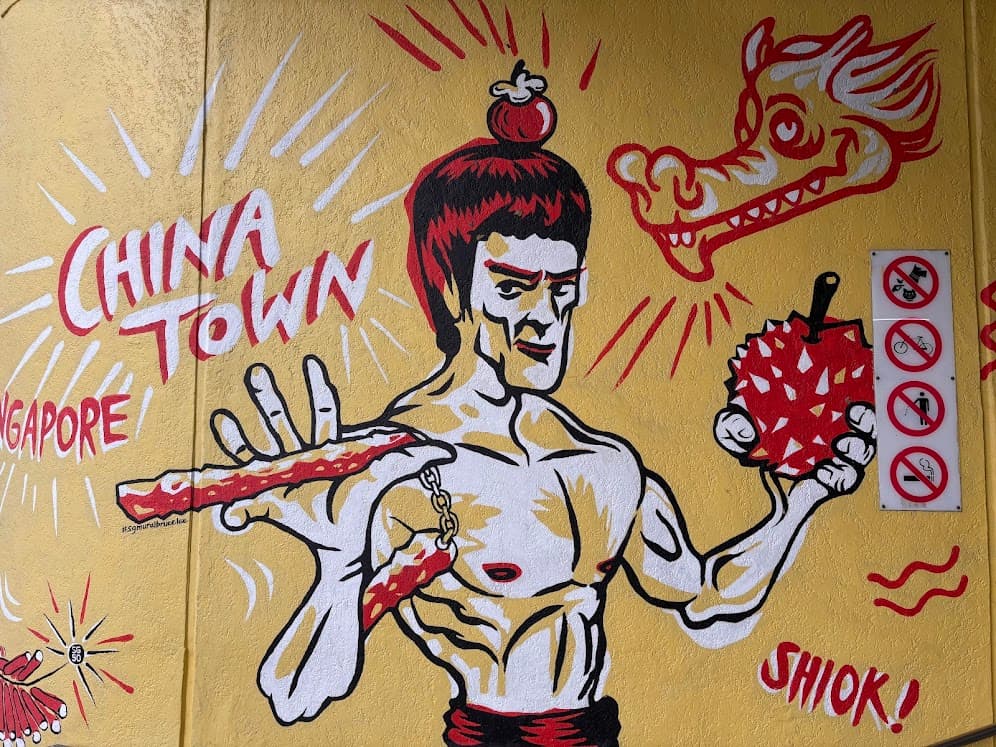
Bruce Lee is depicted holding an iconic durian in one hand and his nunchucks in another. It is a fun, lighthearted stop that perfectly captures how modern Singaporean culture reimagines its heritage.
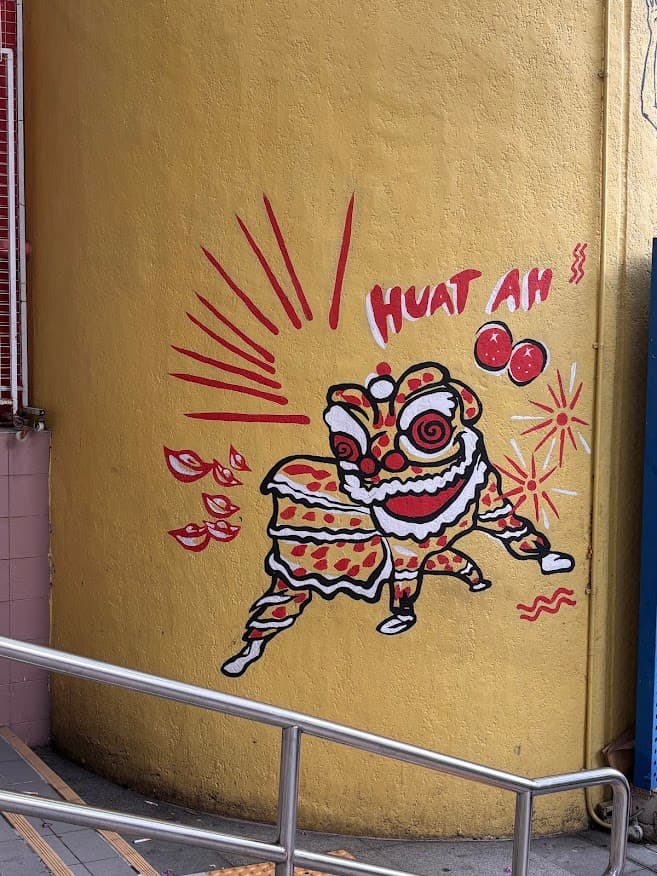
The project was part of the National Environment Agency (NEA) and National Heritage Board (NHB)’s Our Hawker Centres – A Heritage & Art Project initiative in 2015, celebrating Singapore’s hawker culture and neighbourhood heritage.
Chinatown Complex Hawker Centre
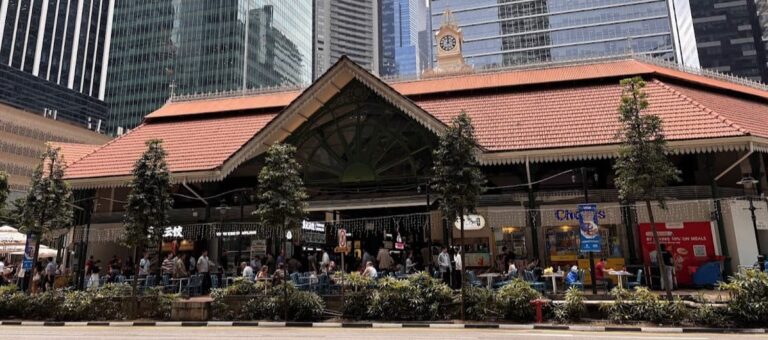
And since you’re well-positioned to enter Chinatown Complex Hawker Centre, it’s time to refuel. This is one of the largest hawker centres in Singapore. It was originally built in 1983 to house the itinerant street hawkers who used to line the roads of Chinatown. Today, it houses over 200 stalls across multiple levels, including a wet market in the basement and retail shops on the first floor.
Since this trail ends at Maxwell Food Centre, I recommend having your main meal here and saving room for local desserts once you reach Maxwell.
Buddha Tooth Relic Temple
Though it looks ancient, this Tang-style temple was actually completed in 2007. It’s named after what is believed to be the left canine tooth of the Buddha, housed in a massive 320kg gold stupa on the fourth floor. The architecture was meticulously designed to fit the historic Chinatown landscape, avoiding “contemporary” styles that would have felt out of place.
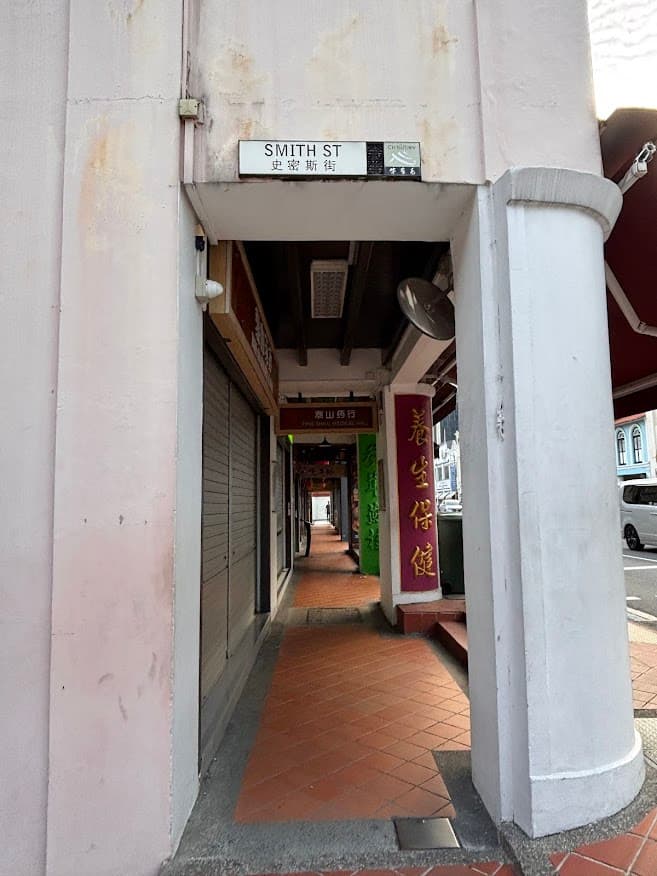
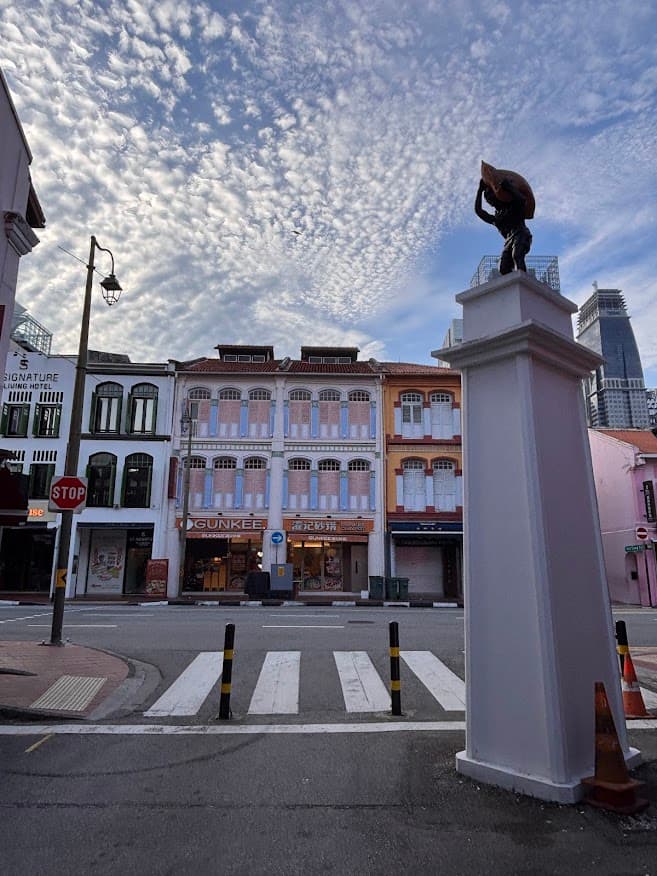
Named after Governor Sir Cecil Clementi Smith, this street transformed from a 1900s red-light district into a cultural hub centered around the Lai Chun Yuen Cantonese opera house. It later became a famous site for itinerant street hawkers until they were moved into the Chinatown Complex in 1983.
Stop 9. Detective Conan in Chinatown
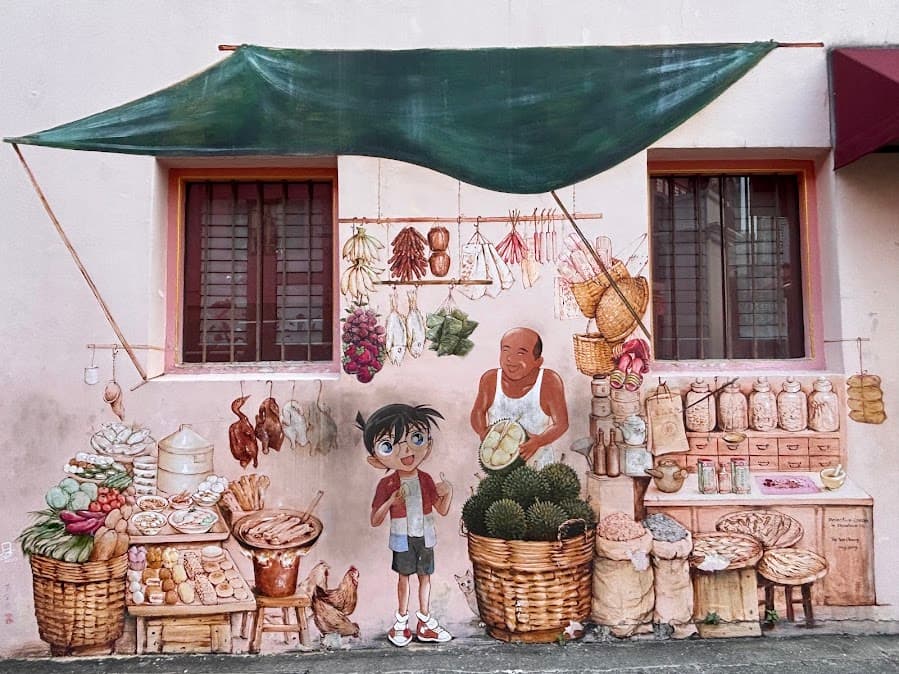
This mural shows the famous Japanese detective trying Singapore’s “smelly” durians, a popular bridge between modern manga and traditional market life.
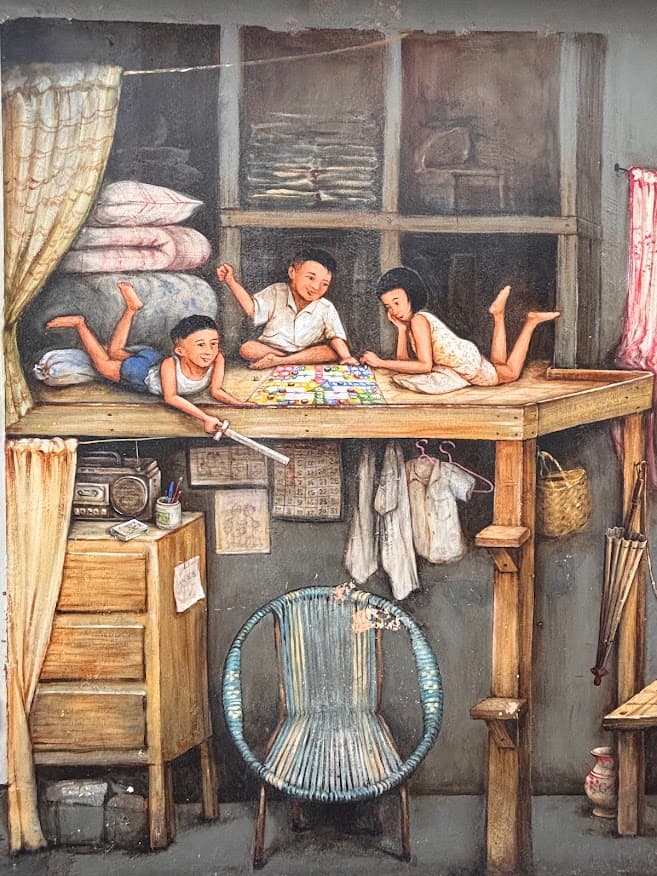
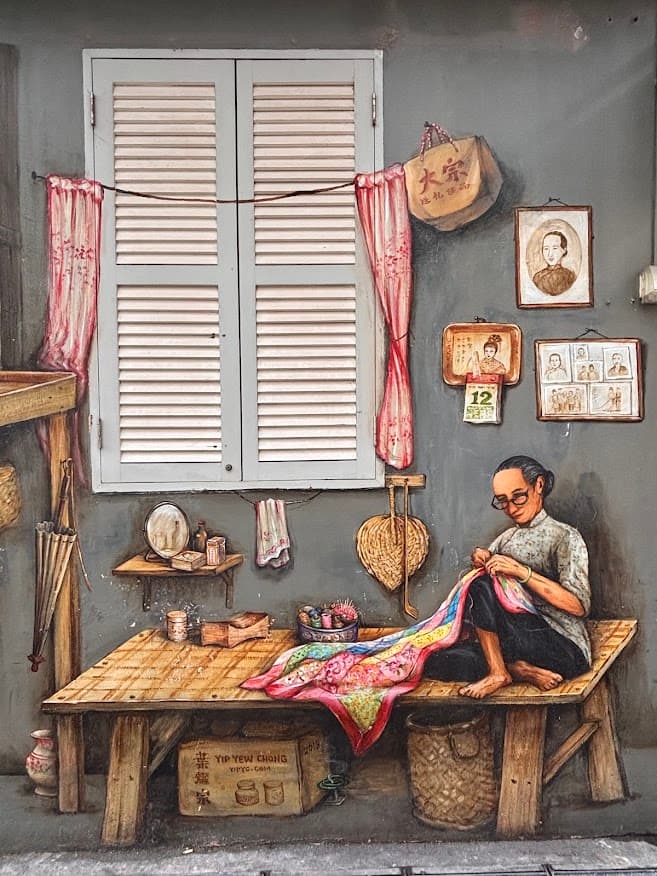
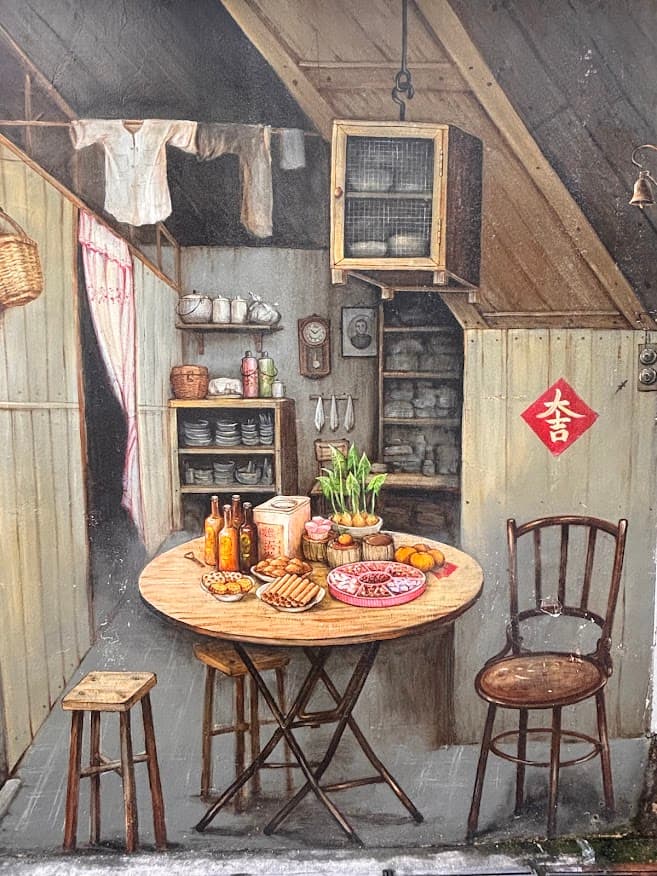
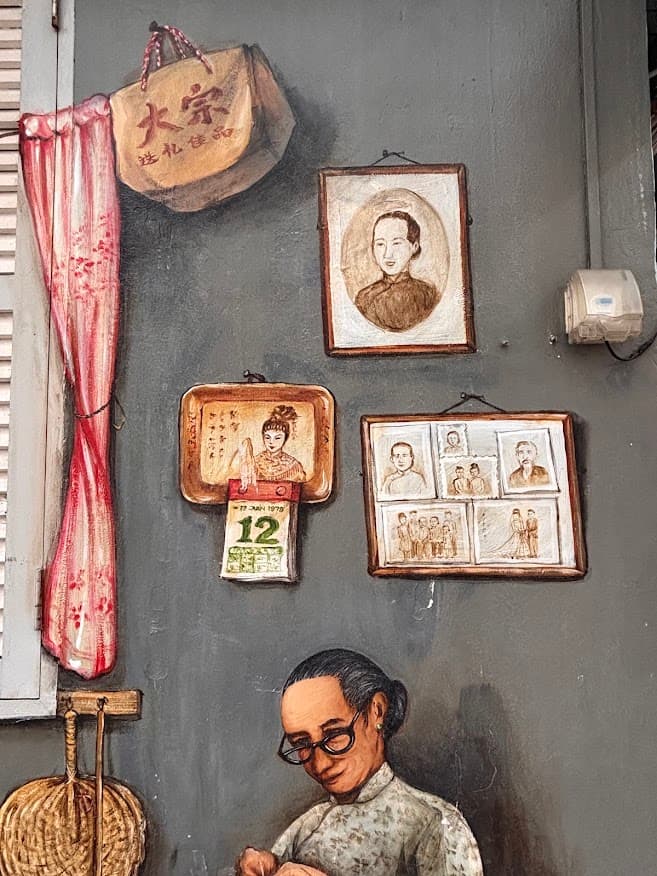
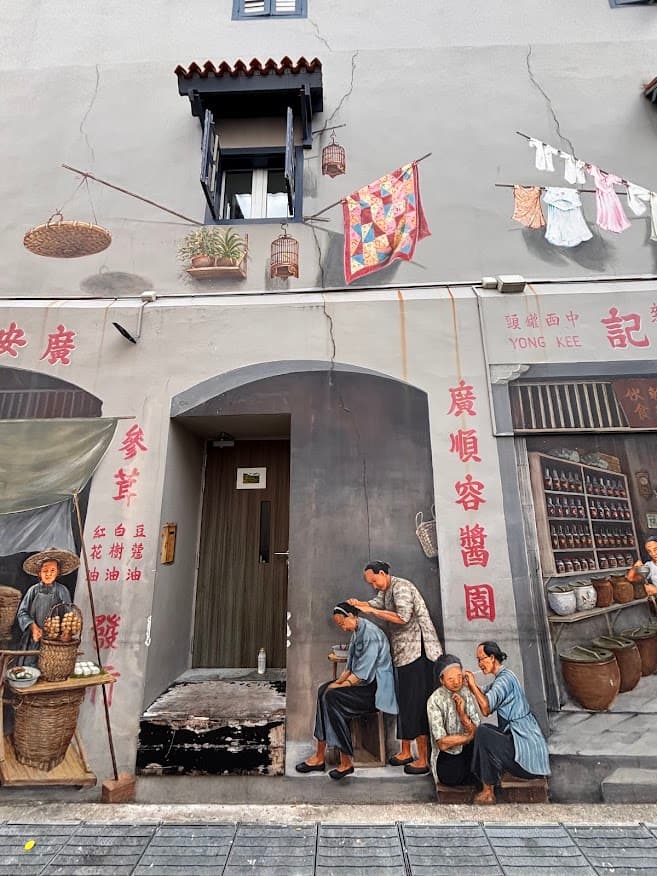
Stop 10. My Chinatown Home (我家牛车水)
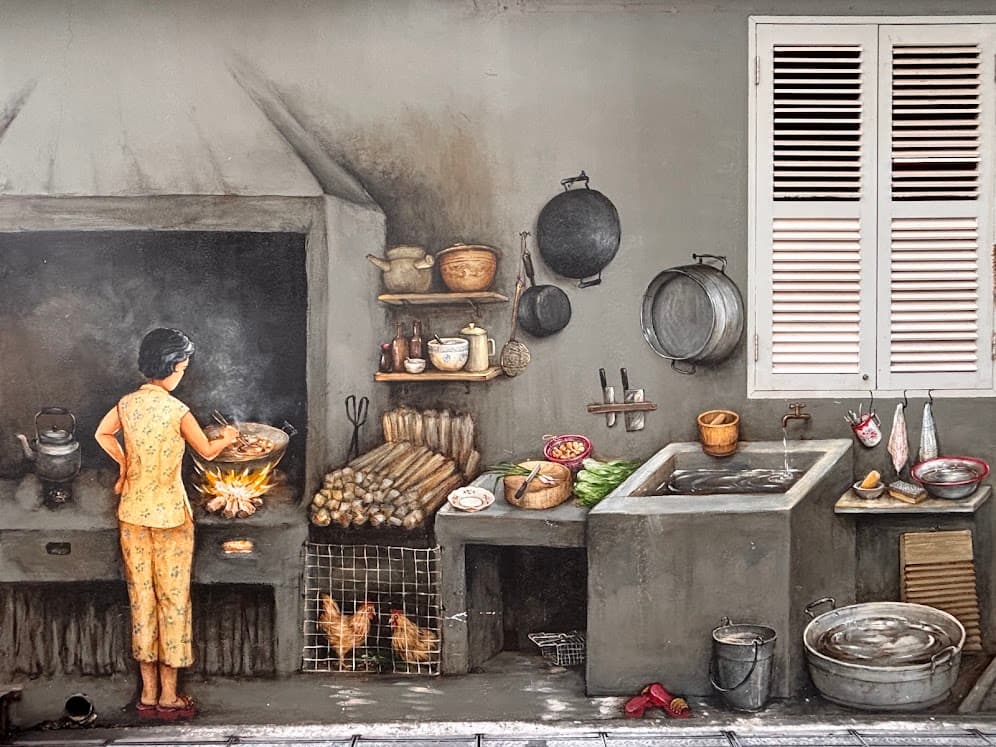
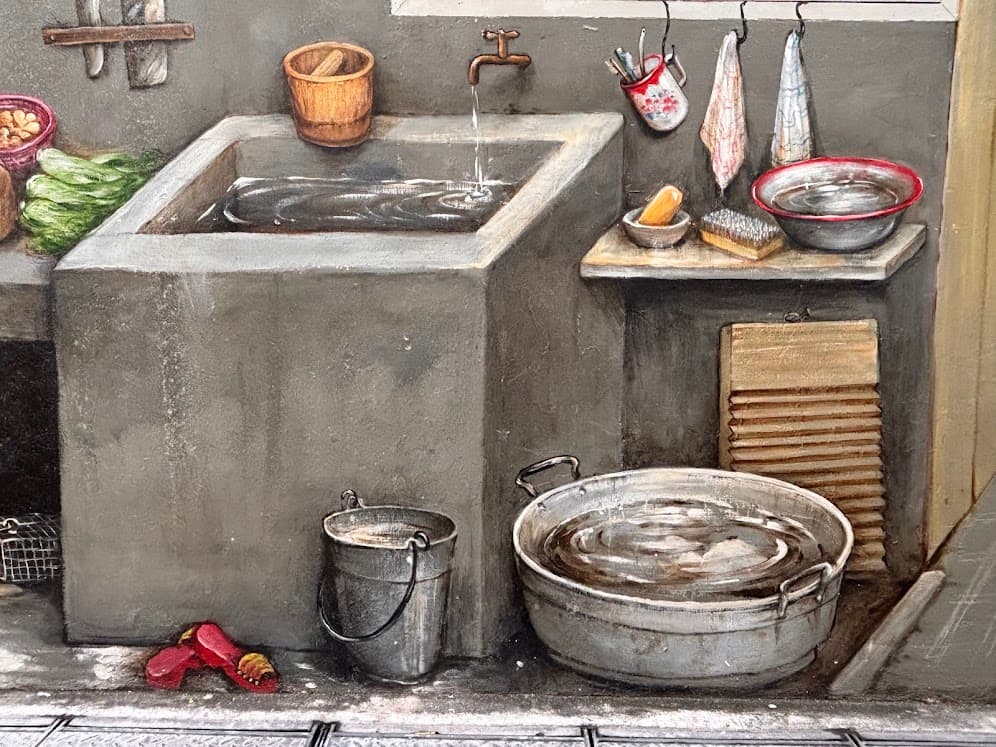
This is the artist’s most intimate work, depicting his childhood home at Sago Lane. It is rich with specific memories: his grandmother sewing a patchwork blanket, siblings playing “aeroplane chess” and his mother frying New Year sticky cake.
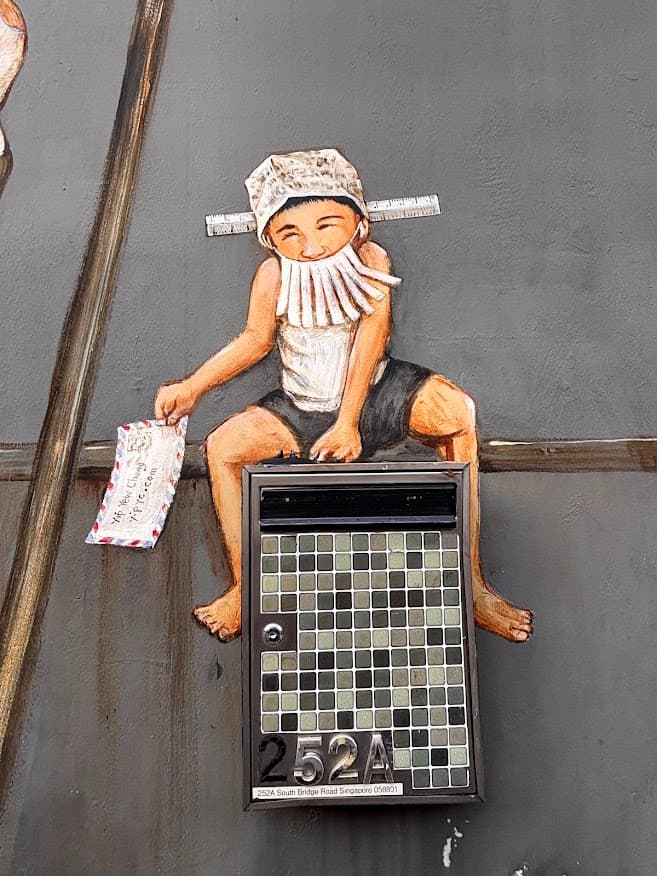
Stop 11. Letter Writer (寫信佬 . 妙手揮春)
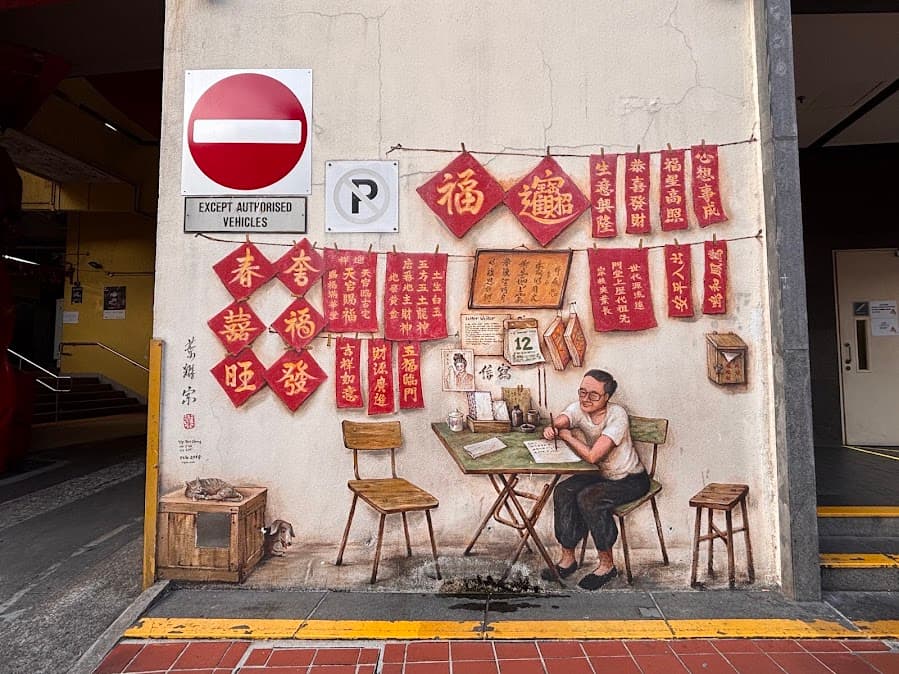
This was the first mural the artist painted with his children. It depicts the letter writers who helped illiterate migrants write letters home to China. These writers also doubled as calligraphers for Chinese New Year couplets.
Stop 12. Mid-Autumn Festival
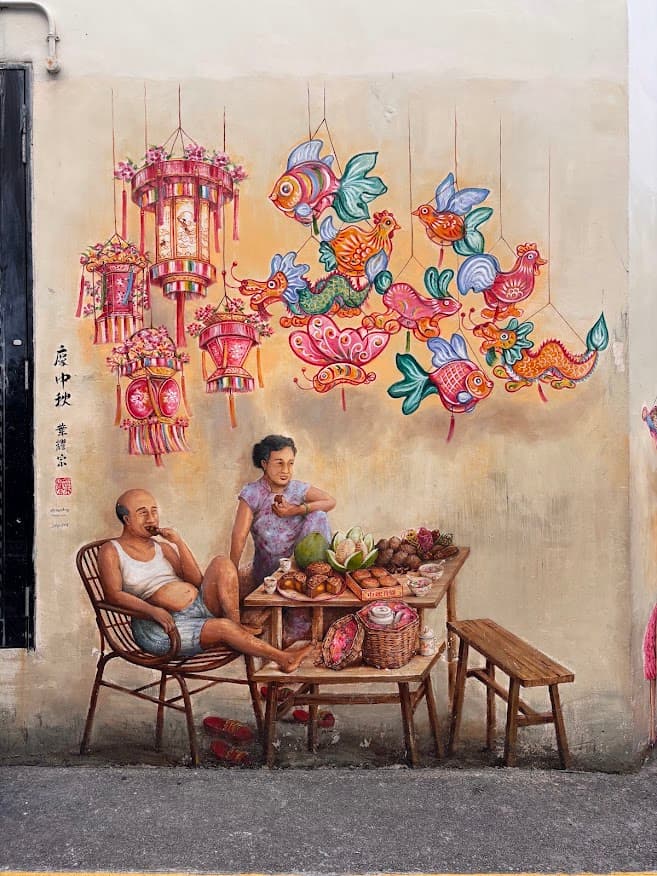
Captures a family reunion under the glow of lanterns, emphasizing the cultural importance of filial piety and the Mooncake Festival.
Stop 13. Chinatown Mural
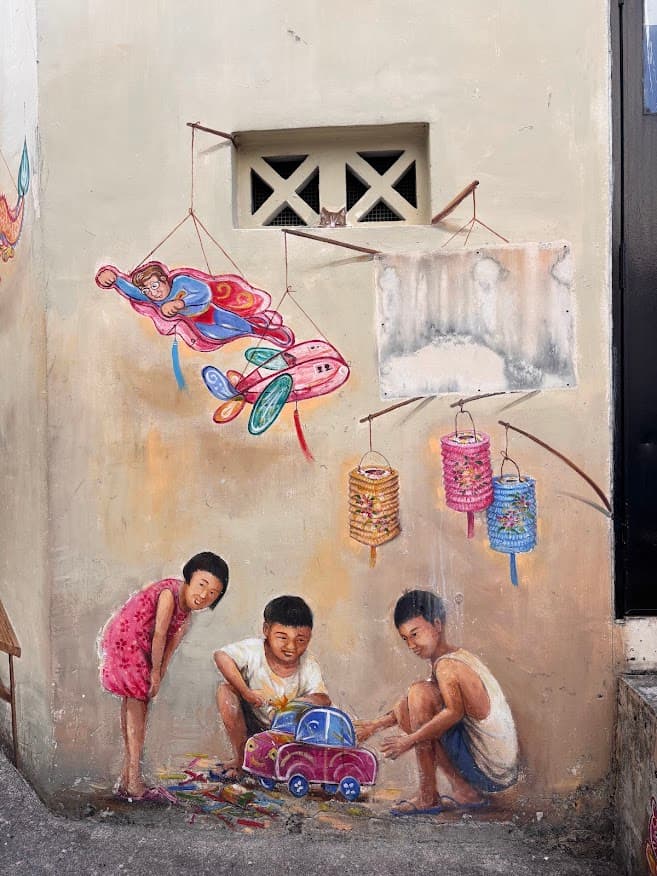
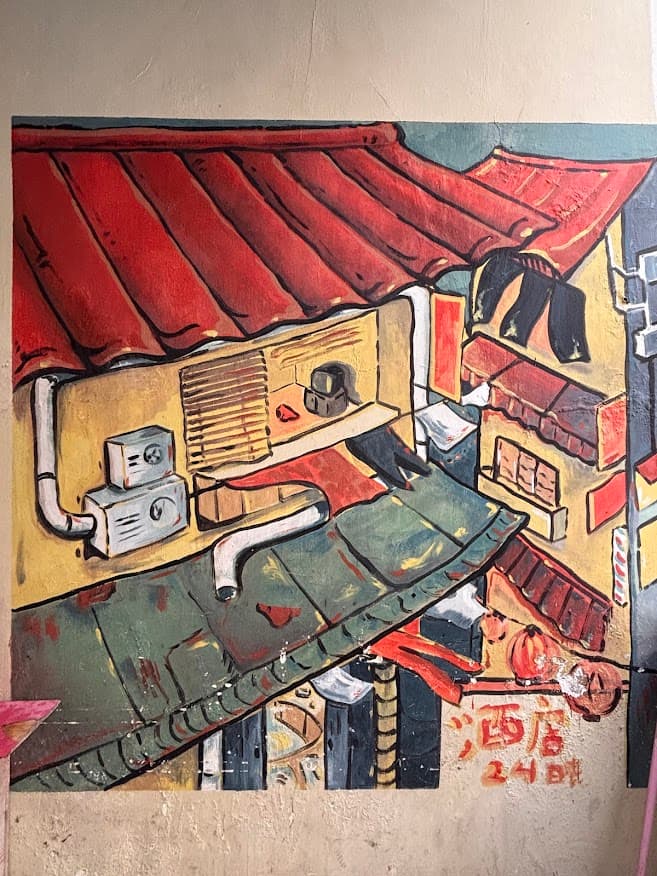
I haven’t been able to identify the specific artist or the official name but the colourful painting alone makes it pop-out.
Chinatown Heritage Centre
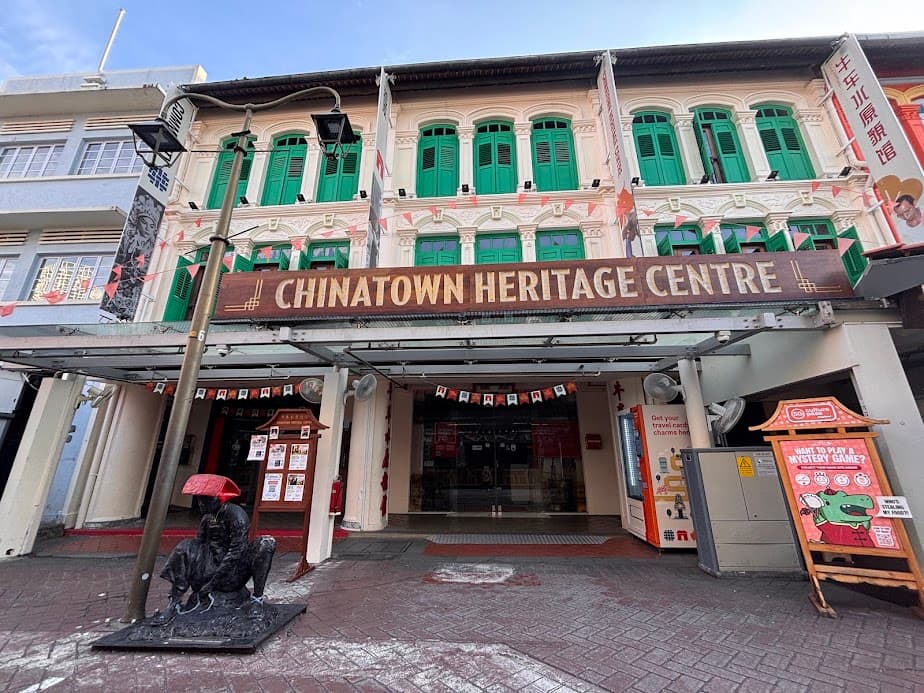
Located in three beautifully restored shophouses on Pagoda Street, this is perhaps the most immersive museum in the area. It features meticulously recreated living quarters from the 1950s, showing the cramped conditions of Samsui women, coolies, and medical practitioners. Walking through the narrow hallways and seeing the tiny bunk spaces makes the history feel much more real. It’s a sobering but necessary look at the grit required to build the Singapore we see today.
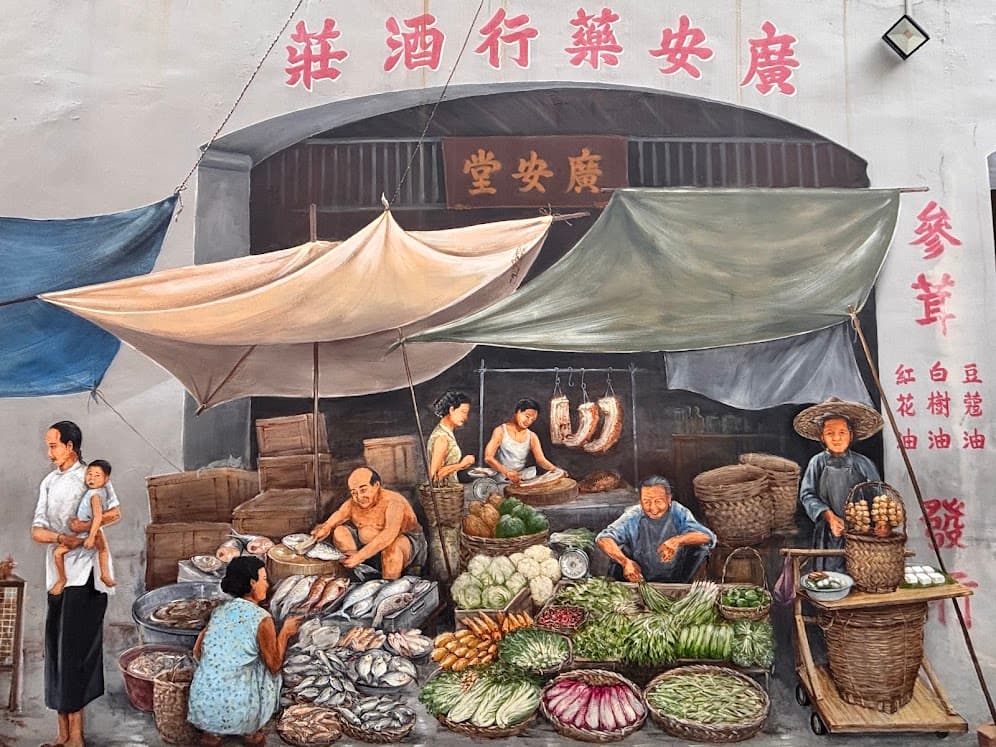
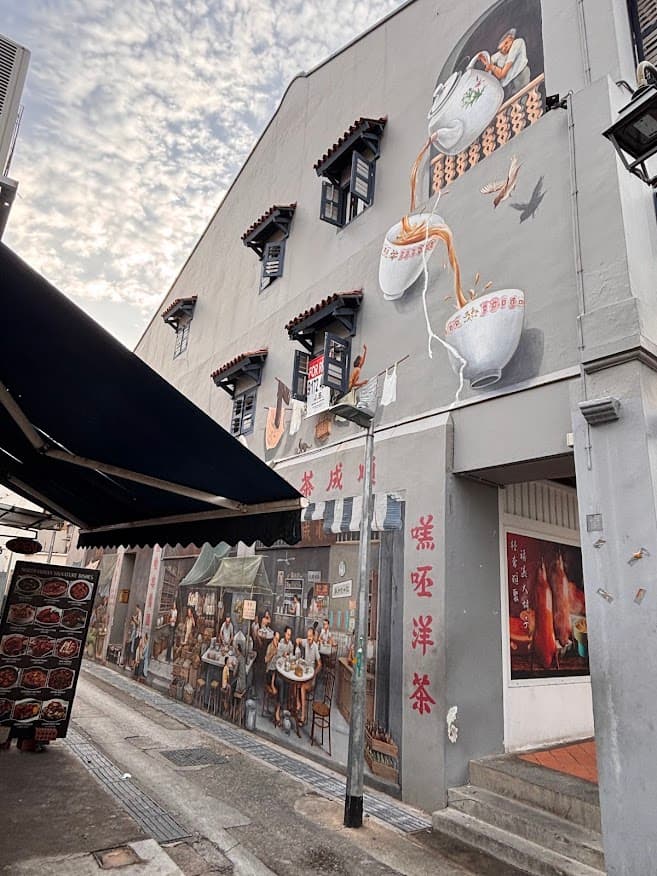
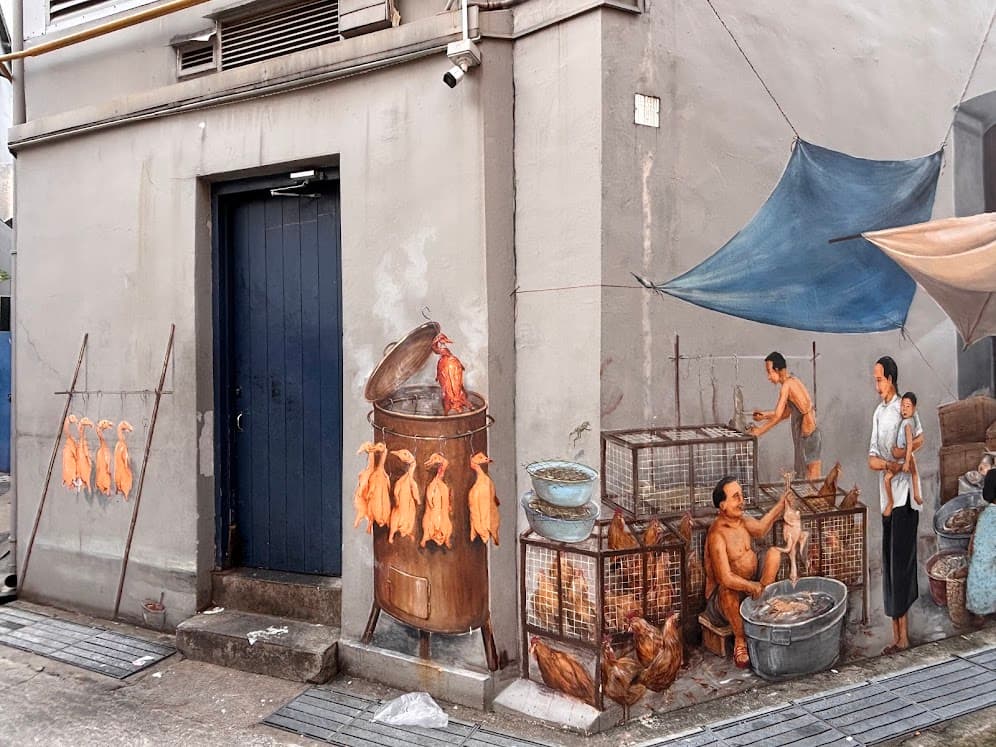
Stop 14. Chinatown Market (Dreams of Chinatown)
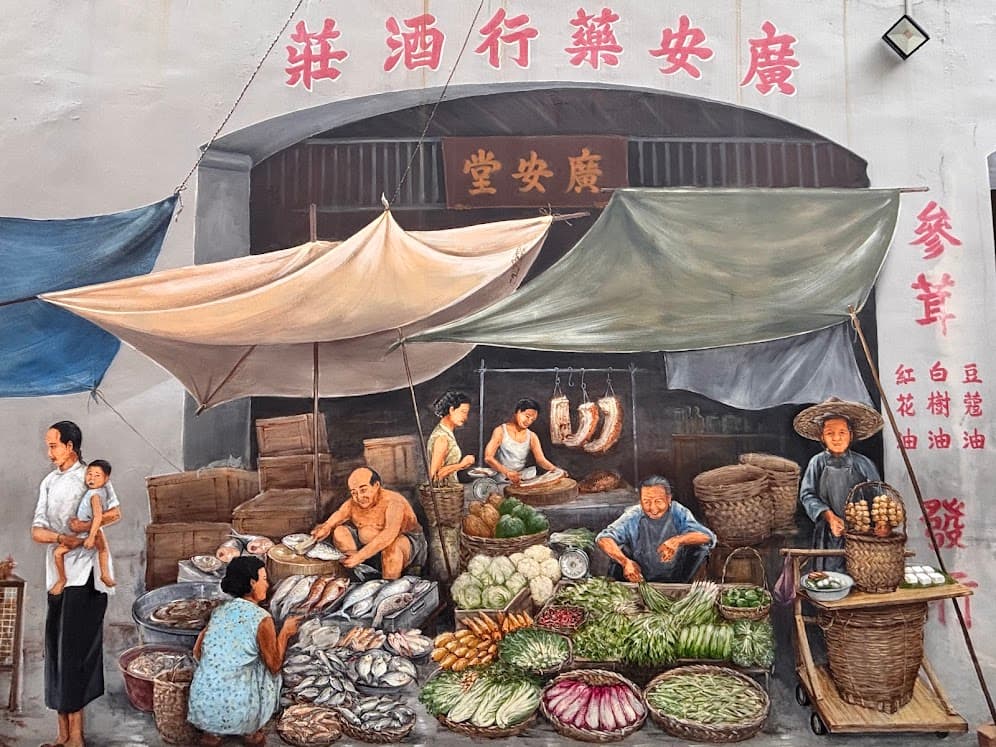
This three-story mural took Yip Yew Chong 24 days to paint. It is a “whimsical” reimagining of the 1970s/80s. Look for the traditional kopitiam, a shop selling snakes and monitor lizards on the ground floor, and a larger-than-life uncle pouring tea on the third floor.
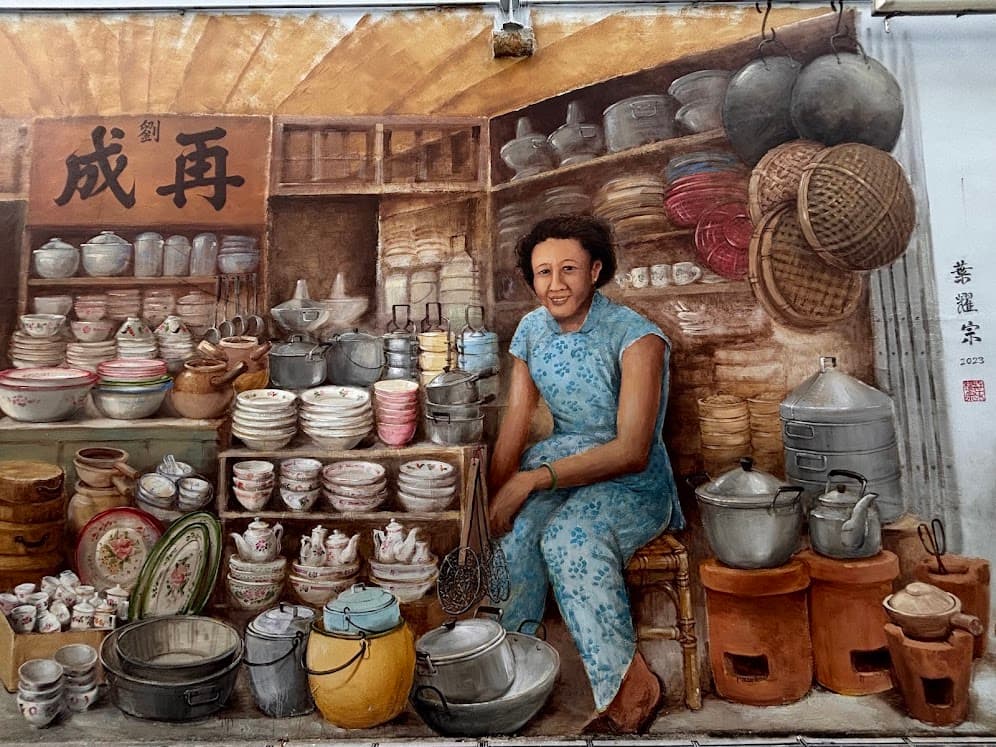
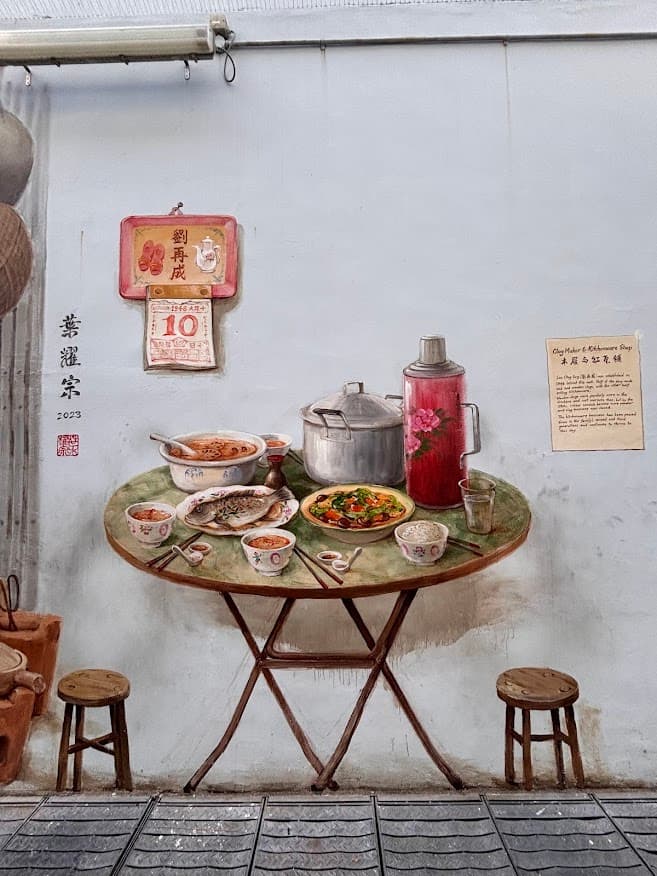
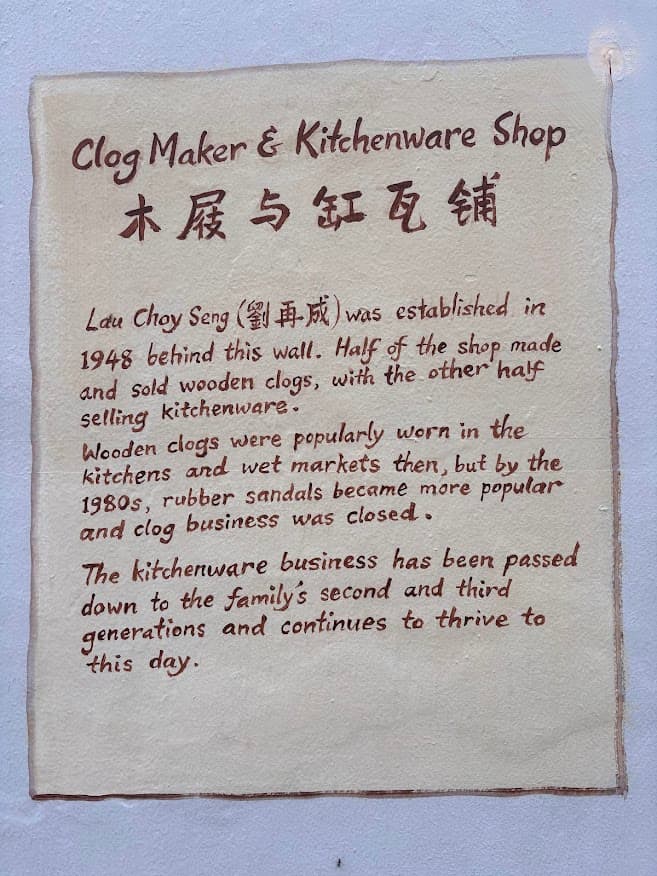
Stop 15. The Old Clogmaker & Kitchenware Shop
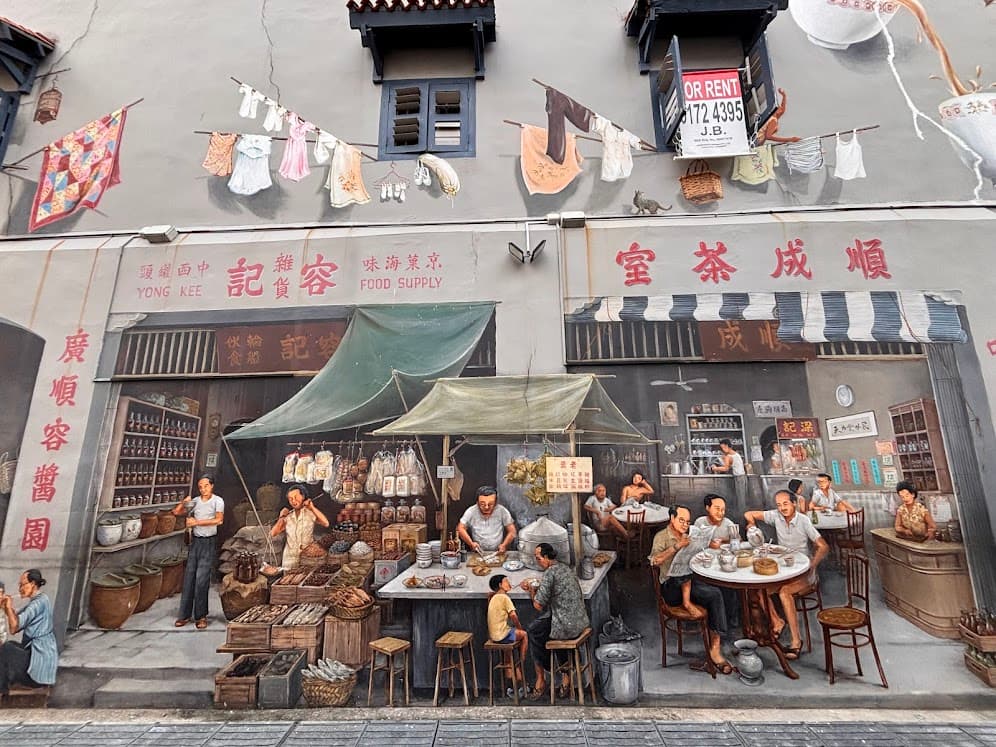
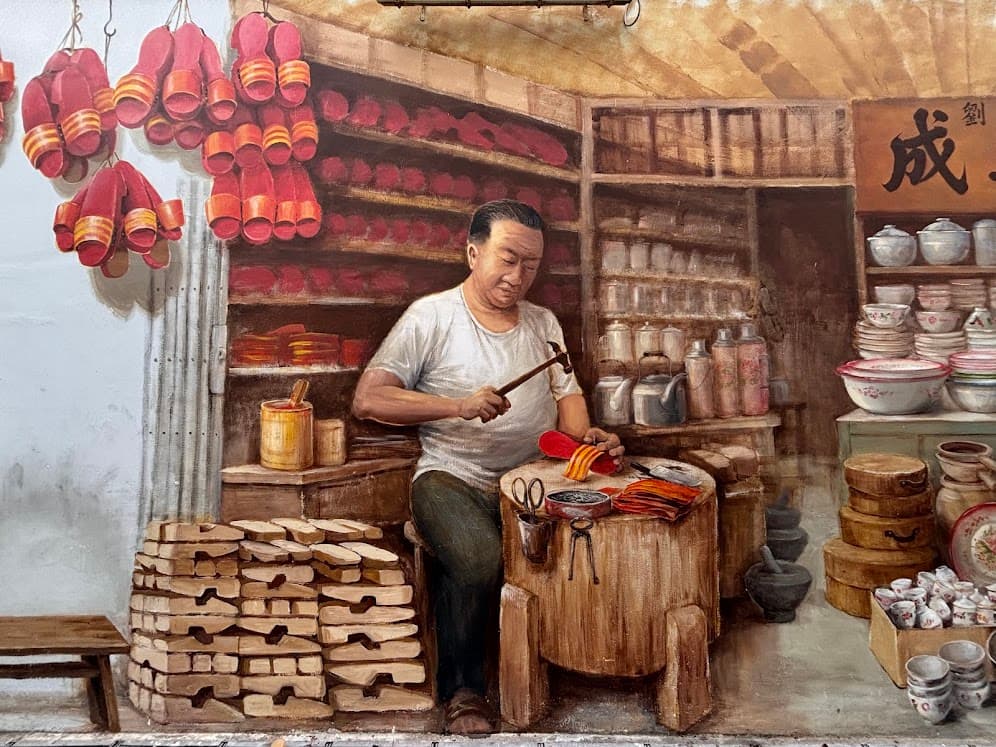
This mural sits behind the real shop Lau Choy Seng, established in 1948. It records the transition from wooden clogs (popular for wet markets) to rubber sandals in the 1980s. It’s good to know that the kitchenware business survives today through the third generation.
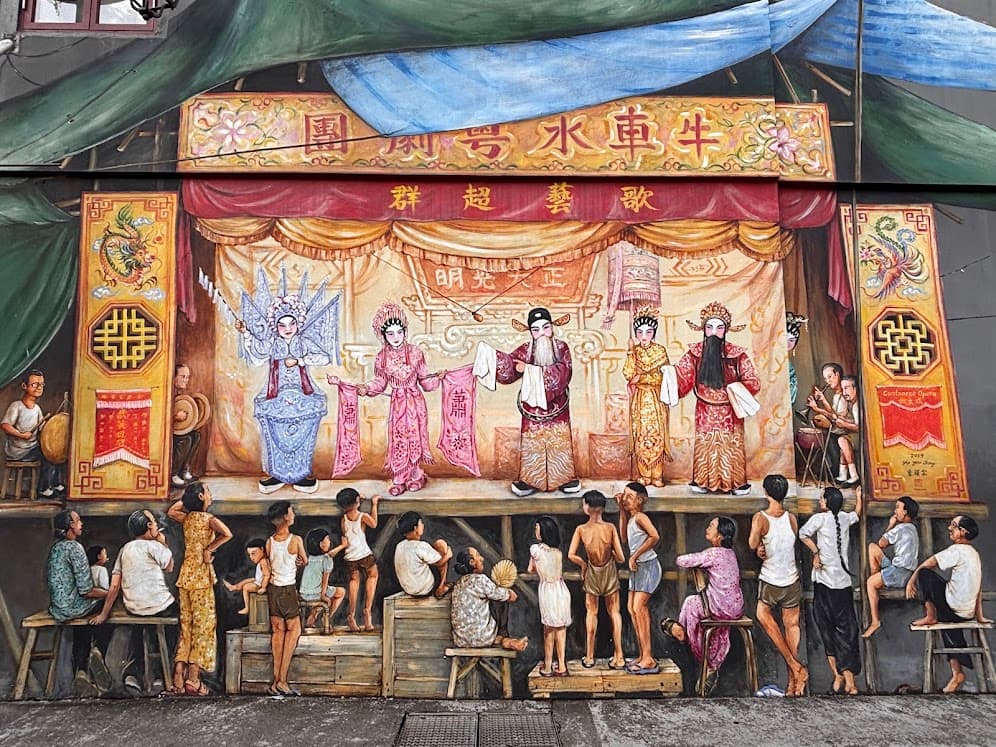
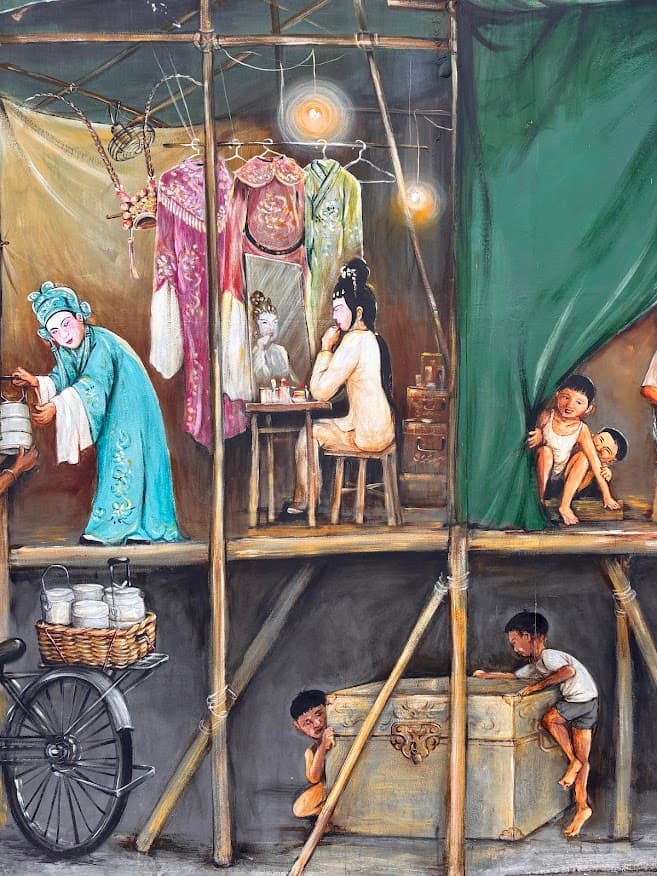
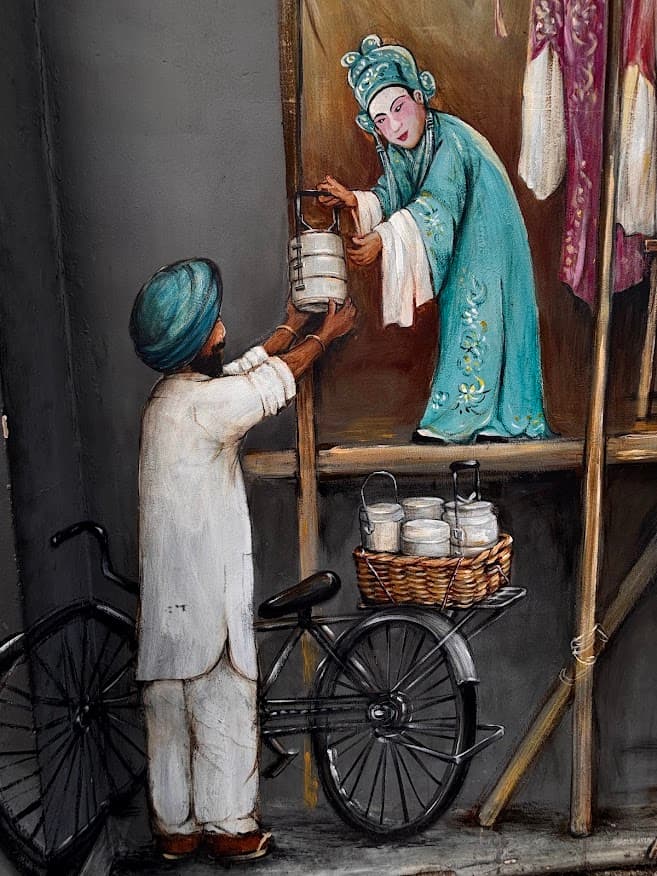
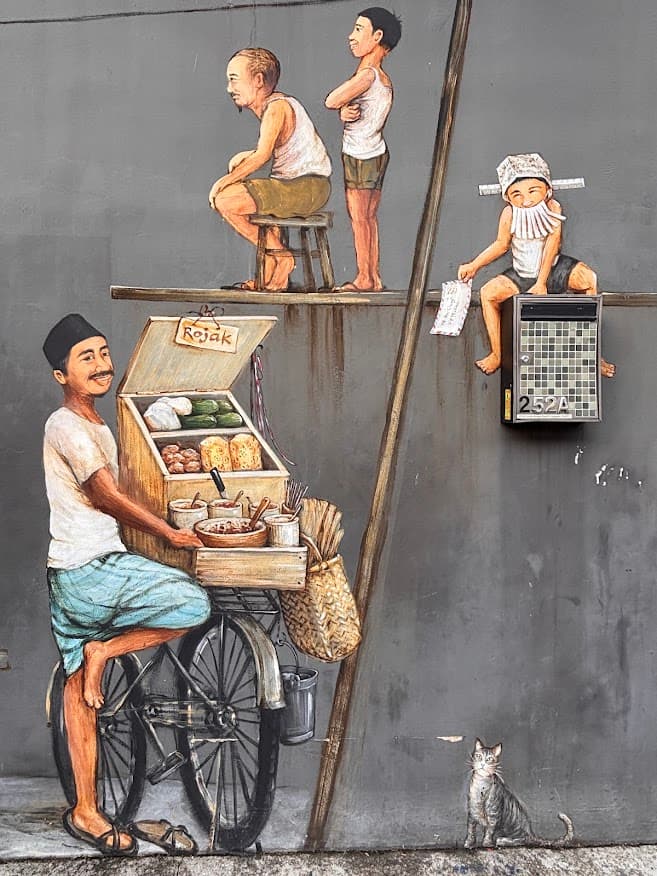
Stop 16. Cantonese Opera (做大戏)
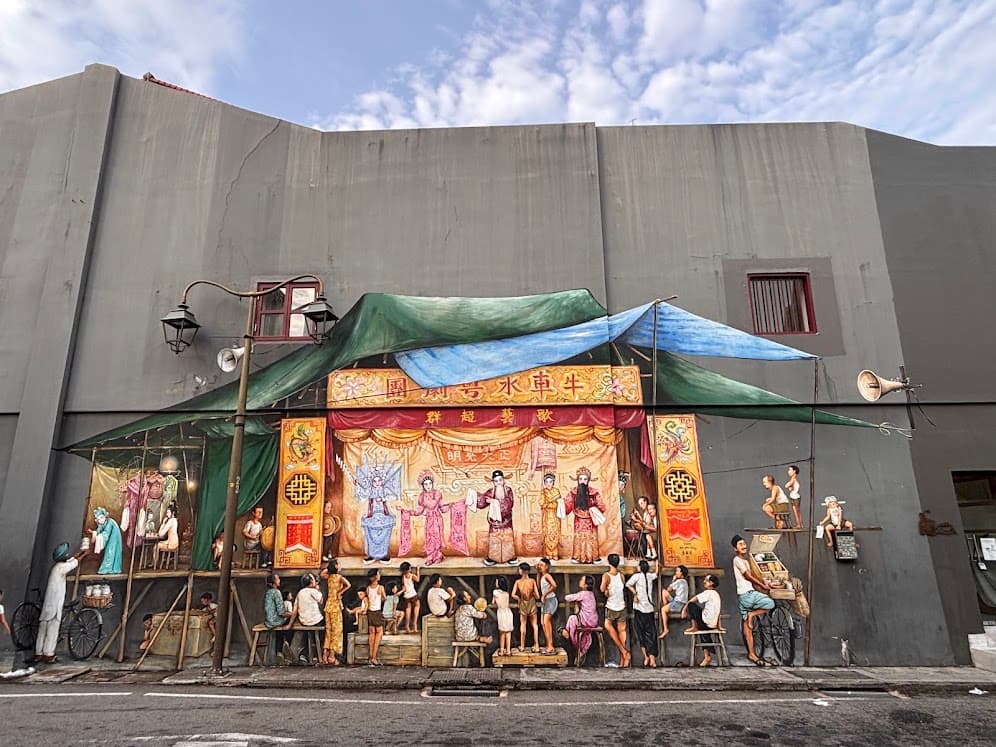
A self-funded project by the artist that doubled as a fundraiser for the Community Chest. It captures the dazzling costumes and “backstage” hustle the artist remembered from his childhood visits to Chinatown operas with his aunt. It includes intricate details of mobile food vendors that once fed the opera spectators. It includes intricate details of the mobile food vendors, such as the “Rojak man,” who once fed the opera spectators. I particularly love the meticulous details the artist included throughout the scene and the wonderful sense of playfulness captured in the young boys.
Sri Mariamman Temple
Gazetted as a National Monument, Singapore’s oldest Hindu temple was founded in 1827 by Naraina Pillai — a government clerk who arrived in Singapore with Stamford Raffles in 1819. In its early years, the temple served as a registry of marriages and provided shelter for new Indian immigrants arriving with little and knowing no one. The fact that it sits in the middle of Chinatown is not a contradiction. It’s a vivid, colourful reminder of the multi-racial harmony that has always existed here. It adds a layer of diversity to the trail that makes the “Old Singapore” story feel complete.
Stop 17. Paper Mask, Mamashop & Lion Dance Headmaker
Located at Mohamed Ali Lane, this mural beautifully illustrates the harmony of old Chinatown, where multi-racial tenant families co-lived within single shophouse units. The scene specifically features the Kadir family and their Mamashop alongside the Lee family, who were renowned lion dance headmakers. While you explore the details, try to spot the yellow toy tortoise—a sentimental inclusion representing a childhood gift the artist once received from a co-tenant.
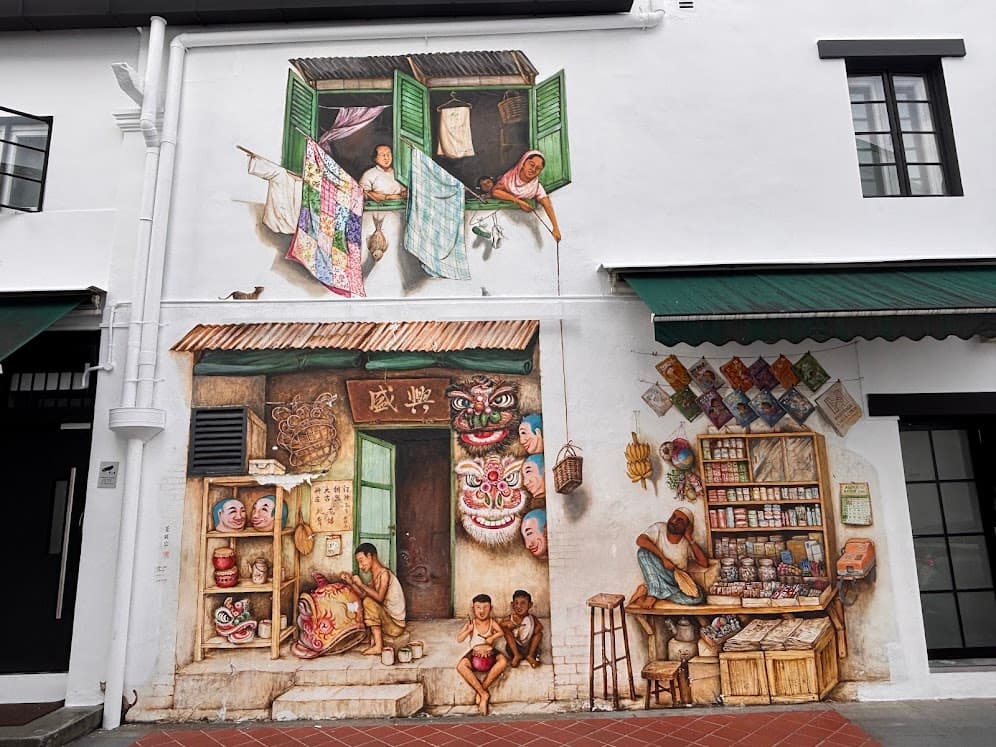
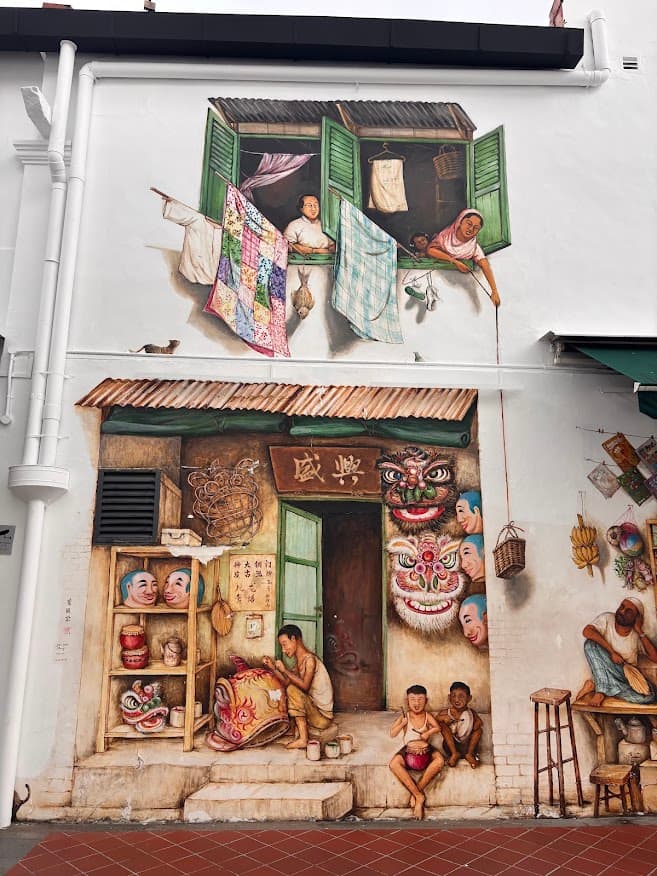
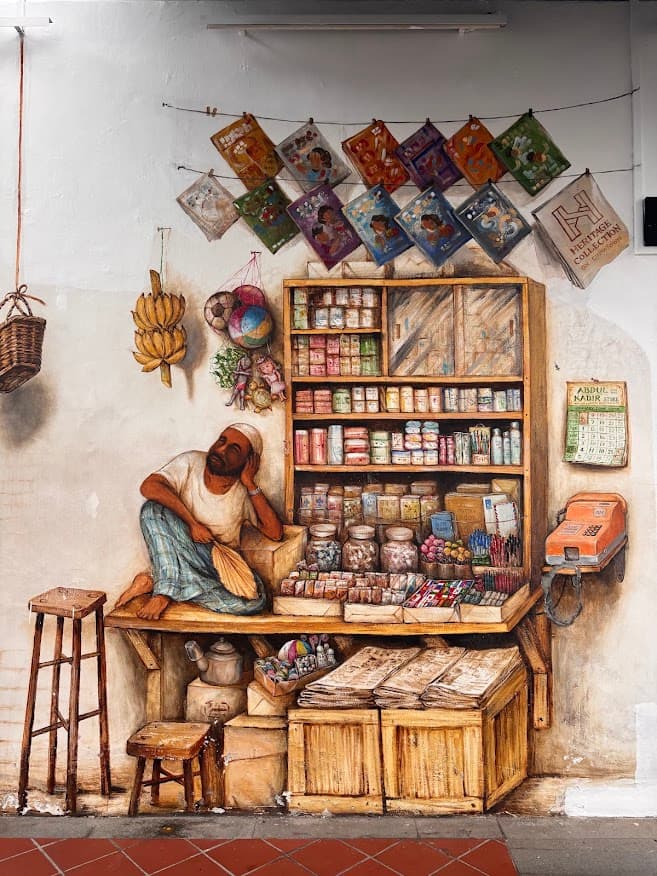
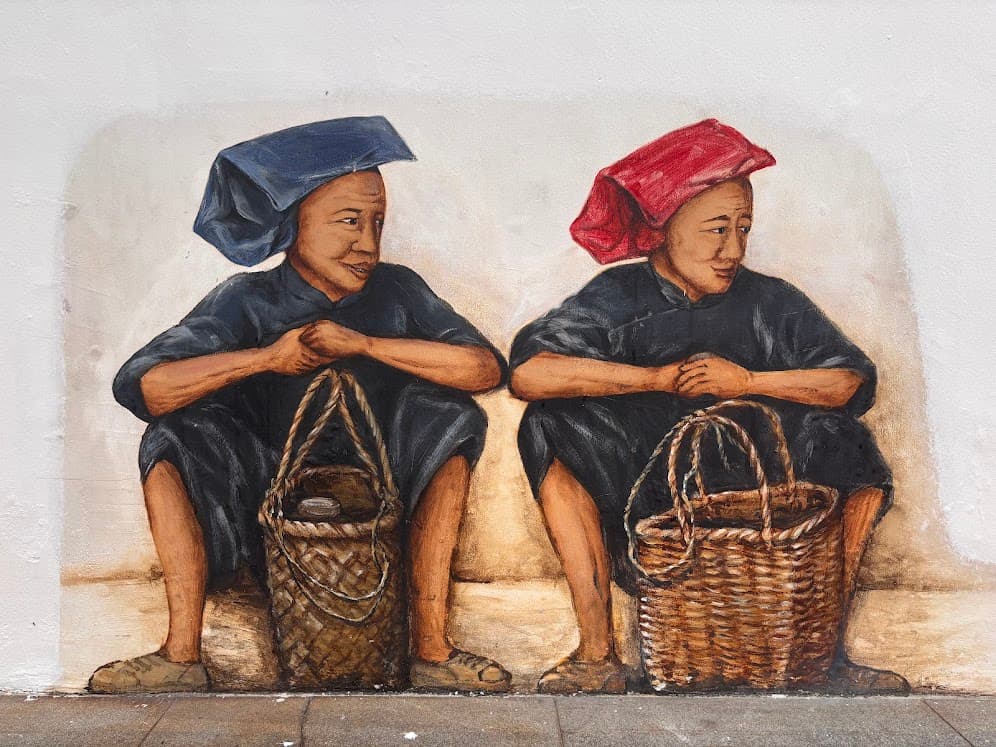
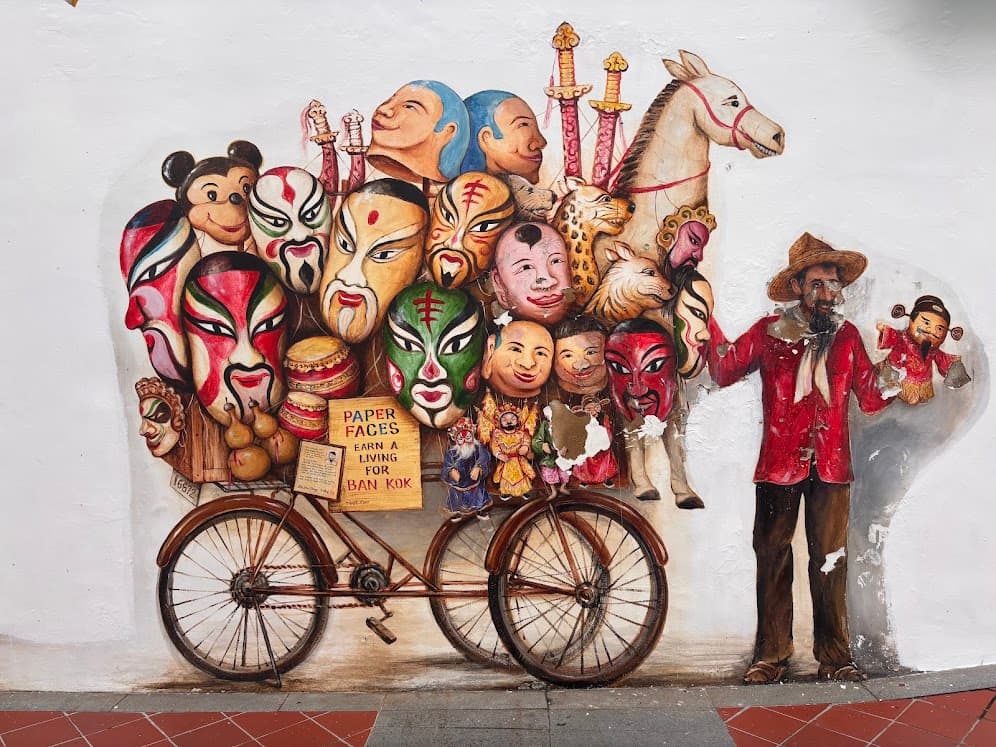
I personally find these mural scenes so whimsical and colorful; they are truly a joy to study. The more I walk this trail to uncover Yip Yew Chong’s work, the more endearing his storytelling becomes. Unfortunately, this brings us to his final mural on our journey, as the next stop features a different artistic voice.
Stop 18. Samsui Woman at Rest
Last but not least, the final stop on our trail, is a three-story masterpiece painted by artist Sean Dunston. Unlike many other depictions that show these “founding mothers” in their later years, Dunston’s work portrays a young Samsui woman in her prime. She is shown in a moment of rare leisure, seated and holding a cigarette—a detail that sparked significant national debate regarding heritage and public art.
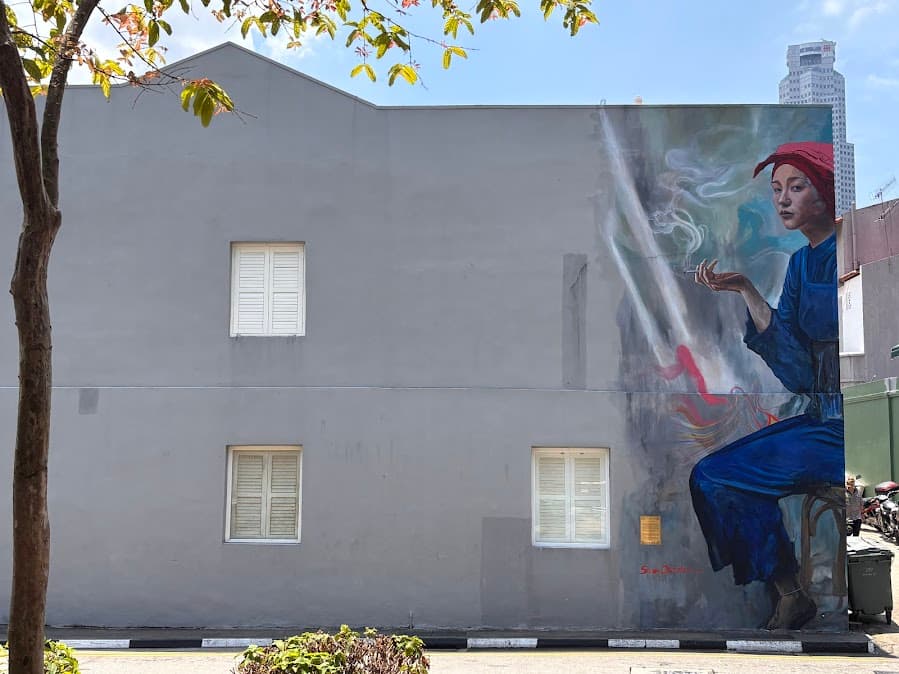
Following the public controversy, the authorities allowed the mural to remain untouched in its original form. Today, it stands as a bold tribute to the strength, youth, and authentic history of the women who helped build our skyline.
Maxwell Food Centre
Originally opened in 1928 as Maxwell Market — a wet market — it was converted into a food centre in 1987 and has been around for close to a century — through the Japanese Occupation, through urban renewal, through several waves of renovation.
This hawker centre is well known for Tian Tian Hainanese Chicken Rice — made famous by Anthony Bourdain — the queue is always long but it moves quite fast. However, if you already had your meal in Chinatown Complex Hawker Centre, you should now try the local desserts, there’s chendol, ice kacang or soya beancurd to name a few.
Final Stop: Maxwell MRT Station Exit 2
Once you’ve had your fill of history (and food!), simply head towards Exit 2 of Maxwell MRT Station to catch your train to your next destination.
However, if you aren’t quite ready for the day to end, you are perfectly placed to explore Tanjong Pagar which offers a completely different vibe. It’s a place where you can go on a heritage walk to admire Peranakan shophouses and the next, head up a skyscraper for a breathtaking panoramic view of the city. I’ve even included a stop where you can see what a local HDB (public housing) estate looks like up close. But don’t worry, I already have it all planned for you, check out my detailed and complete guide to Tanjong Pagar here.