Visiting Singapore for the first time?
This guide to local dos and don’ts ensures a stress-free trip. From essential requirements and rules to local habits and social norms, here’s what you need to know before coming to Singapore.
- How to Submit the Official SG Arrival Card (SGAC)
- Local Map App for Singapore Visitors
- Getting Around Singapore: Map, MRT and Bus Tips for Visitors
- Escalator and Travelator Tips in Singapore
- Eating at a Hawker Centre in Singapore: The Unwritten Rules
- Do You Tip in Singapore?
- What is Singapore’s GST and Service Charge? (The “++” on Menus)
- What’s Not Allowed in Singapore (and the biggest misconception)
1. How to Submit the Official SG Arrival Card (SGAC)
Submitting your SG Arrival Card (SGAC) is the most critical step to take before you fly.
This digital entry requirement replaced the old paper ‘white cards’ years ago and is now a mandatory process for all travelers entering Singapore. To be clear: this is a free immigration declaration, not a visa—so if your nationality requires an entry visa, you will need both.
- Where to Do It: Only use the official ICA website or the MyICA app shown below. The SG Arrival Card application is FREE.
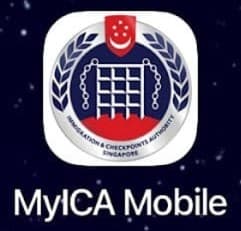
Avoid scams: Use the MyICA Mobile app to stay safe because there are many websites out there that looks like the official website. If you are asked for credit card details, you are on a scam “agency” site. Exit immediately—no payment or financial information is ever required.
How to fill in the SG arrival card on ‘mobile app’: A step by step guide
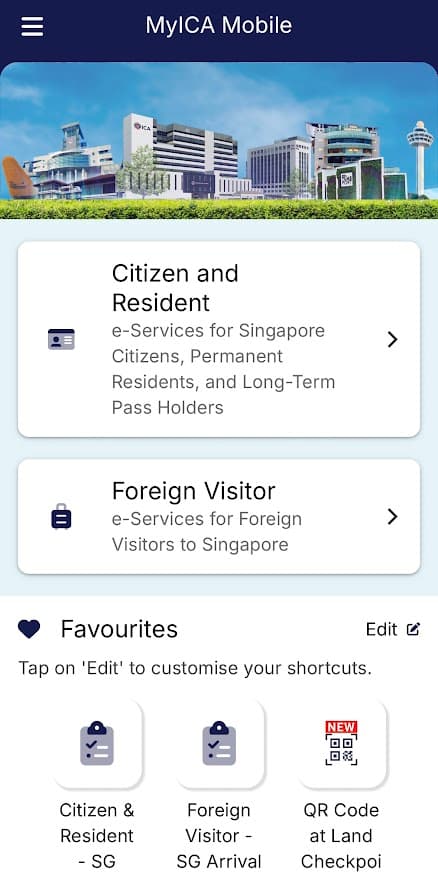
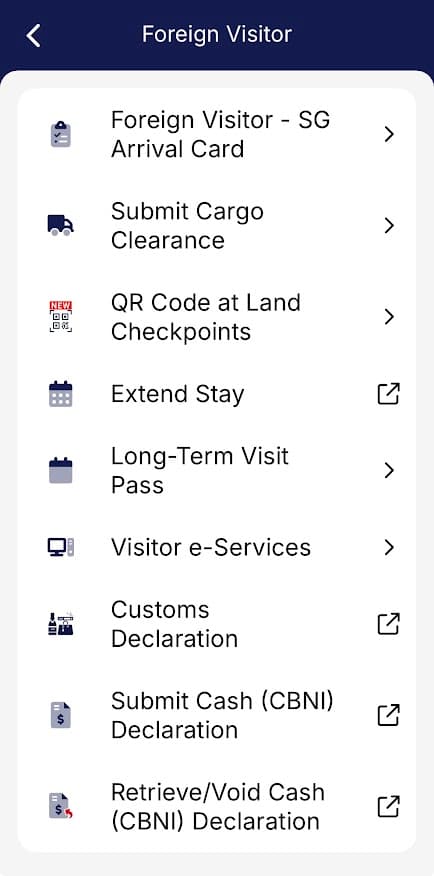
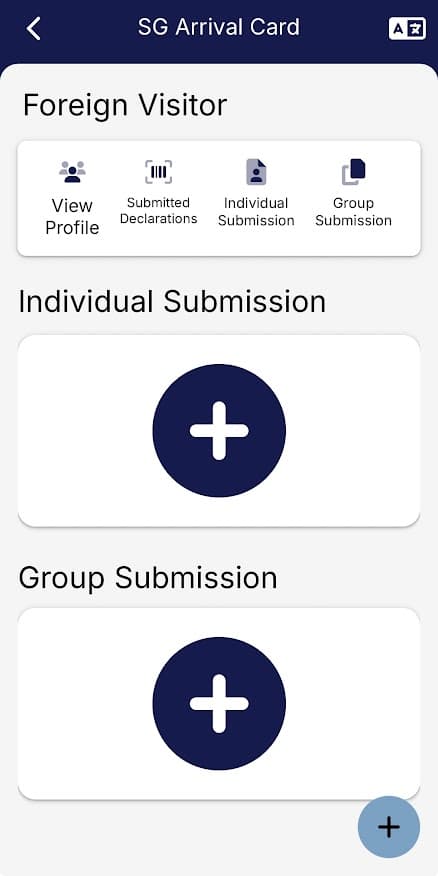
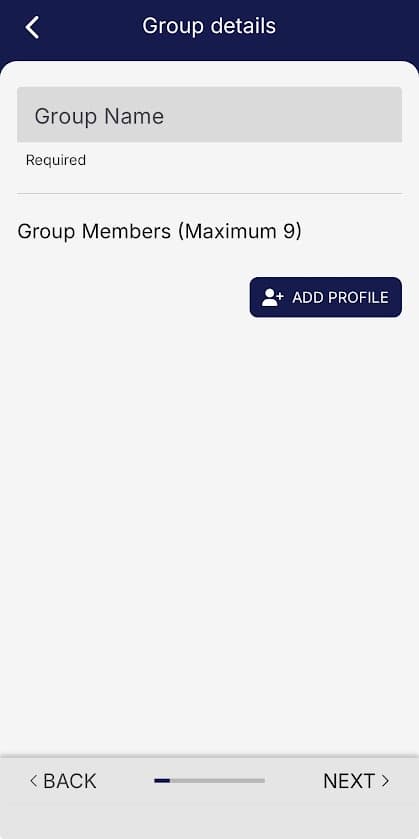
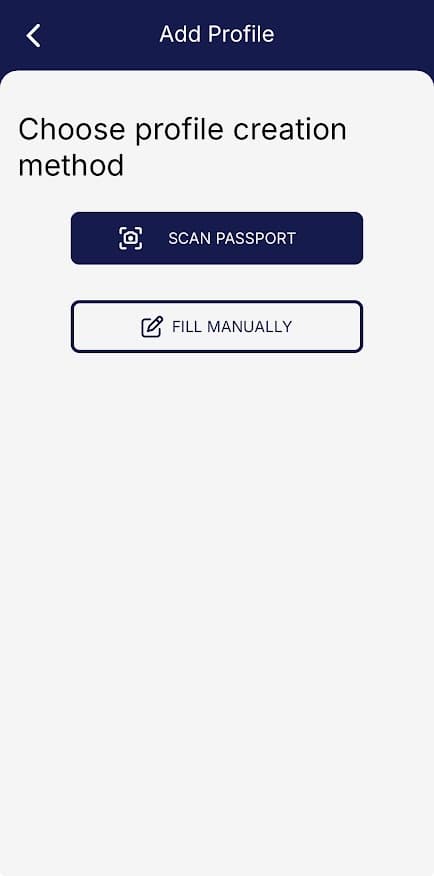
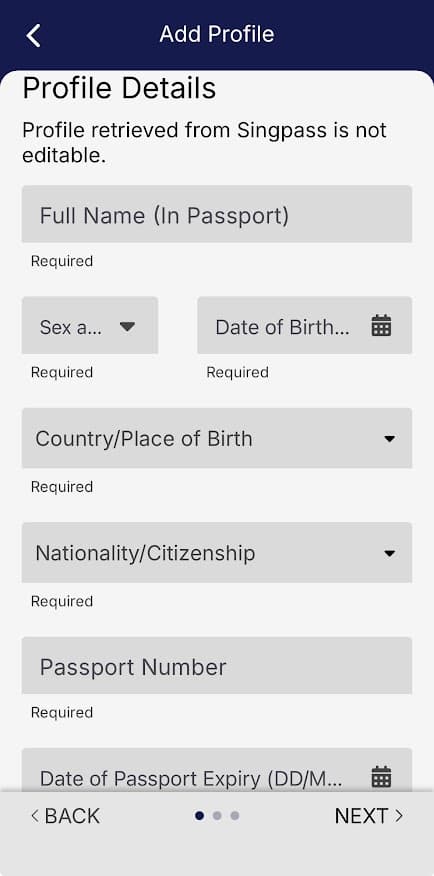
- Ease and Speed: It only takes a few minutes and it is very straightforward. It’s mostly just typing in your personal and travel details. Once you hit submit, you will receive an email confirmation almost instantly.
- When to Submit: Within 3 days of your arrival (including the day that you arrive in Singapore). For example, if you are planning to arrive in Singapore on 8 June, you can submit it from 6 June onwards.
- Why You Need It: You won’t be able to clear immigration or use the automated gantries without a confirmed submission in the ICA system.
Why you shouldn’t forget to do this: After a long flight, you’ll likely be tired and ready to get to your hotel. If you forget to fill in your SG arrival card, you’ll be pulled aside to fill it out at a counter, which is a major hassle and can take a long time if there’s a queue of others who also forgot to do it. So save yourself the stress and do it before you board the plane.
2. Local Map App for Singapore Visitors
Most visitors default to Google Maps — and it works fine. But if you want to navigate Singapore like a local, download OneMap. It’s built by the Singapore government and packed with features not found on other maps.
What I personally like about it is when you walk along heritage shophouses, Onemap shows you the shop number (unfortunately Google map does not show this). It is details like this that makes planning and getting around such a breeze.
Getting around
Search any address by postal code or building name — far more accurate for Singapore than other maps.
Locate nearby amenities instantly — hawker centres, parks, MRT stations, toilets, clinics — all pulled from official government data.
Multiple map styles — so you can switch views depending on what you need
Pinpoint accuracy for Singapore’s dense urban layout — especially useful in areas like Chinatown, Little India and the CBD where buildings are tightly packed and entrances aren’t always obvious on Google.
Directions for public transport and walking — Walking routes include sheltered paths and underground connections — a game-changer in Singapore’s heat and humidity that Google Maps doesn’t account for
Barrier-Free Access routing — if you’re travelling with a pram, wheelchair or elderly parents, it maps routes via ramps, lifts and covered walkways specifically.
It’s completely free
No subscriptions, no in-app purchases. Download it before your trip and use it for day-to-day navigation during your stay in Singapore. Having said that, the interface does require some getting used to however if you still prefer to stick with Google maps then by all means, use whichever you are comfortable with.
3. Getting Around Singapore: Map, MRT and Bus Tips for Visitors
Singapore’s public transport system is one of the best in the world — clean, affordable and easy to use. But there are a few things to know before you hop on.
- Boarding the MRT or Bus: Stand where the red arrows are below, which is at the sides of the MRT doors. Always let all exiting passengers out first before you board. NOTE: The doors will give a few warning beeps before closing — if you hear them quickening, don’t need to rush for it. There’s always another train in a few minutes.
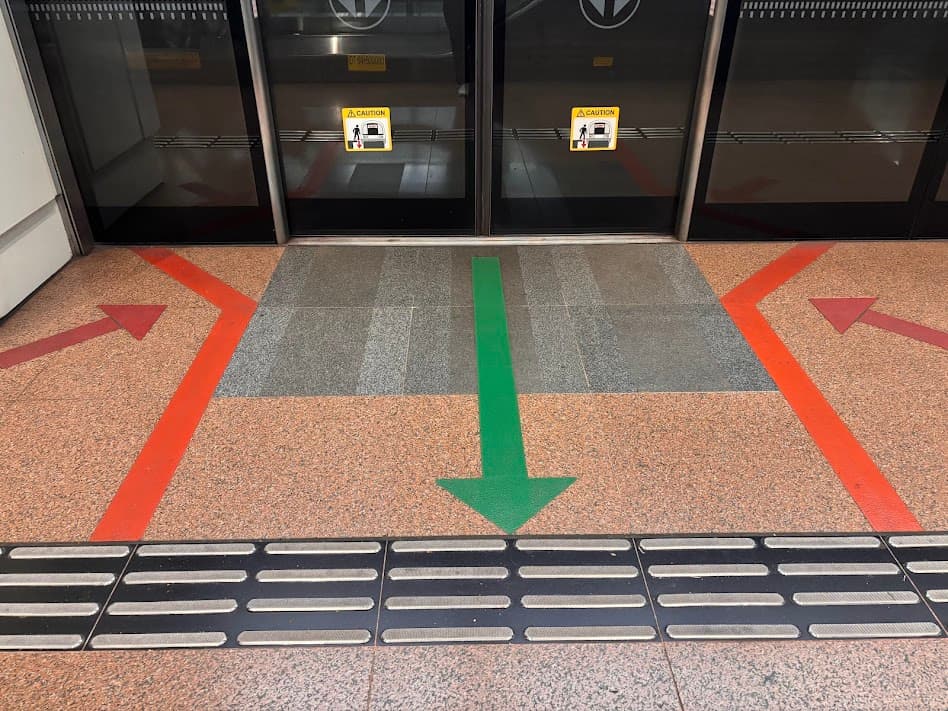
Stand to the side and let others off the train first.
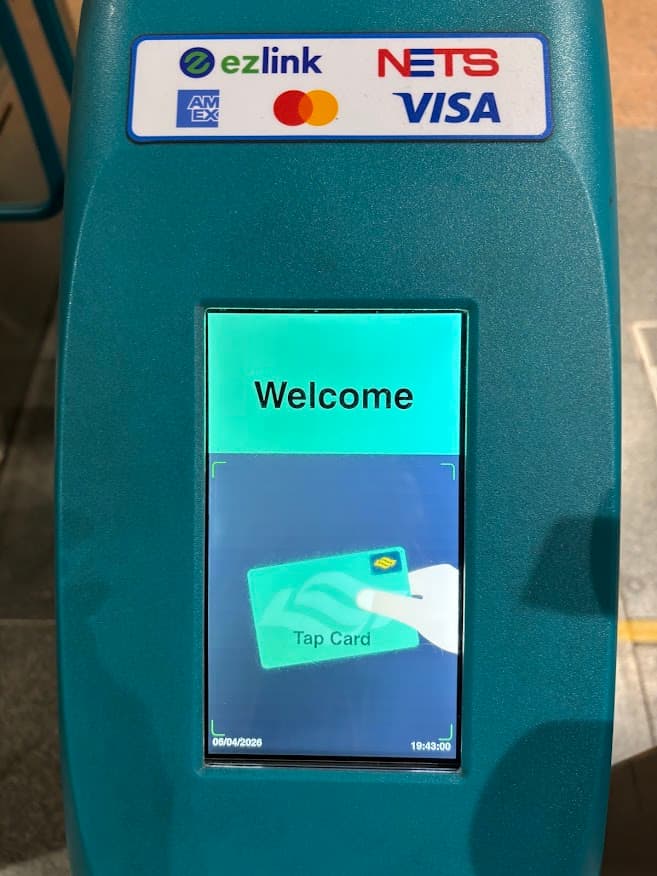
- Always Tap Out on Buses: While MRT stations have gantries at every exit to remind you to tap out, buses do not have these physical gantries, so it’s easy to forget. Remember to tap your contactless credit card or EZ-Link card on the reader at the exit door or you will be charged the maximum distance fare.
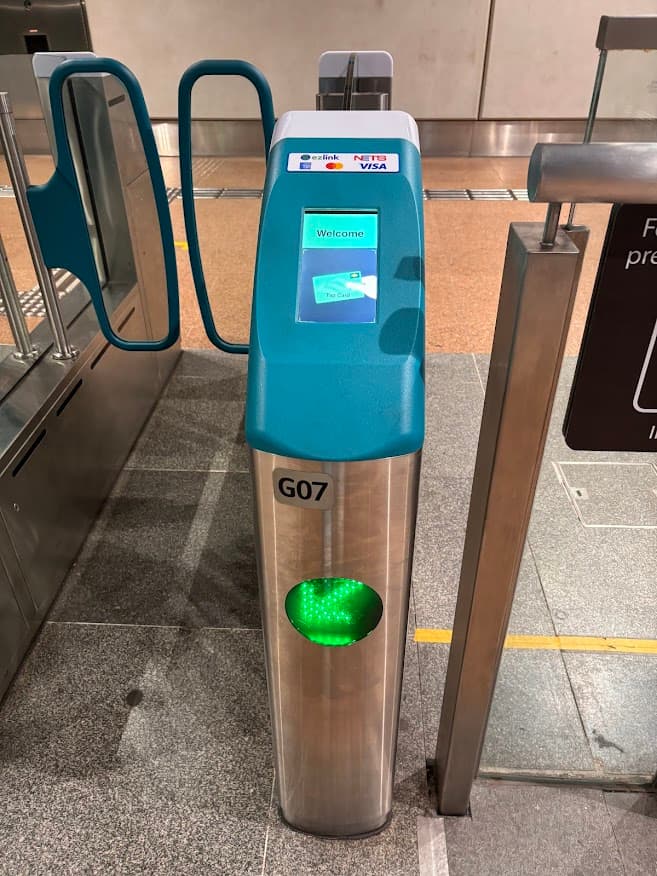
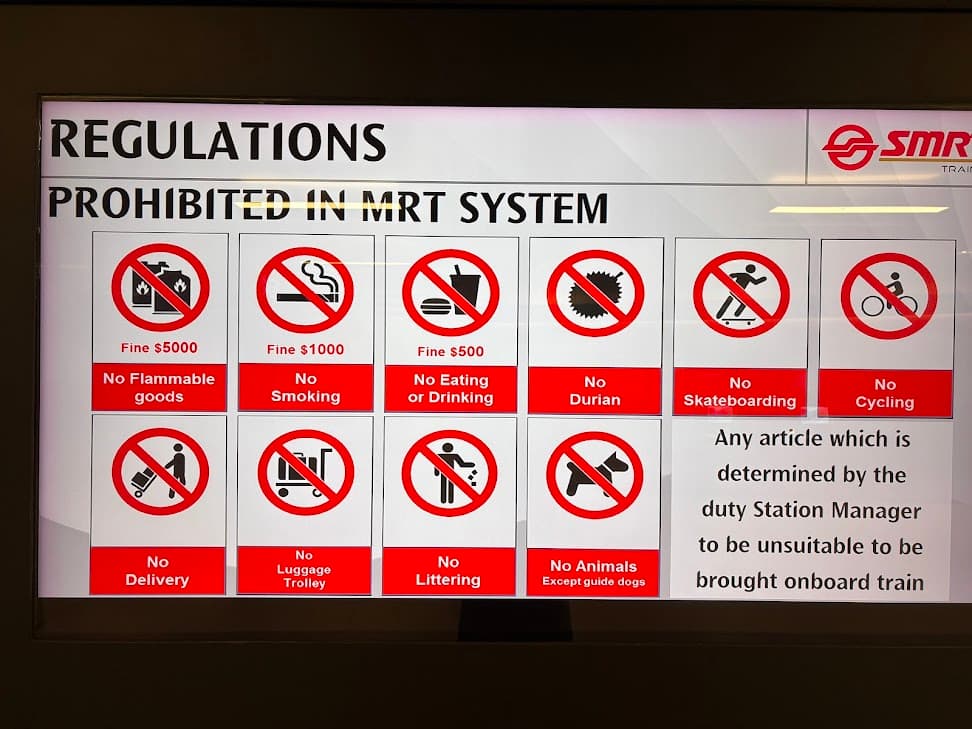
- No Eating or Drinking: You cannot eat or drink anything inside MRT stations, on trains or on buses. This is a strict offence and you can be fined up to $500. And that includes plain water and chewing gum too.
- No Durians on Public Transport: Yes, this is a real rule. Durians are banned on MRT and buses due to their strong scent. If you want to try the “King of Fruits,” — and you absolutely should — eat it at the stall where you bought it.
- Travelling During Peak Hours: If you have a large luggage or backpack, be mindful of the space you take up especially during rush hour (7:30 AM – 9:30 AM or 5:30 PM – 7:30 PM). Carry your backpack in front of you to give others more room. It does get busy during these hours but crowded by Singapore standards is still a far cry from the shoulder-to-shoulder crush you’d experience on the Tokyo or Dubai Metro.
- Use Any Carriage on the Train: Unlike some other major cities, the Singapore MRT does not have designated “women-only” carriages. All cabins are open to everyone, so feel free to board whichever one is closest to you. Just remember to let passengers off first before you step inside.
Now enjoy the rides and help us keep our buses and trains clean and litter free!
4. Escalator and Travelator Tips in Singapore
This one is simple but important.
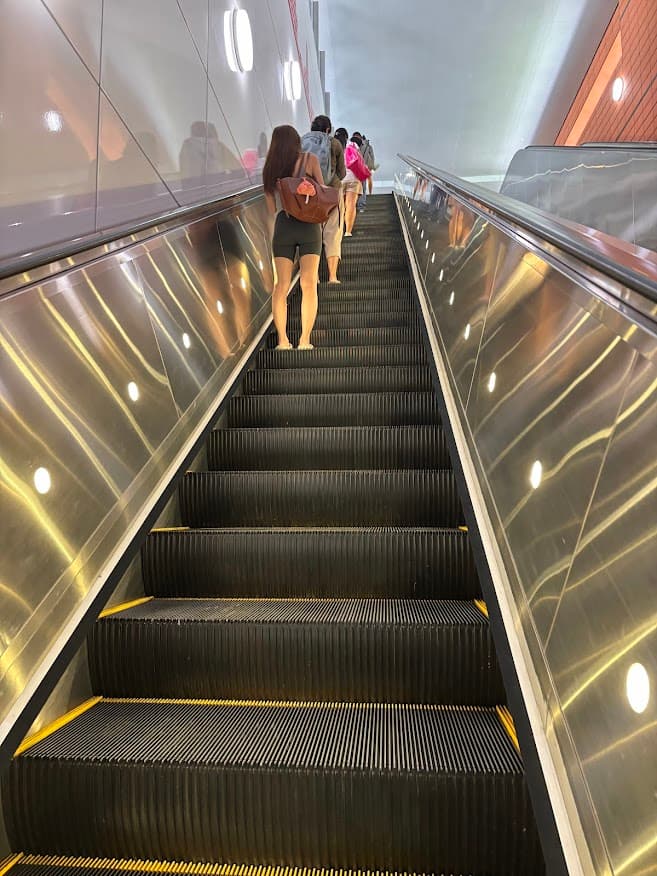
Stand on the Left: Whether you’re on an escalator in an MRT station or a shopping mall — stand on the left if you’re not walking. The right side is strictly for people in a hurry. This applies to escalators and the flat moving travelators. Stand left, walk right.
5. Eating at a Hawker Centre in Singapore: The Unwritten Rules
Eating at a hawker centre is a uniquely wonderful Singapore experience — but there are a few things worth knowing before you sit down.
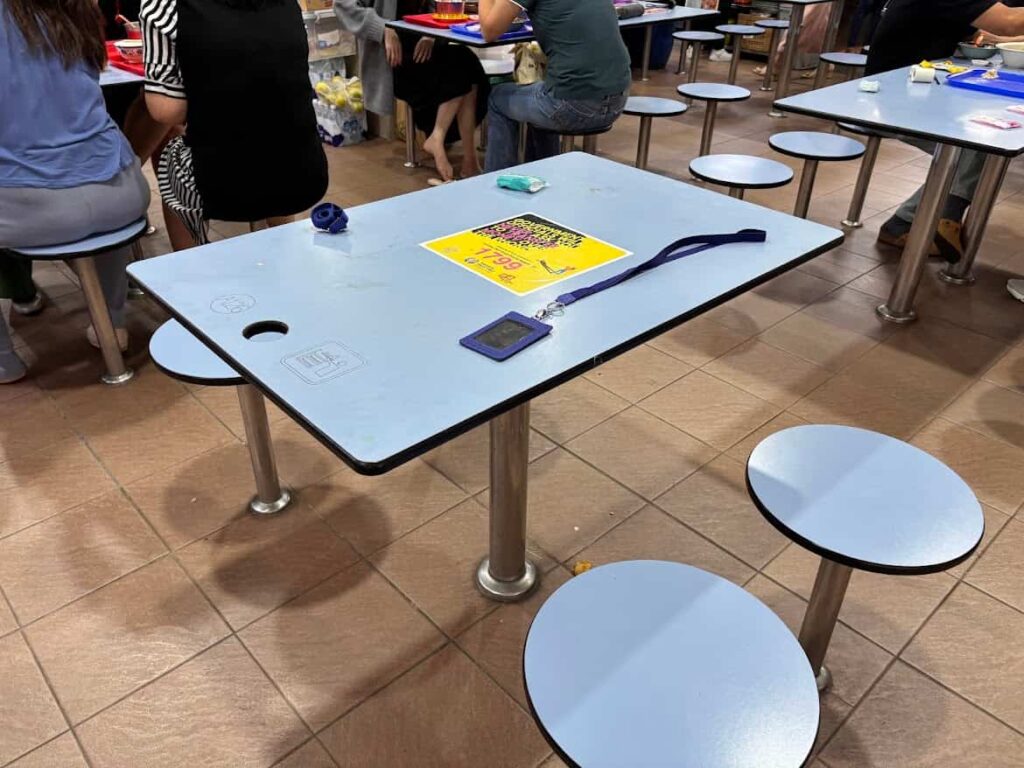
lanyard or tissue packet on a table means the seat is reserved.
- The ‘Chope‘ System: If you see a tissue packet, an umbrella or a business card on an empty table—don’t sit there. That seat is being reserved or ‘choped’. Find another empty table and leave your own tissue packet or water bottle there to ‘choped’ your seat before ordering your food.
- Sharing Tables: Space is tight during peak hours. If a table is half occupied, you can approach the diners and ask if you can share the table with them. It is socially acceptable at hawker centres, coffee shops and food courts to share tables with strangers.
- Tray Return is Mandatory: By law, you must return your trays and used crockery to the designated return points. Leaving them on the table can result in a fine.
- Leave the Table Clean: Do not leave behind a messy table. If you spill food or sauce, wipe it up. Throw your used tissues and scraps in the bin or together with your used crockery at the return points before you leave.
Check out my full guide on how hawker centres work in Singapore.
6. Do You Tip in Singapore?
Tipping is not expected or necessary in Singapore.
- At Hawker Centres: There is no need to tip hawkers. Locals don’t do it and hawkers don’t expect it.
- Taxis and Grab: Tipping is not required for taxis or Grab drivers either. That said, if your driver was particularly helpful with your luggage or gave you good local tips, rounding up the fare or letting them keep the change is a kind gesture. Entirely your call.
7. What is Singapore’s GST and Service Charge? (The “++” on Menus)
One thing that catches many first-time visitors off guard is the pricing at cafes and restaurants in Singapore. Unlike many countries where the price on the menu is what you pay, in Singapore you may notice “++” in small print at the bottom of the menu. Unfortunately, you’ll only know the final price when you pay up.
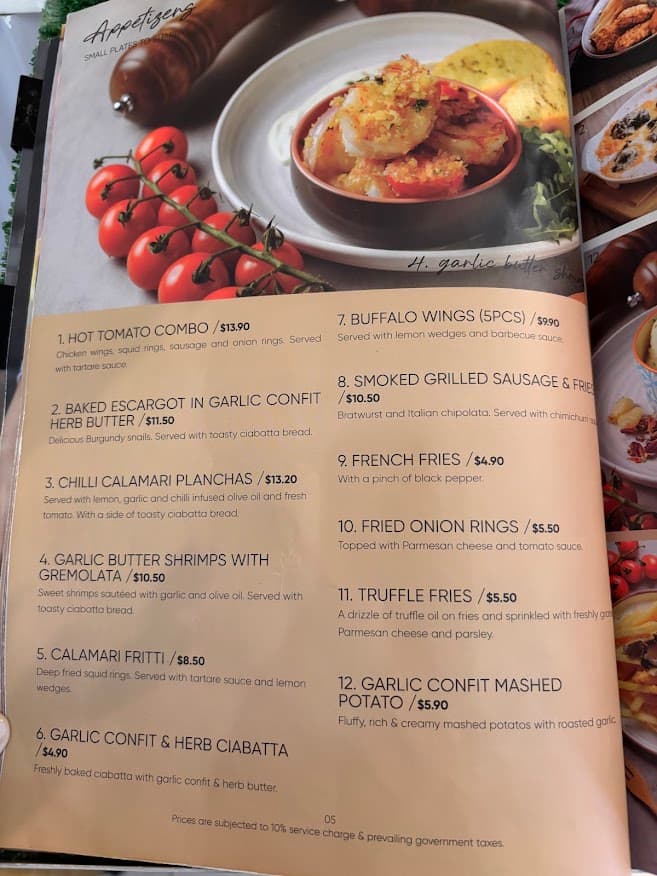
usually found at the bottom of menu page.
- The First “+” refers to a 10% Service Charge, which goes to the restaurant.
- The Second “+” refers to the 9% Goods and Services Tax (GST) which is similar to VAT.
- The Maths: If your meal costs $20, a 10% service charge brings it to $22. The 9% GST is then calculated on this amount, bringing your total to $23.98. In short, your final bill will be about 19.9% higher than the menu price.
The good news: at hawker centres, coffeeshops and food courts, there is no service charge and no GST. What you see on display is exactly what you pay.
8. What’s Not Allowed in Singapore (and the biggest misconception)
Singapore is famous for its rules. While some are exaggerated, these are the ones you must take seriously:
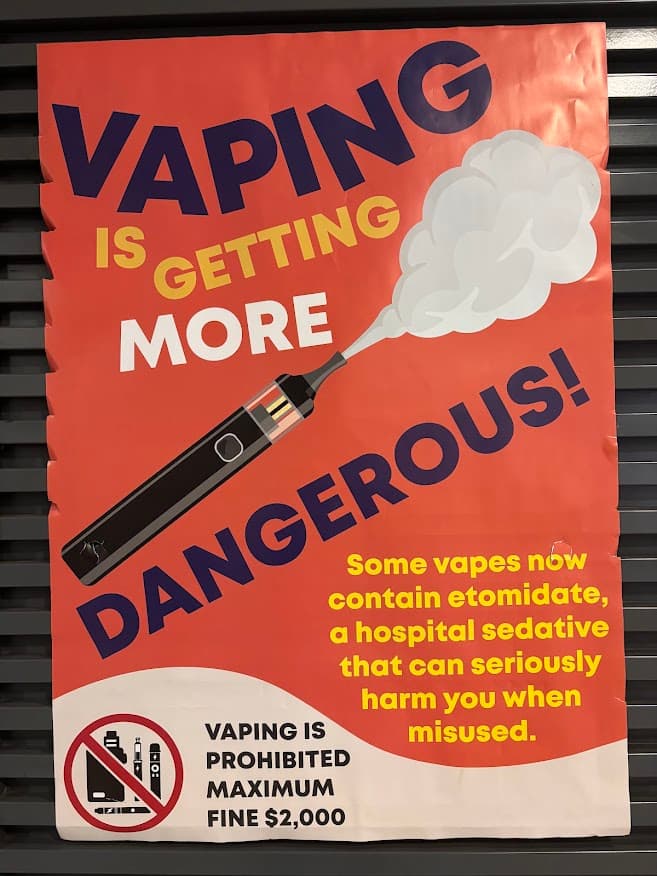
- Vaping (Zero Tolerance): Vaping is 100% illegal. Possession, use or even transiting with a vape can lead to a fine of up to $2,000.
- Smoking in Singapore: Only smoke in “Yellow Boxes” or marked smoking corners. Smoking under shelters, at bus stops or near building entrances is illegal.
- Littering and Spitting: These are strictly enforced. Singapore is clean because littering and spitting in public are both fineable offences. Even small items like cigarette butts or tissues must go in a bin.
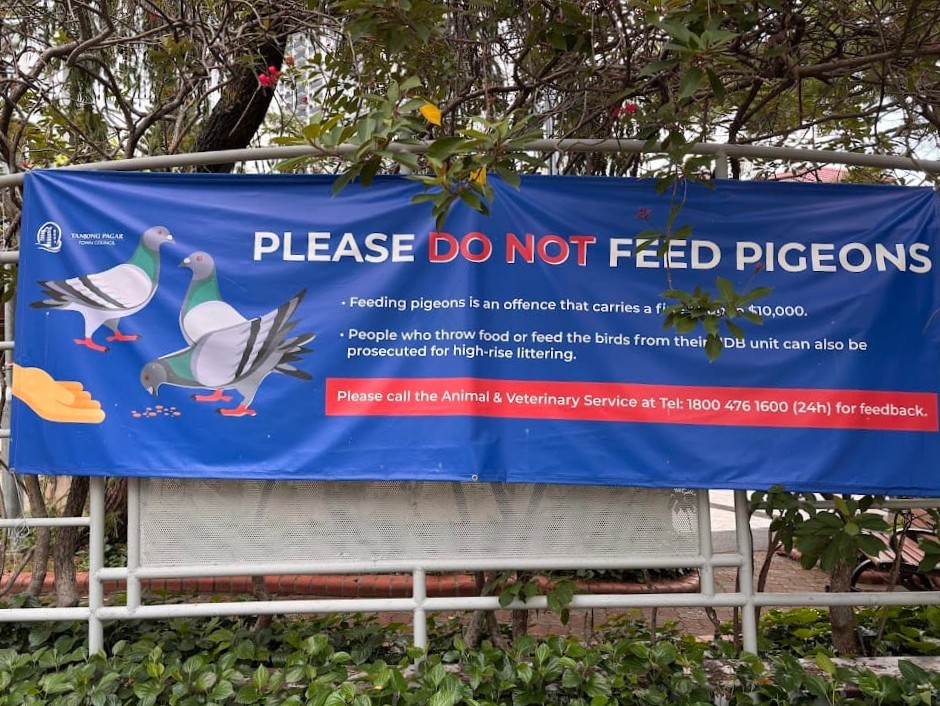
- Feeding of birds: Under the Wildlife Act, the penalty for a first-time offense of feeding any wild animal—including pigeons and crows—is a fine of up to $5,000. For repeat offenders, the maximum fine increases to $10,000. Recent cases in early 2026 have seen significant fines handed down for those who repeatedly ignore these rules:
- In March 2026, a woman was fined $9,000 for feeding pigeons 17 times.
- In February 2026, a 71-year-old woman was fined $3,200 for feeding birds despite previous warnings.
- The Chewing Gum Ban: And here’s the biggest misconception about chewing gum. Chewing the gum itself is fine but selling it is illegal. So you won’t find it in supermarkets or convenience stores. However, nicotine gum or sugar-free dental gum can be bought from a registered pharmacist and the pharmacist will check your ID and record the purchase, so bring your passport if you intend to buy some. If you bring some for yourself from your home country, you can chew it in Singapre but don’t spit it on the ground or stick it onto public property—that is a fineable offence.
- Backstory: The ban dates back to 1992, largely triggered by vandals sticking gum on MRT door sensors — causing repeated train delays. What started as a practical solution became one of Singapore’s most internationally recognised laws.
- My take: In hindsight, I would say that’s a good call because there’s nothing quite like the unpleasant surprise of stepping on gum or reaching for a handrail and finding a chewing gum stuck there. I would hate getting caught in a sticky situation (pun intended).
Enjoy Your Singapore Adventure
By keeping these simple dos and don’ts in mind—and getting your SG Arrival Card sorted early, you can spend more time enjoying the incredible food, culture and sights that make this city so unique. Safe travels and enjoy every bit of your stay!