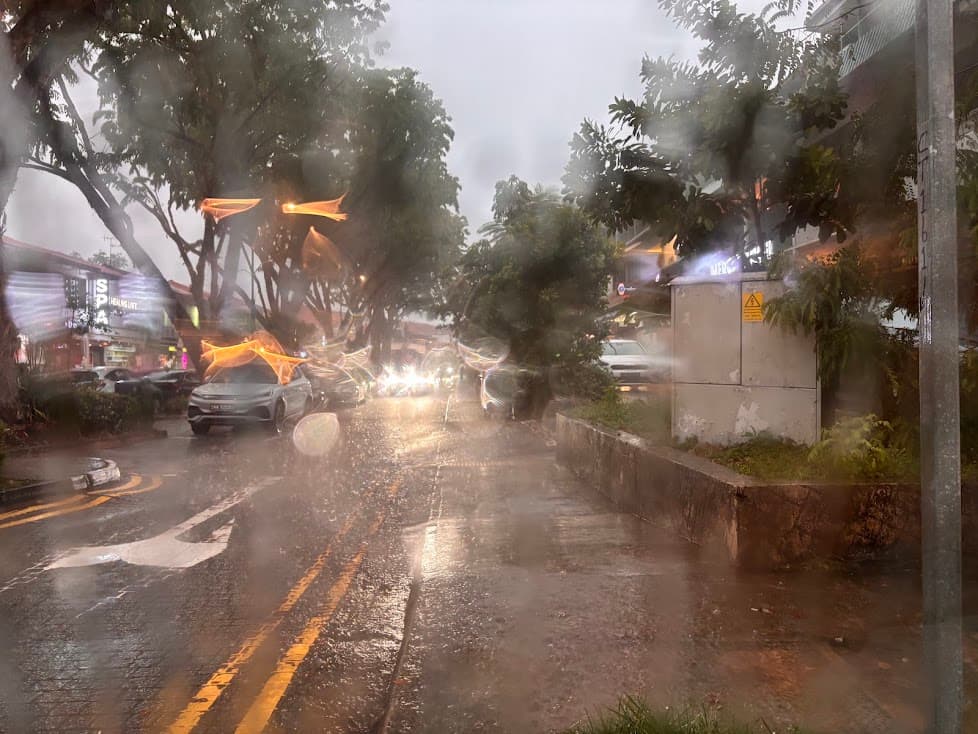

Most travel guides will tell you the same thing about Singapore’s weather: “It’s hot, humid and rains in short bursts.”
Having lived here for so long, I know this description is not only partly true but it’s far too simplistic and sets the wrong expectations for visitors.
Singapore experiences a tropical rainforest climate throughout the year. This means high humidity year-round, warm temperatures and rainy days and knowing the past weather trends can help you plan a better trip.
Understanding Singapore’s Tropical Weather
After looking through 10 years of actual climate data from Singapore’s Meteorological Service (MSS) and data.gov.sg, I will show you that Singapore’s weather is much more varied than most people think. Yes, there are sudden afternoon showers — but there are also periods where it can rain heavily for hours on end.
I analysed four practical indicators of weather data taken from 2016–2025:
- Rainfall volume
- Number of rainy days
- Average maximum temperature
- Bright sunshine hours
The goal here is not to predict the weather perfectly — because Singapore weather can still be unpredictable — but to help you understand Singapore’s tropical weather, set the right expectations and plan flexible itineraries with contingencies.
Singapore Rainfall by Month — Why Total Rainfall Matters
One of the first things I analysed was total monthly rainfall.
Why Knowing Rainfall Volume Is Useful?
Rainfall volume helps you understand how wet a month can potentially become. Higher rainfall months may mean:
- longer periods of rain,
- stronger thunderstorms,
- sometimes raining a few times a day,
- wetter outdoor conditions,
- and reduced visibility for skyline views.
Understanding this data can be useful when planning:
- walking trails,
- outdoor attractions,
- or photography-heavy itineraries,
For this section, I created yearly rainfall charts from 2016–2025, along with a 10-year average mean to better show the overall pattern.
The 10-Year Average Data
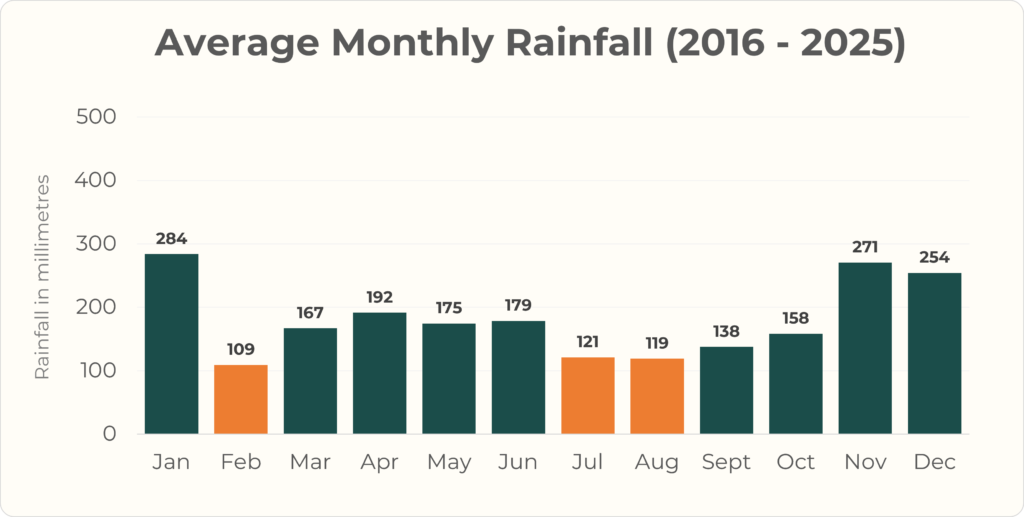
If you are wondering which months to visit Singapore, I’ve highlighted in orange, the 3 months which record the lowest total rainfall volumes of the year, February, July and August. These three months are your safest bet if you want to avoid heavy downpours.
Rainfall can vary from year to year
However, these very same months February, July and August may experience occasional anomalies with unusually heavy rainfall.
To make comparisons easier, I’ve standardised the maximum rainfall scale on the y-axis at 500 mm. This allows a clearer visual comparison across all 10 years.
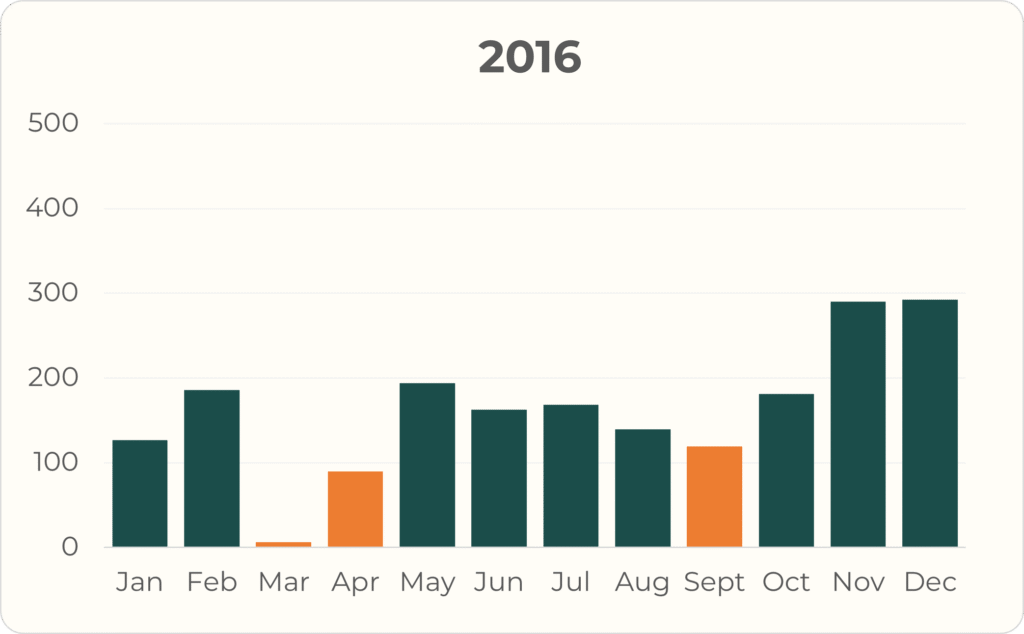
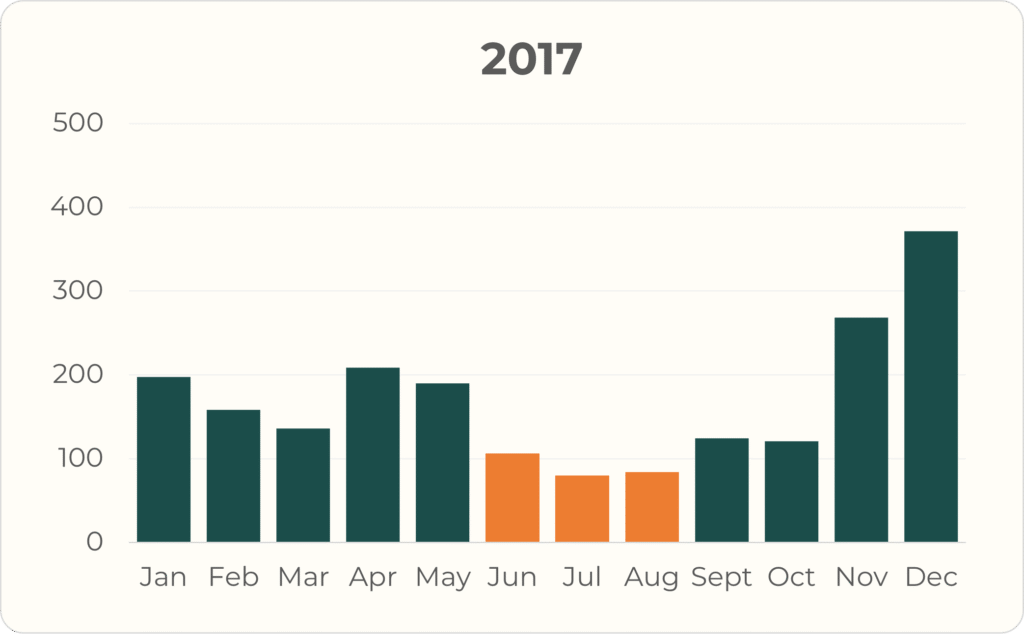
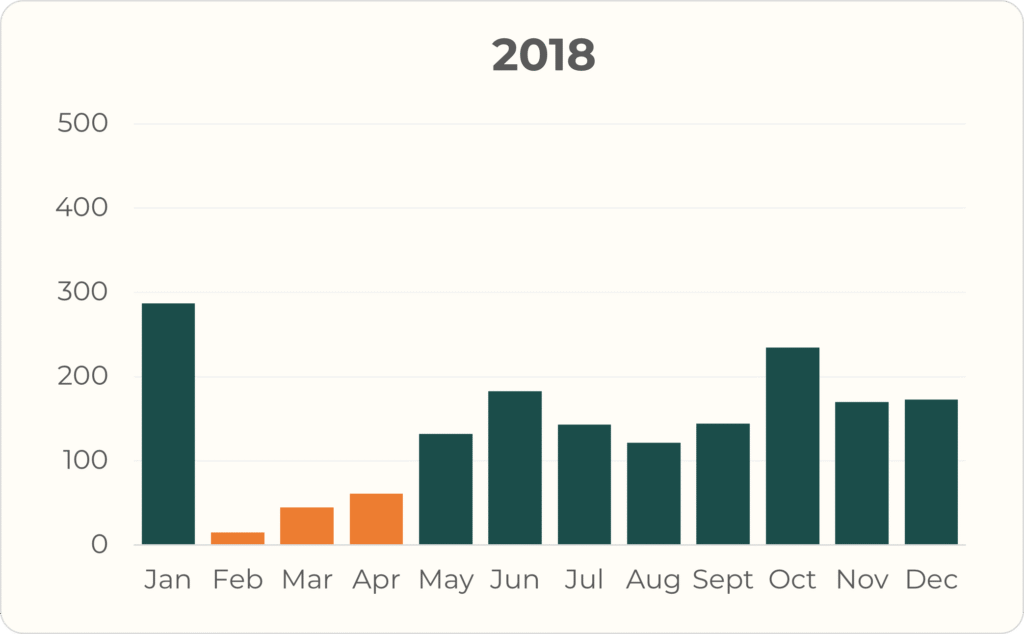
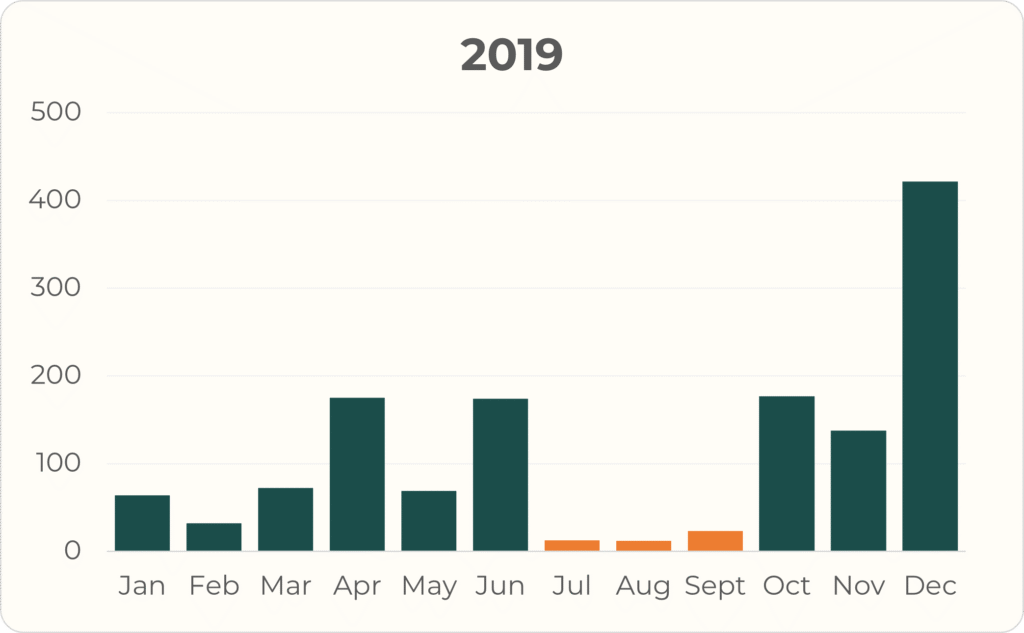
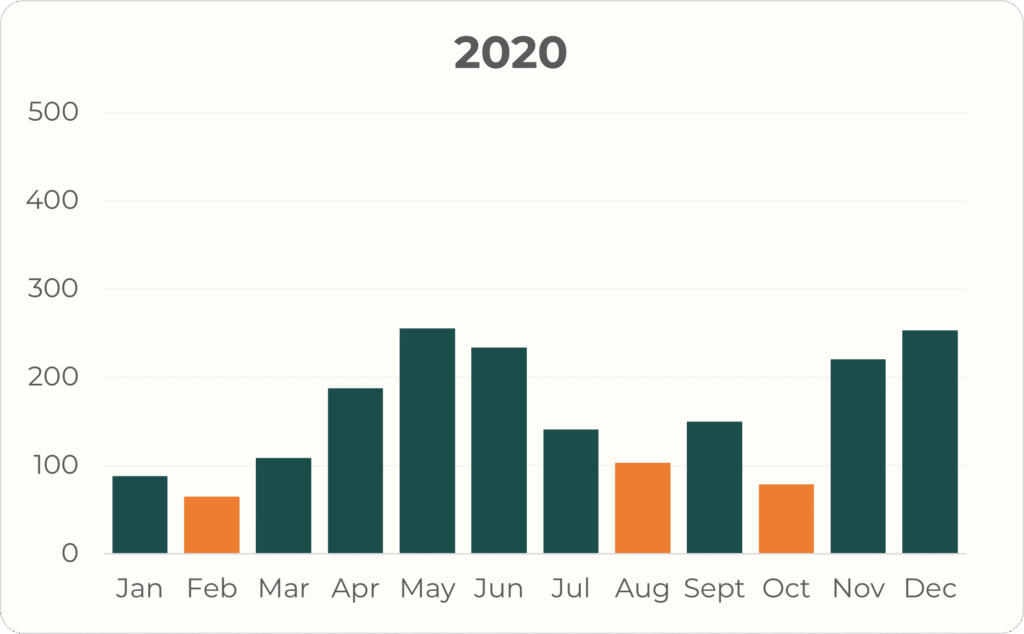
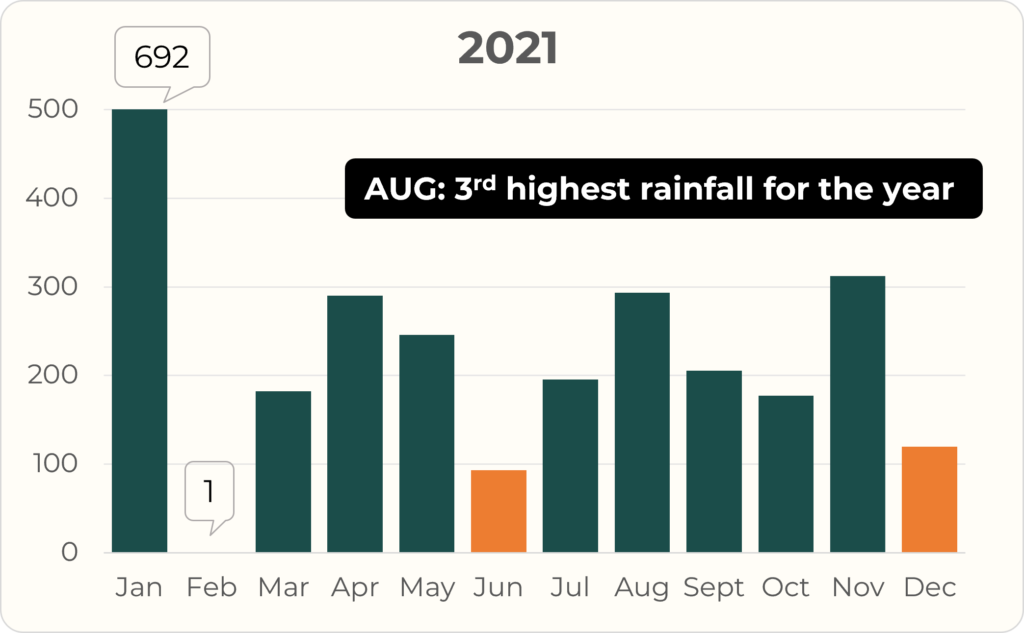
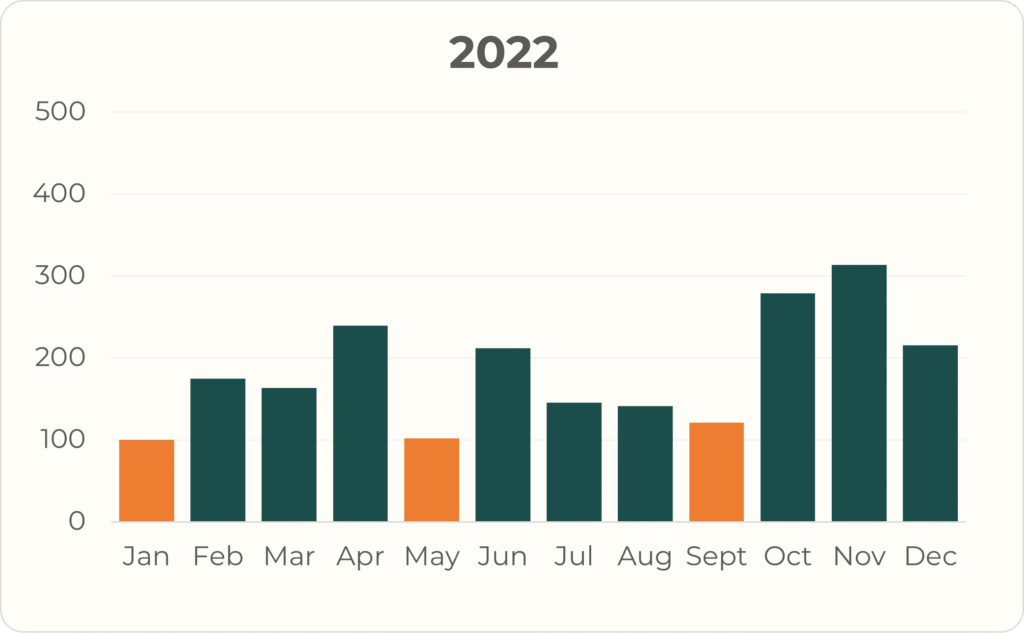
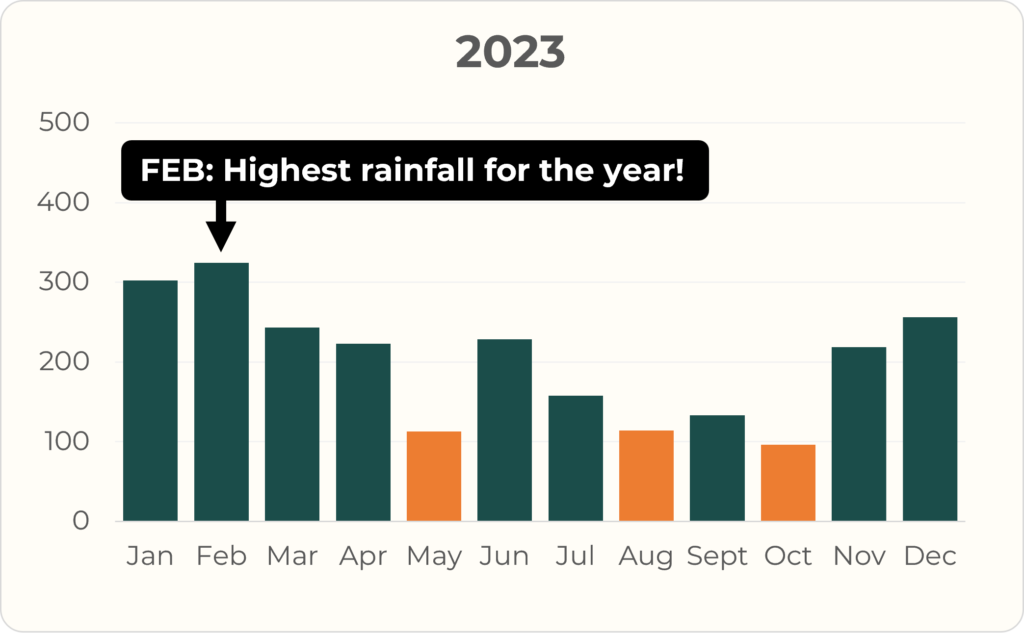
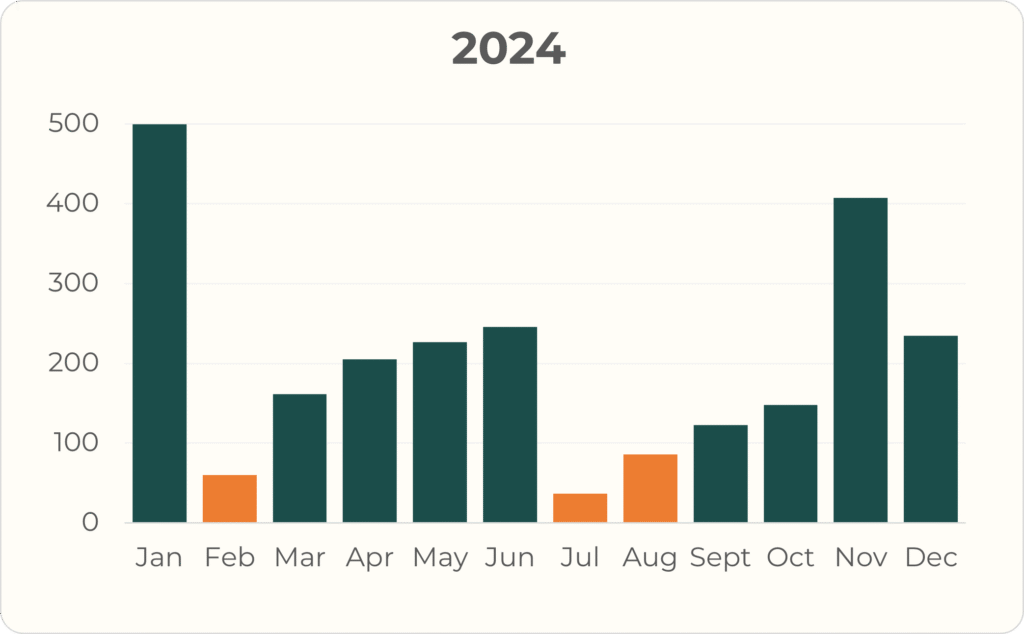
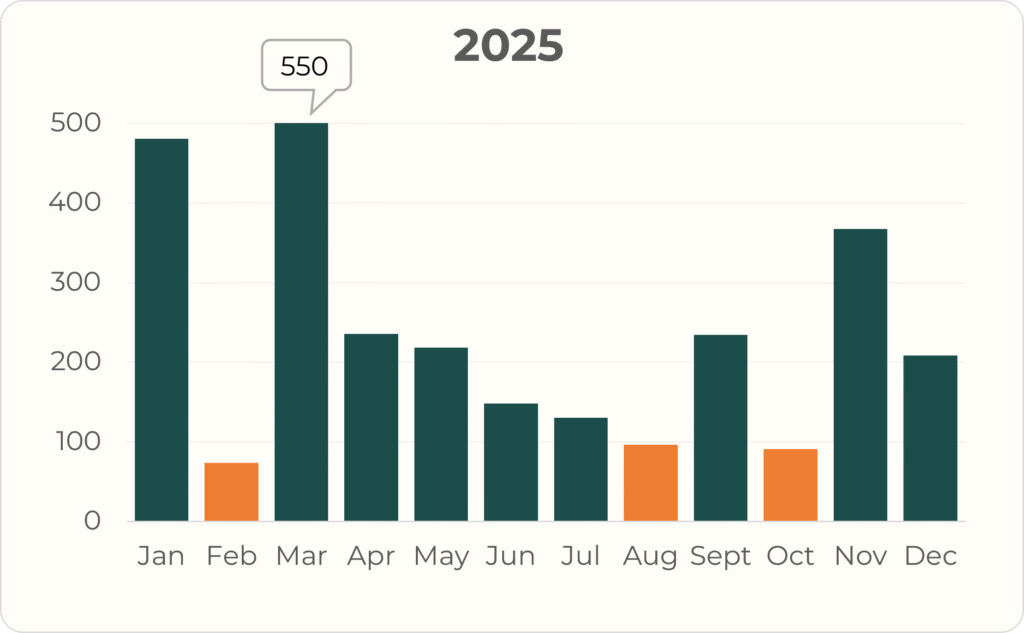
From the data, August 2021 — and especially February 2023 — stand out as months with significantly higher rainfall despite being part of the “drier” period,
These yearly charts are useful for showing how weather patterns can differ substantially from their long-term averages.
Singapore’s Wetter Months
Based on the 10-year average, the wetter periods are
- November
- December
- January
This period coincides with the Northeast Monsoon season, when rainfall tends to be more frequent and consistent.
That said, this doesn’t mean it’s a bad time to visit. In fact, these months are also among the most comfortable for outdoor walking thanks to cooler temperatures between rain showers. November and December bring the festive Christmas atmosphere, while January often overlaps with early Chinese New Year preparations, adding a lively cultural touch across the city.
The key is simply to plan smart. Keep a flexible itinerary, prioritise indoor attractions during heavier rain periods, and be ready to switch outdoor plans with indoor alternatives when needed.
Number of Rainy Days in Singapore — A Useful Indicator
Rainfall volume alone does not tell the full story. Another equally important indicator is the number of rainy days in each month.
This metric is especially useful because it helps you understand the probability of rain happening during your visit, not just how much rain falls overall.
In other words, it answers a more practical question for you: “If I visit in this month, how likely am I to actually experience rain during my trip?”
What the Data Says
At first glance, you can see that Singapore experiences rain on almost every other day on average throughout the year. This is mainly influenced by wetter months such as November and December, when rain can happen almost daily.
I’ve highlighted February, March, and July in orange as these months record the fewest rainy days. The months differ slightly from the previous metric. If you are planning an itinerary with lots of outdoor attractions and walking, these months are also your safest bet as there is a lower chance of rain affecting your plans.
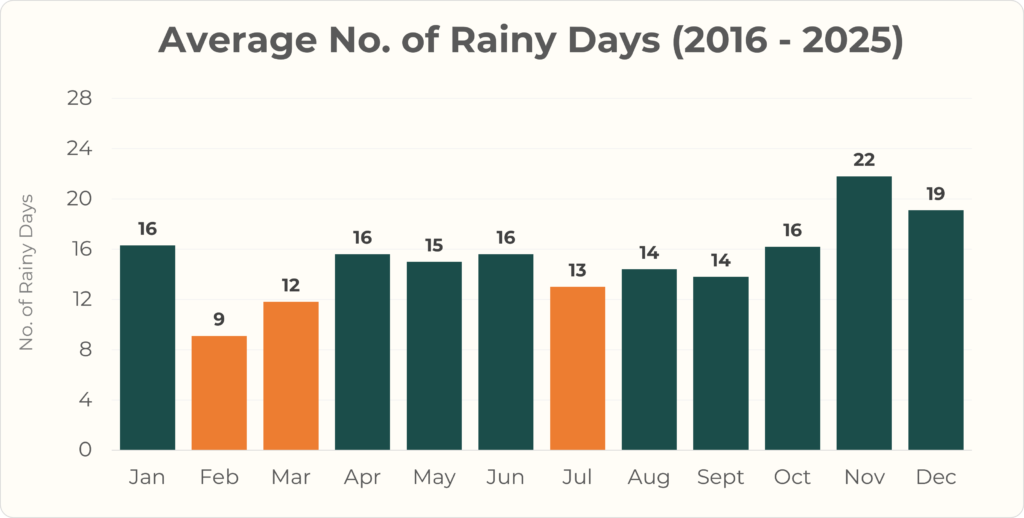
I also created yearly charts from 2016–2025 to give better insight and set more realistic expectations for your trip.
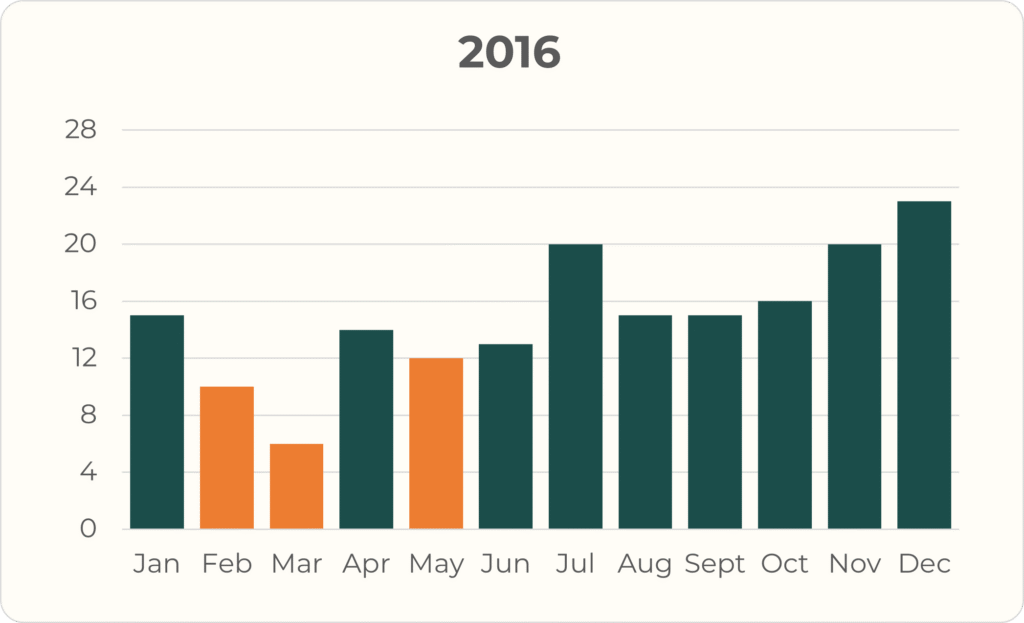
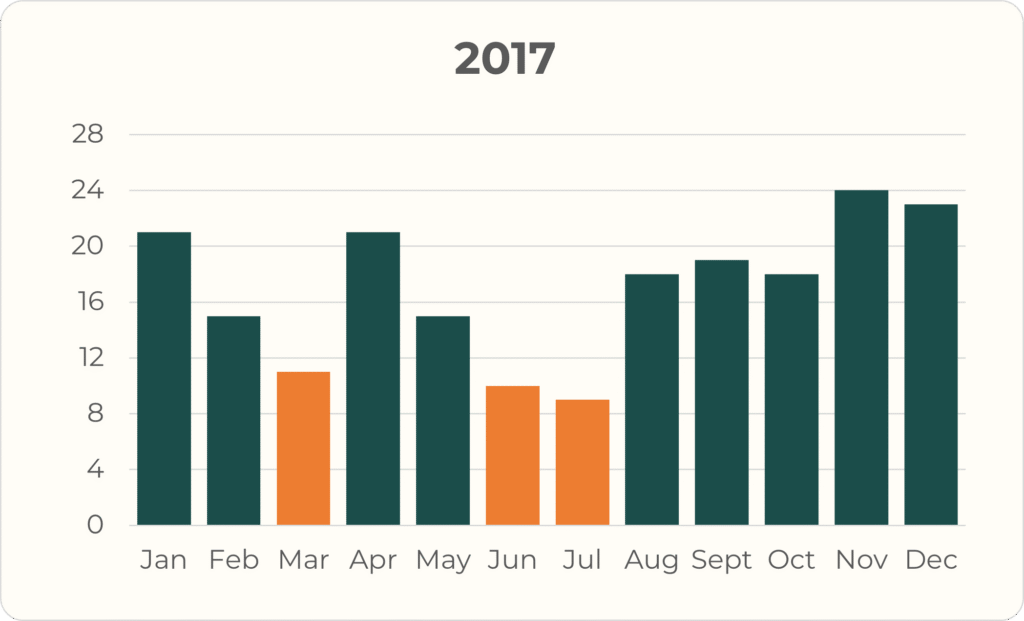
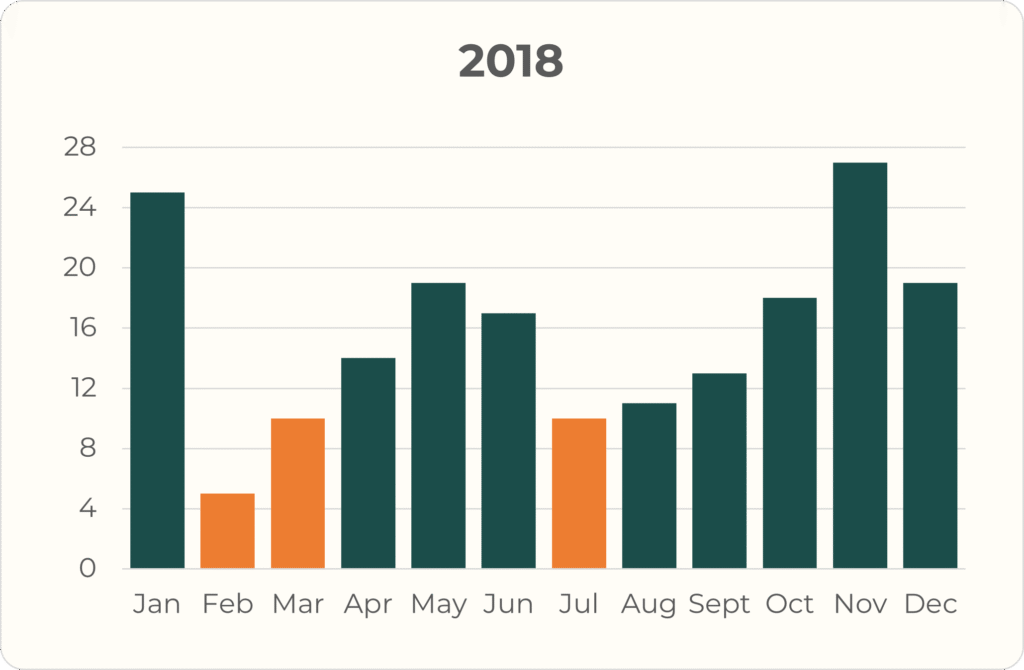
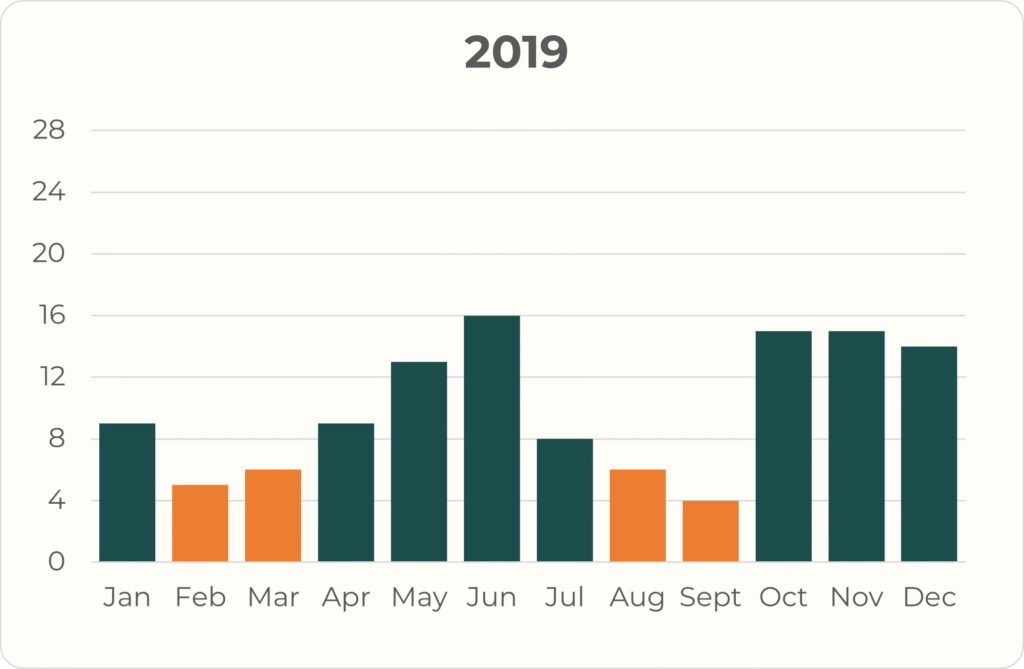
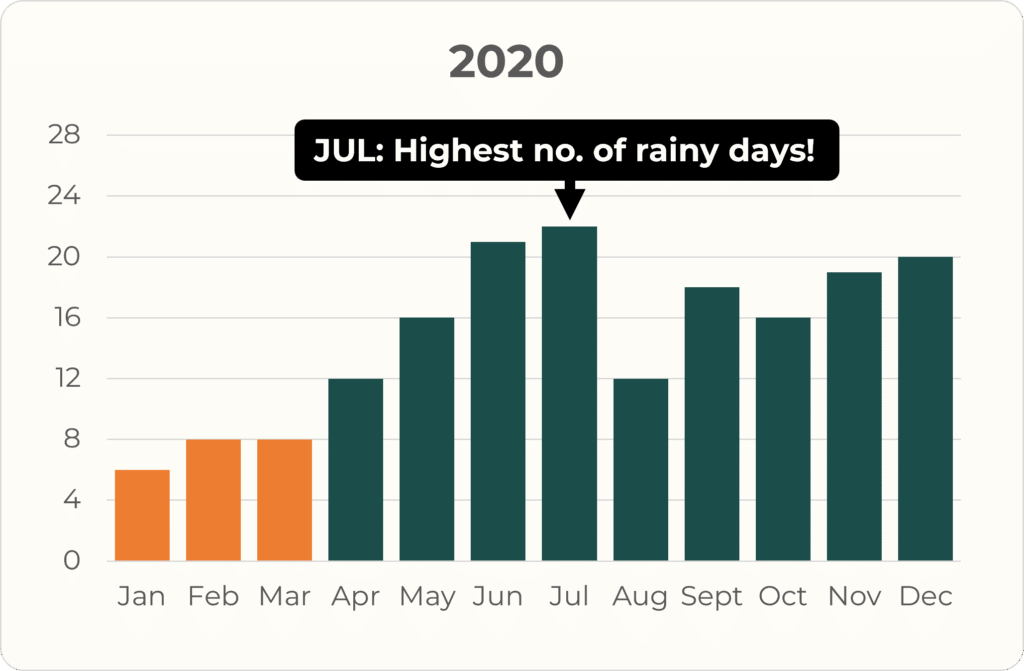
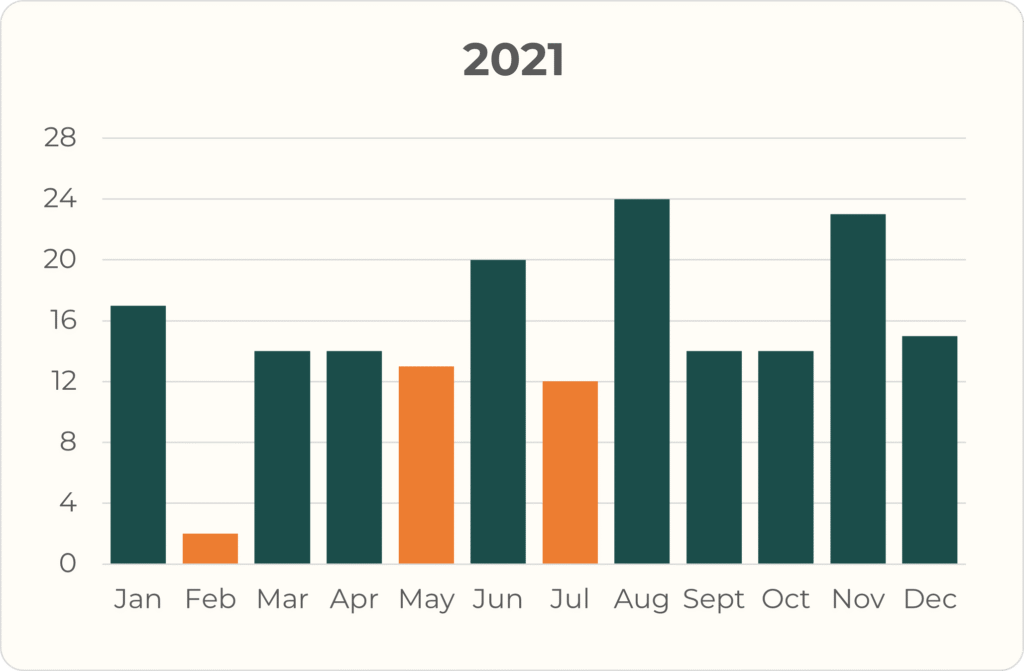
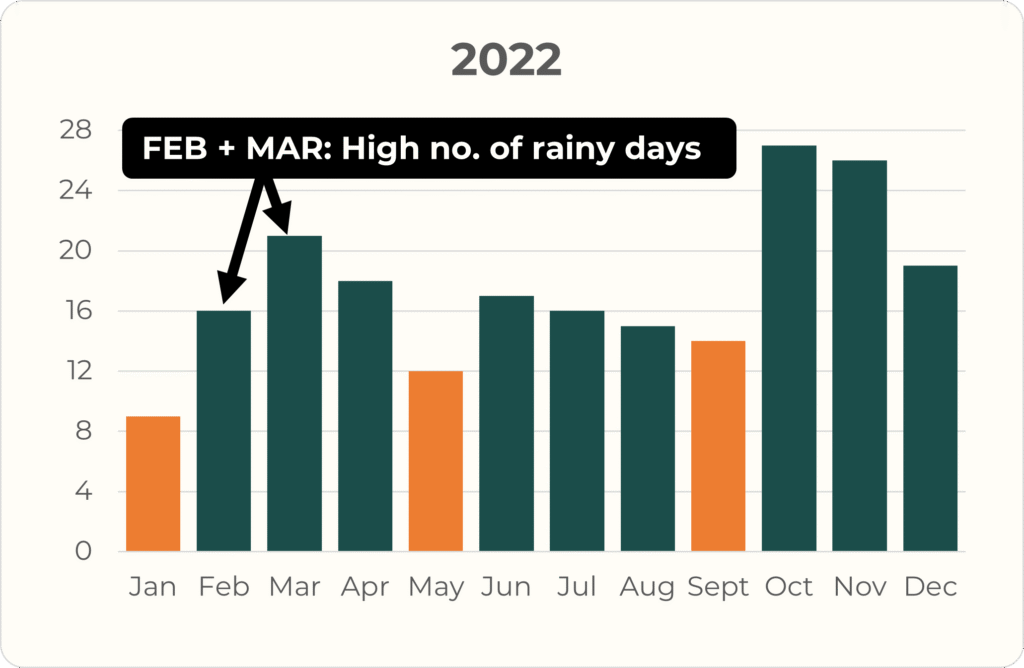
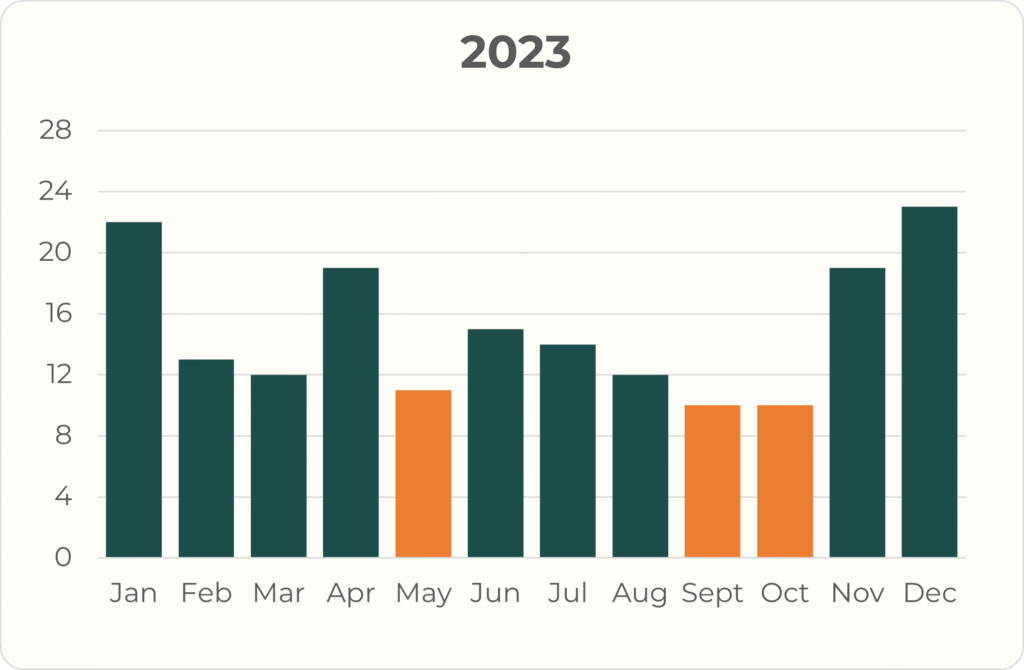
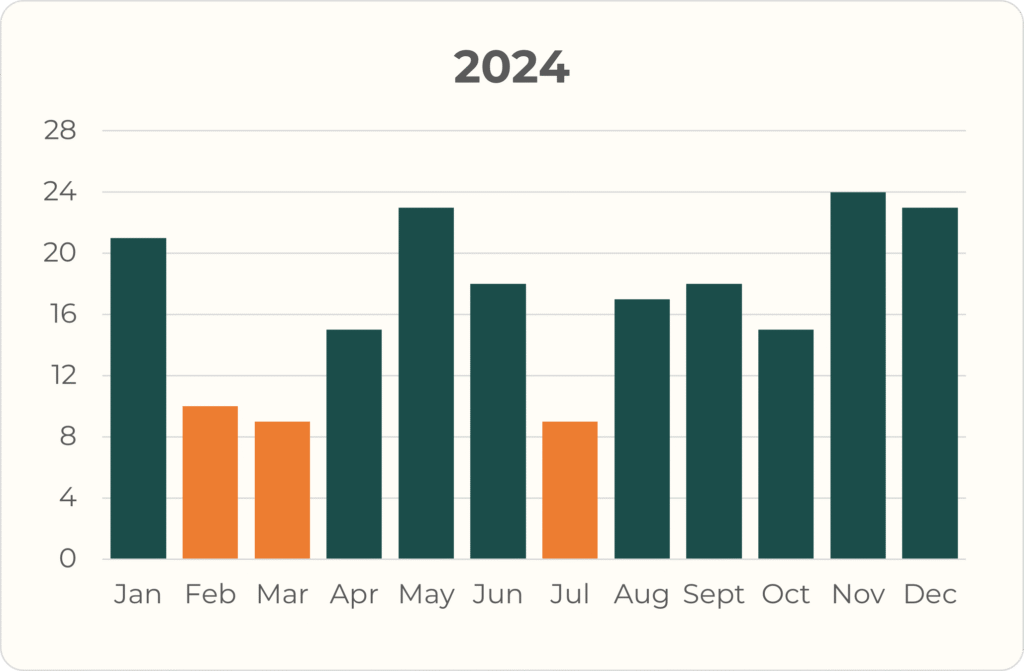
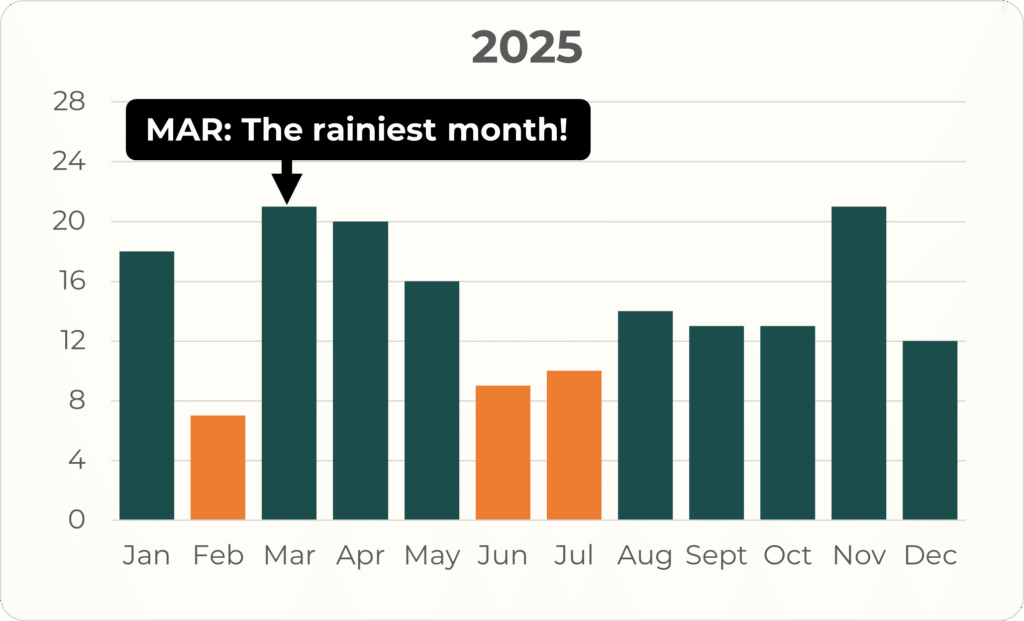
2020, 2022 and 2025 are the years with usual anomalies have higher no of rainy days.
However, if a month historically has many rainy days, it does not necessarily mean your entire trip will be ruined — but it does mean:
- you should plan more indoor backup options,
- avoid overly packed outdoor schedules,
- and stay flexible with attraction timing
This is especially important in Singapore because many attractions involve walking outdoors between locations.
Singapore’s Maximum Temperature — Understanding When It Feels the Hottest
Another indicator I analysed was average maximum temperature.
This temperature is shown in degrees Celsius and focuses on how hot Singapore can potentially feel during the hottest parts of the day, usually between 12pm – 2pm.
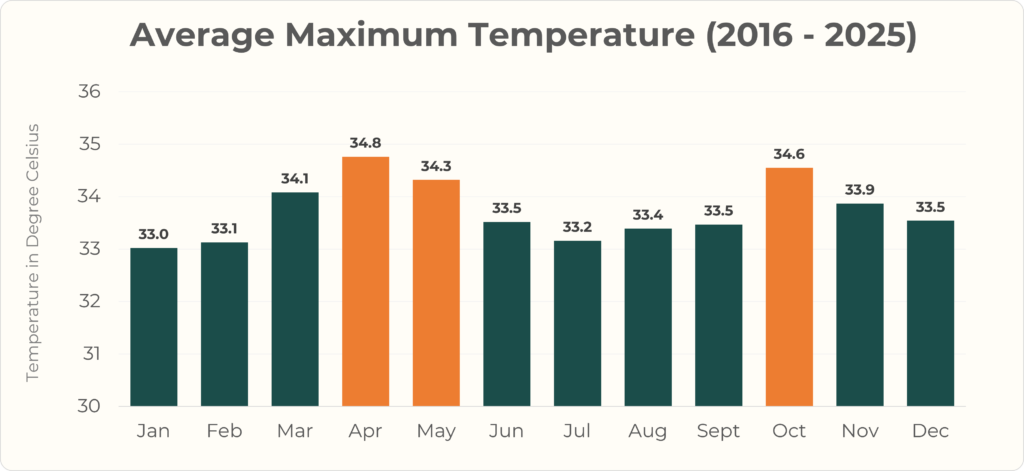
This chart tracks the maximum daily temperatures, I’ve highlighted the months when temperatures can hit their absolute maximum, which are April, May and October. If you are visiting during these periods, you’ll definitely want to avoid heavy outdoor activities between 12pm and 2pm when the midday heat can be brutal.
Why This Matters for Visitors
Most visitors underestimate how intense Singapore’s midday heat can feel, especially when combined with humidity.
Knowing the maximum daytime temperature can help visitors plan their itinerary more comfortably.
For example, midday may be better for:
- indoor attractions,
- shopping malls,
- museums,
- hawker centres.
Meanwhile, outdoor attractions are often more enjoyable:
- early in the morning,
- or evening.
This is especially useful for places like:
- Sentosa
- Marina Bay Sands SkyPark Observation Deck
- Merlion Park
- Singapore Botanic Gardens
Planning around the heat can make a surprisingly big difference to overall travel comfort.
Bright Sunshine Hours in Singapore — A Useful Indicator for Photography
The final indicator I analysed was bright sunshine hours.
This measures the actual duration of direct, bright sunlight, excluding any cloudy or overcast periods.
Why Bright Sunshine Hours Matter
Sunshine hours affect:
It may sound less important initially but I actually think this can be very useful for you — especially for photography and outdoor sightseeing.
- lighting conditions,
- skyline visibility,
- sunset views,
- outdoor scenery,
- and photography quality.
Months with higher sunshine hours generally offer:
- brighter skies,
- stronger natural lighting,
- and clearer city views.
Months with lower sunshine hours may experience:
- cloudier conditions,
- flatter lighting,
- and duller skies.
What the 10-year average data tells us
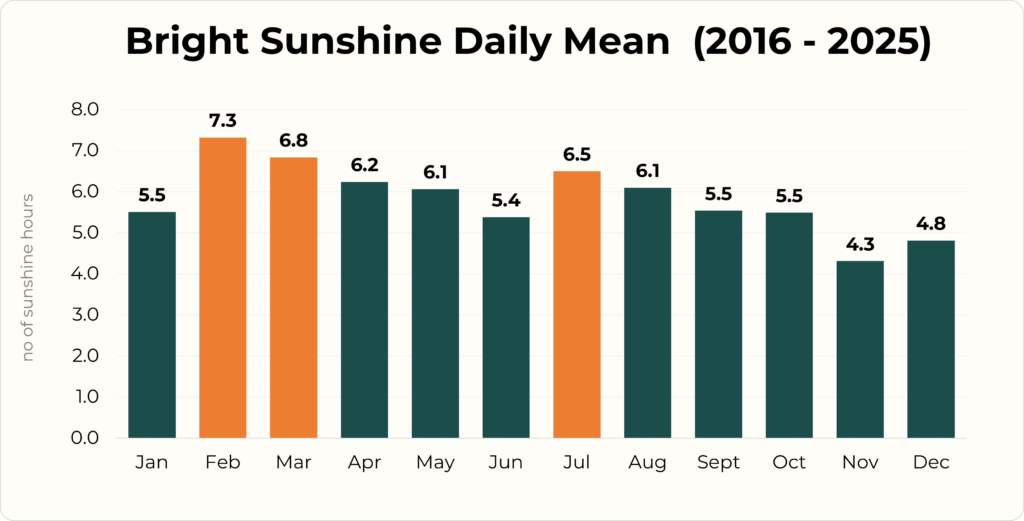
Looking at the data over the past decade (2016–2025), February, March, and July stand out as the sunniest months in Singapore, averaging the highest number of daily bright sunshine hours.
This does not necessarily mean bad weather — but it helps you set more realistic expectations when planning outdoor activities or photo spots.
So, When Is the Best Time to Visit Singapore?
The data above shows that February and July appear the better months across all 4 weather metrics if taken on a 10-year average. But do take note of the unusual anomalies that may occur.
Ultimately, Singapore is a year-round destination. However, understanding these patterns allows you to plan a much smarter trip and set more realistic expectations, you can:
- Build a smarter itinerary that balances indoor and outdoor activities.
- Prepare for the rain so it doesn’t dampen your spirits.
- Avoid the hottest hours of the day to stay comfortable.
- Match the month to your travel style, whether you want festive buzz or quiet streets.
Regardless of when you land, come prepared for our tropical climate. Whether it’s a bright sunny day or a sudden monsoon downpour, always keep an umbrella or poncho, sunscreen and a bottle of water on hand to stay hydrated.
Finally, the key to a stress-free Singapore holiday is flexibility. Always have “Plan B” and be ready with indoor contingencies—like exploring our world-class malls or museums—in case of a heavy afternoon rain.