Why does Singapore’s carrot cake have no carrots and no cake?
If you’ve been researching what to eat in Singapore, you’ve probably come across “carrot cake” on a hawker centre menu. Naturally, most visitors expect a sweet dessert. What arrives at the table is something completely different.
It’s in fact, one of Singapore’s most beloved hawker dishes and it’s the kind of food that makes no sense until you eat it. But once you taste it, you won’t care about either of those things.
Many visitors skip this dish because they are confused by its name and appearance. It’s time to clear up the confusion and give this underrated local favorite the spotlight it deserves.
Here’s everything you need to know before you order it.
What Is Singapore Carrot Cake?
Singapore carrot cake — known locally as chye tow kway (菜头粿) — is a savoury stir-fried dish made from steamed blocks of white radish (daikon).
The confusion comes from the Chinese term for white radish, which was loosely translated into English as “white carrot”, giving rise to the name “carrot cake”.
The “cake” refers to the steamed radish and rice flour block — so the best way to perhaps explain it in my own words is Fried Radish Dish.
A Brief History
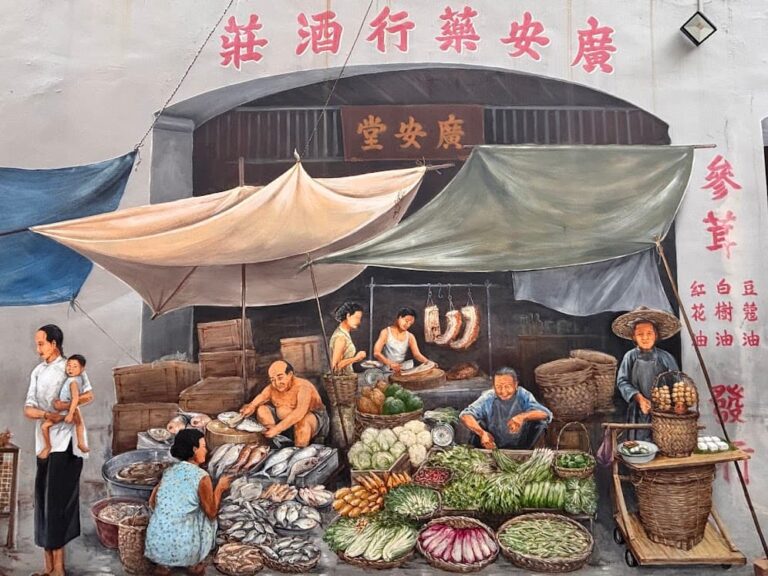
While the Chye Tow Kway dish evolved in Singapore but its roots can be traced back to the Chaoshan (Teochew) region of Guangdong province in southern China. It was brought to Singapore by Teochew immigrants in the late 19th and early 20th centuries.
Early versions were simple rice cakes cooked with dark soy sauce. Over time, hawkers added white radish to the rice cake mixture and developed different cooking styles, eventually giving rise to the black and white versions of Chye Tow Kway.
The dish was particularly associated with the working class back then — inexpensive, filling and easy to cook in large quantities. Radish and rice flour were cheap and widely available, which made carrot cake an accessible meal for labourers and families alike.
This dish is part of Singapore’s everyday hawker culture—it was something I grew up eating for breakfast. Today, this culture has been officially recognised, with Singapore’s hawker culture inscribed on UNESCO’s Representative List of the Intangible Cultural Heritage of Humanity in 2020.
How Is It Made?
The white radish cake is made by cutting raw daikon, mixing it with rice flour and water into a batter, then steaming it in trays until it sets into a firm block. The blocks are then cut into rough cubes.
At the hawker stall, the cubes are thrown into a very hot wok with oil, garlic, and chai poh (preserved salted radish, which has been rinsed and sometimes lightly fried separately). Eggs are cracked in and scrambled through the mixture. For the black version, sweet dark sauce is added and the whole thing is tossed together until the sauce coats every piece and caramelises slightly.
Black or White? The Question You’ll Be Asked
When you order carrot cake at a hawker stall in Singapore, the uncle or auntie behind the wok will almost always ask you this question: “Black or white?”
This is not a reference to race. It refers to two different versions of the same dish.
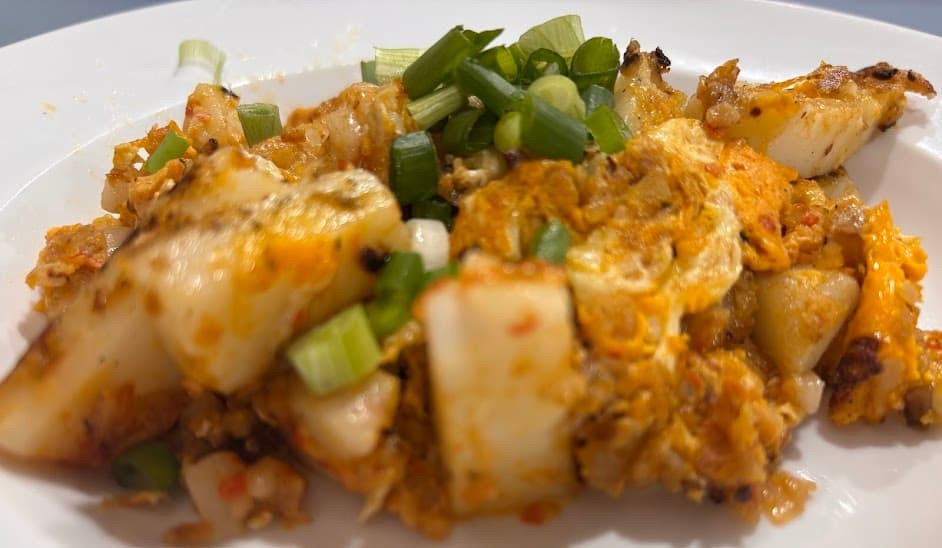
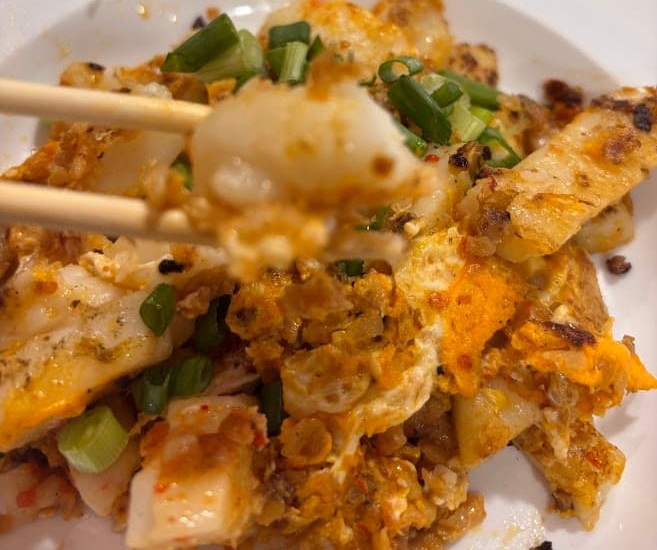
White carrot cake is the original version. The radish cake cubes are fried with egg, preserved radish (chai poh), garlic and spring onions and seasoned with light soya sauce. The egg is scrambled through the cubes as it fries, giving you a dish that’s savoury, slightly crispy at the edges and fragrant from the wok, with a slight softness from the steamed cake underneath.
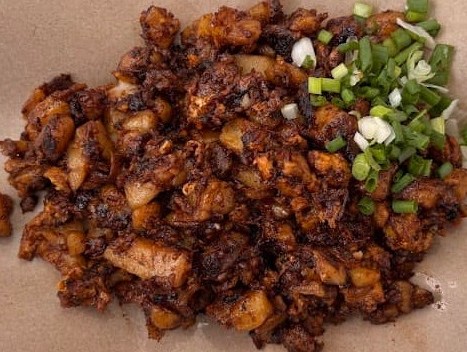
Black carrot cake adds one key ingredient: sweet black sauce (kicap manis). This is stirred through the entire dish as it fries, coating every cube in a sticky, sweet sauce. The result is a darker, richer, slightly sweeter version — caramelised especially around the slightly charred parts and much more intense in flavour.
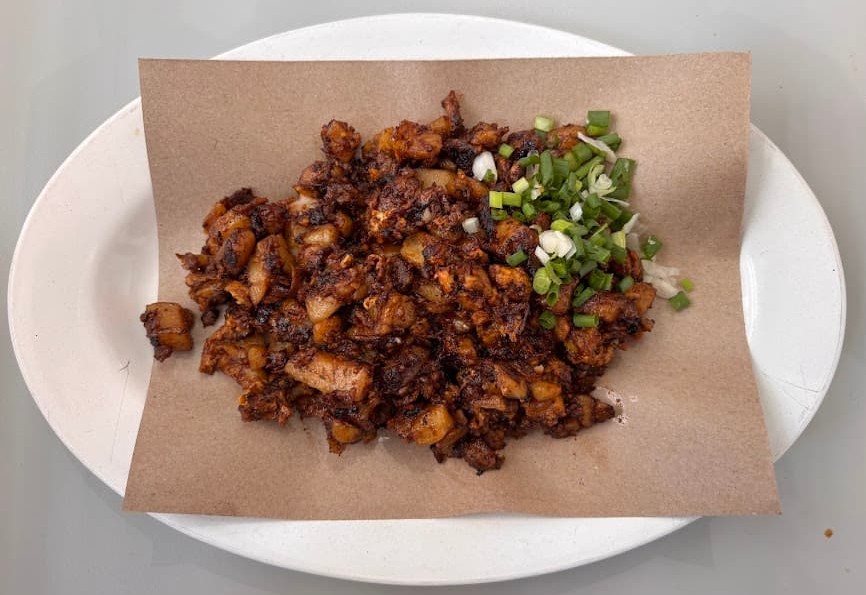
My Personal Favourite
Both versions are equally popular. Most of the time, I would order the black version but on few occasions I might settle for the white one. My overall personal preference is the black version.
Why? Because the black carrot cake is bolder — sweet, sticky, and caramelised, with the same eggy base underneath. The sweetness from the dark sauce makes it more indulging.
Both versions rely heavily on wok hei — the smoky, slightly charred flavour that comes from a very hot wok and fast, confident frying. A good plate of carrot cake should have that slight smokiness. If it doesn’t, the wok wasn’t hot enough.
Most stalls will do a half-half plate, so I highly recommend you get this so you’ll have a taste of both.
How to Order It at a Hawker Centre
Walk up to the carrot cake stall and say: “One carrot cake, black / white.”
If you like it spicy, just tell them and they will accommodate this. I usually have mine black and more spicy.
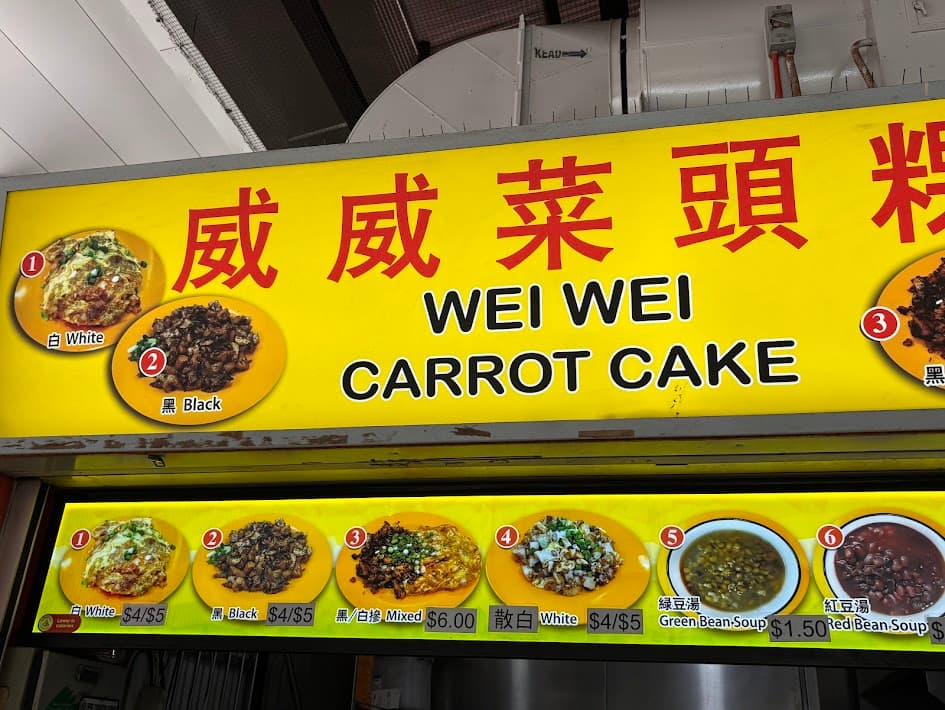
A standard plate costs between $3 and $5, depending on the location of the hawker centre and the portion size. Some stalls offer small, medium, and large portions. A medium is usually sufficient for one person as part of a hawker meal.
However, if you order half-half, the portions tend to be larger, so it may cost between $5 – $7.
The Bottom Line
Singapore carrot cake is one of those dishes that rewards curiosity. The name makes no sense and nothing about it prepares you for how satisfying it is. It’s cheap, fast, deeply savoury and cooked with the kind of muscle memory that only comes from decades behind a wok.
So when you come across a hawker stall selling carrot cake, don’t pass it by. Order both the black and white version and let me know which side you are on!
If you’re exploring the city, you can also check out my Tanjong Pagar walking trail, where I’ve included a stop at Maxwell Hawker Centre where they serve up this popular carrot cake dish.