If you’re wondering what to see at the Asian Civilisations Museum Singapore, this extensive and guide covers the museum’s most interesting displays and artefacts. I’ll also show you highlights of each gallery that I think are most worth your time.
The Asian Civilisations Museum — or ACM as most people call it — is one of Singapore’s national museums. It sits right along the Singapore River at Empress Place and it’s dedicated to the history and cultures of Asia.
I visited recently and went through all the galleries across (except for two that were closed that day). This is a guide to what’s inside, written in the order I walked through it, so you know what to expect before you go. Allow at least 2 hours. If you want to go through everything properly, closer to 3 is more realistic.
How To Get To Asian Civilisations Museum
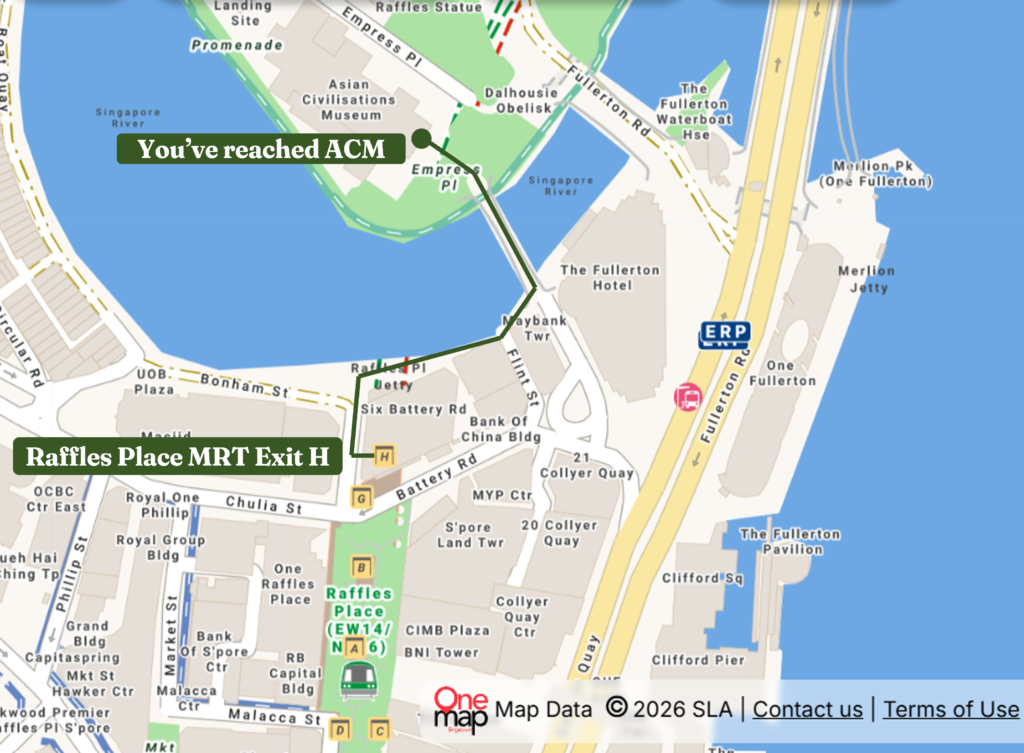
The easiest way to get to the museum is by taking the MRT. Just hop on the East-West (Green) or North-South (Red) line and head over to Raffles Place MRT Station.
Once you arrive, follow the signs to Exit H. When you step outside, you’ll find yourself right next to the Six Battery Road building. From there, it is a short, scenic 3-to-4 minute stroll. You’ll walk past the riverfront, cross the historic Cavenagh Bridge and the museum will be right in front of you.
I’ve mapped out the exact path for you below so you won’t get lost:
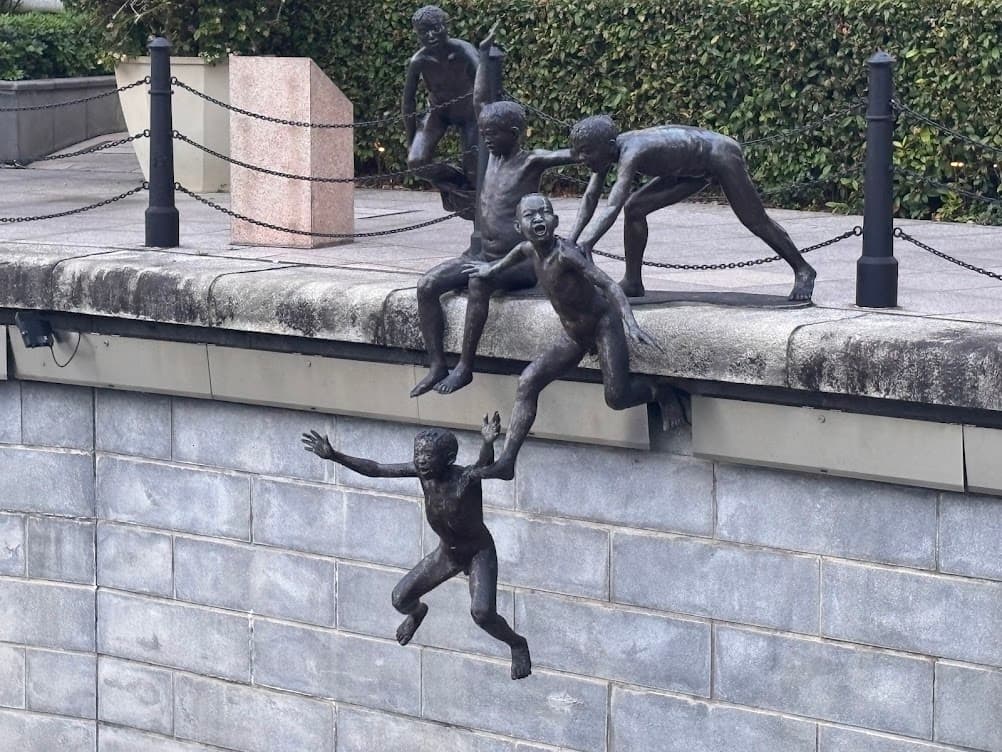
Do keep an eye out for the famous “First Generation” sculpture by Chong Fah Cheong, capturing a playful moment of boys jumping into the Singapore River.
Asian Civilisations Museum Ticket Price
To skip the queues at the counter and secure your entry slot, you can check out the latest ticket prices or combo packages here ahead of your trip.
What to Expect Before You Go
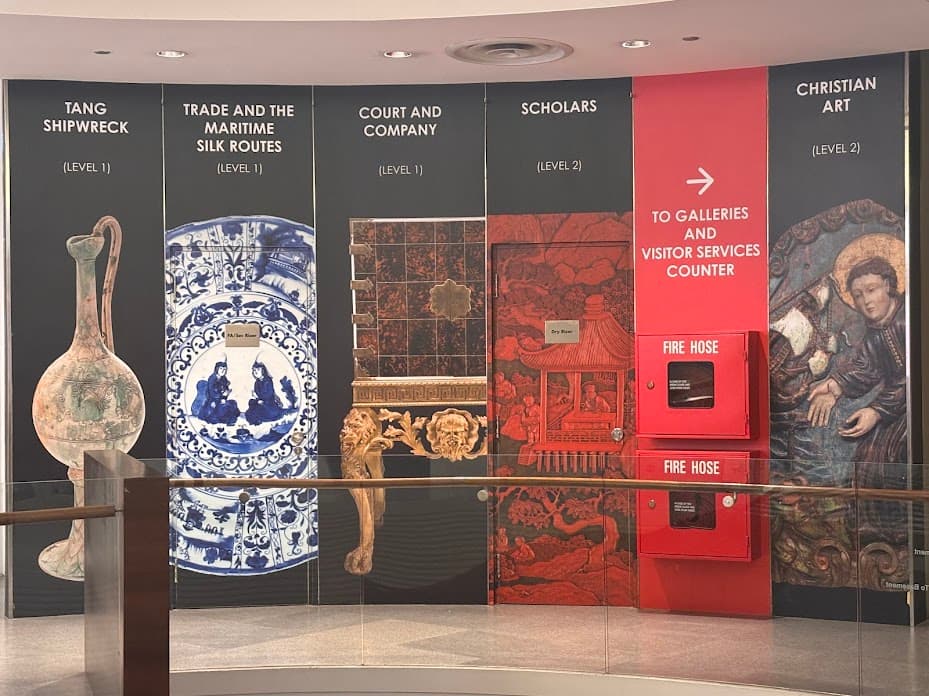
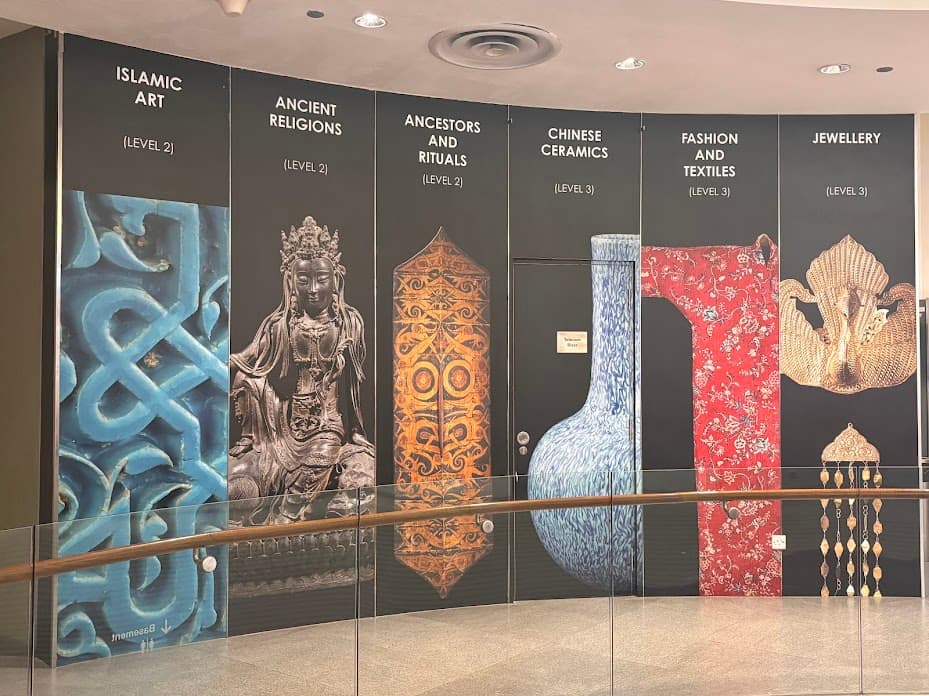
LEVEL 1 – TRADE
Gallery 1: The Tang Shipwreck
Gallery 2: Maritime Trade
Gallery 3: Court and Company
LEVEL 2 – FAITH AND BELIEF
Gallery 4: Ancestors and Rituals
Gallery 5: Ancient Religions
Gallery 6: Christian Art
Gallery 7: The Scholars Gallery
LEVEL 3 – MATERIALS and DESIGN
Gallery 8: Jewellery
Gallery 9: Ceramics
Level 1 — Trade
Level 1 is all about trade and the sea routes that connected Asia to the rest of the world. The three galleries here trace how goods, ideas, and art moved between the Middle East, India, Southeast Asia, China, and later Europe.
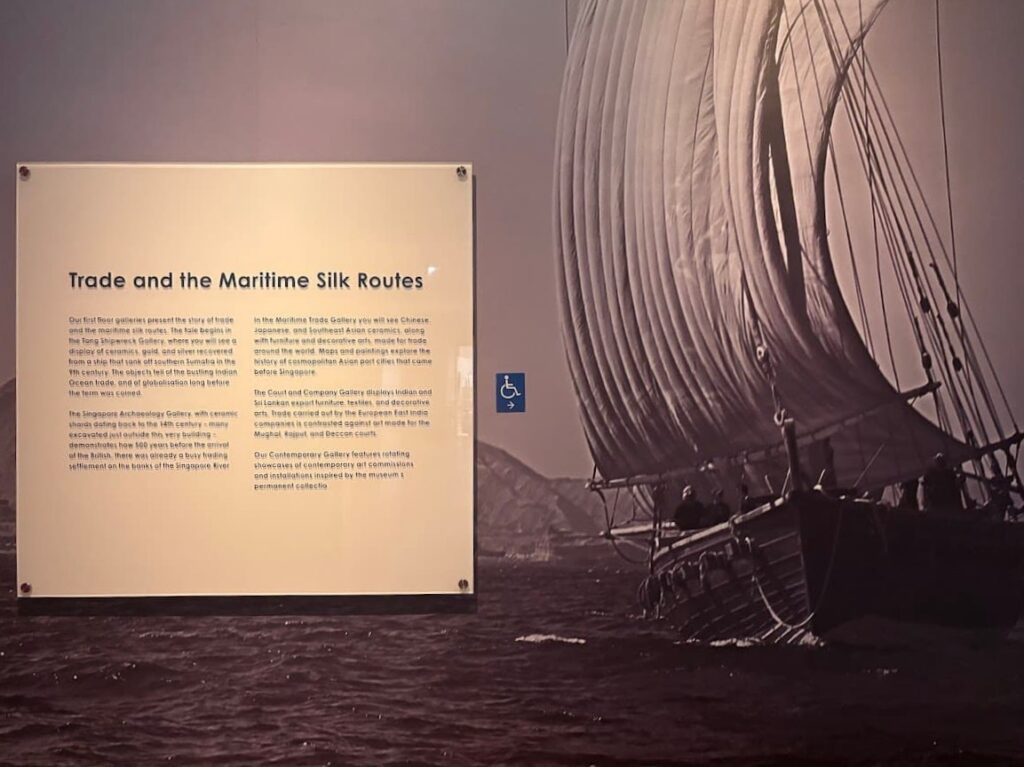
Gallery 1: The Tang Shipwreck
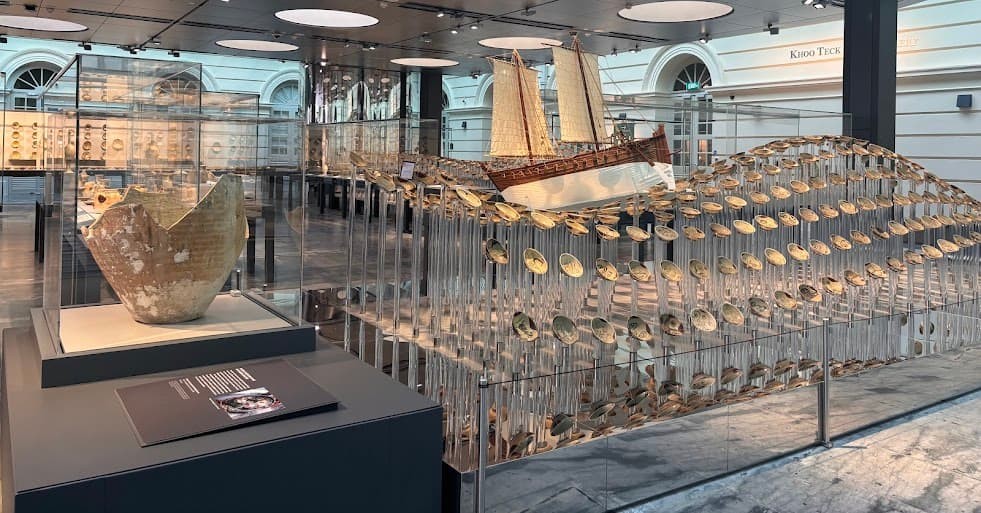
Located inside the Khoo Teck Puat Gallery, the Tang Shipwreck section was one of the most fascinating parts of the museum for me. This is the first gallery you walk into and it is also the highlight of the museum.
Nearly 1,100 years ago, an Arab trading ship carrying precious cargo sailed from China before sinking near Sumatra. The shipwreck remained underwater for centuries until it was accidentally discovered in 1998. What amazed me most was realising that this ship had already connected the Middle East, India, Southeast Asia and China over a thousand years ago.
The ship itself was built using a sewn-plank technique commonly used in the Persian Gulf, showing that the vessel likely travelled all the way from the Middle East to southern China to collect goods before making its return journey.
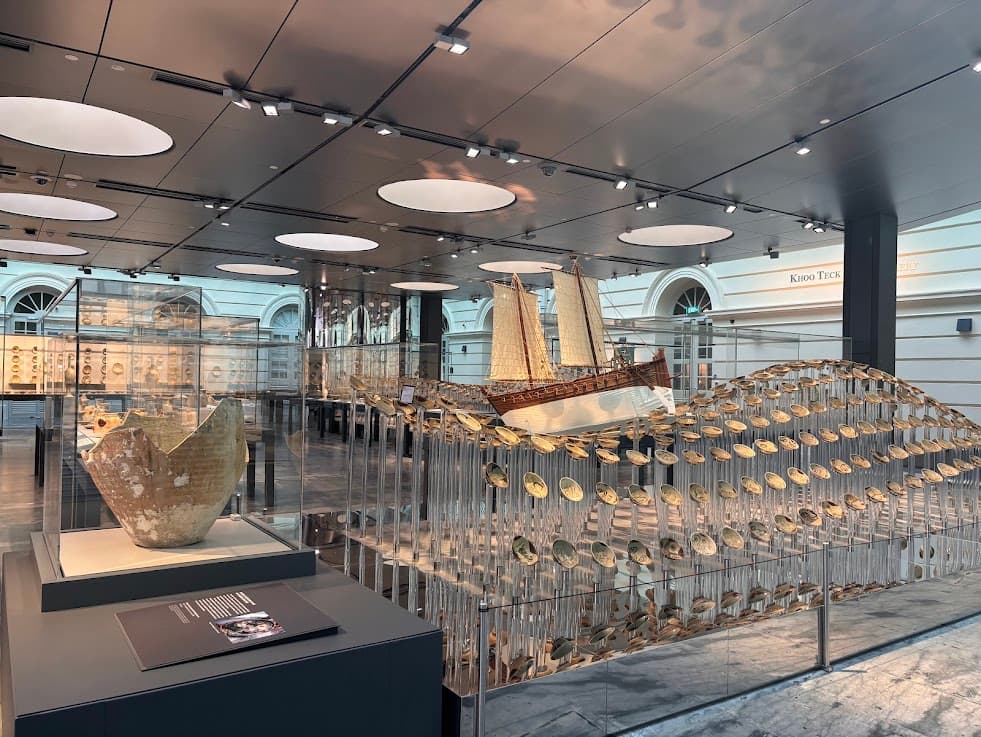
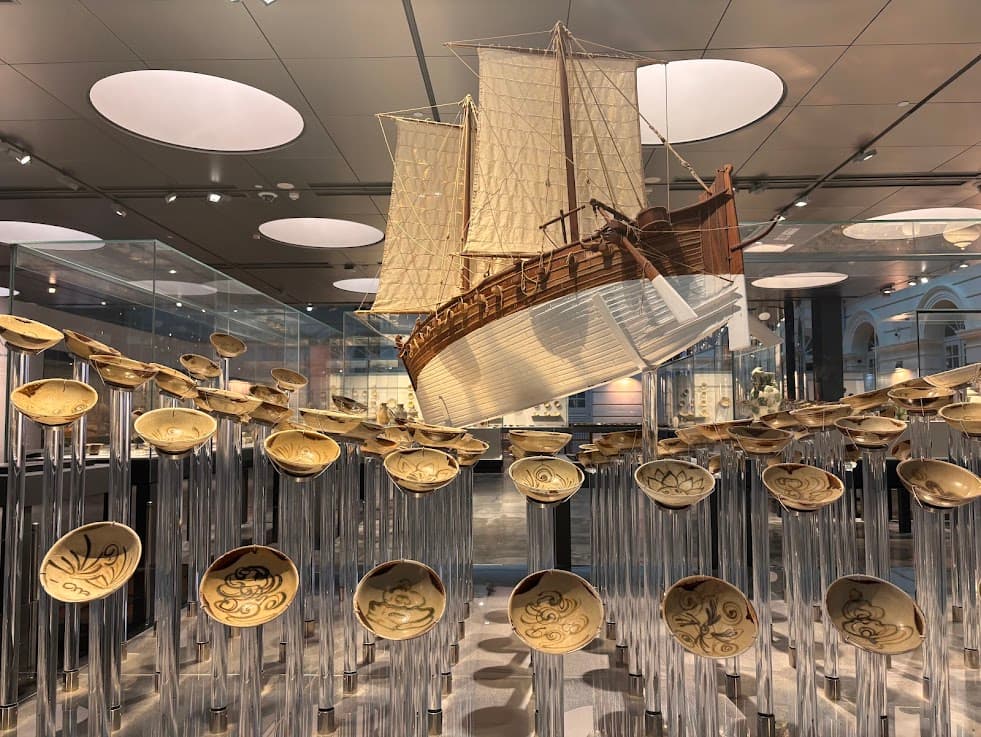
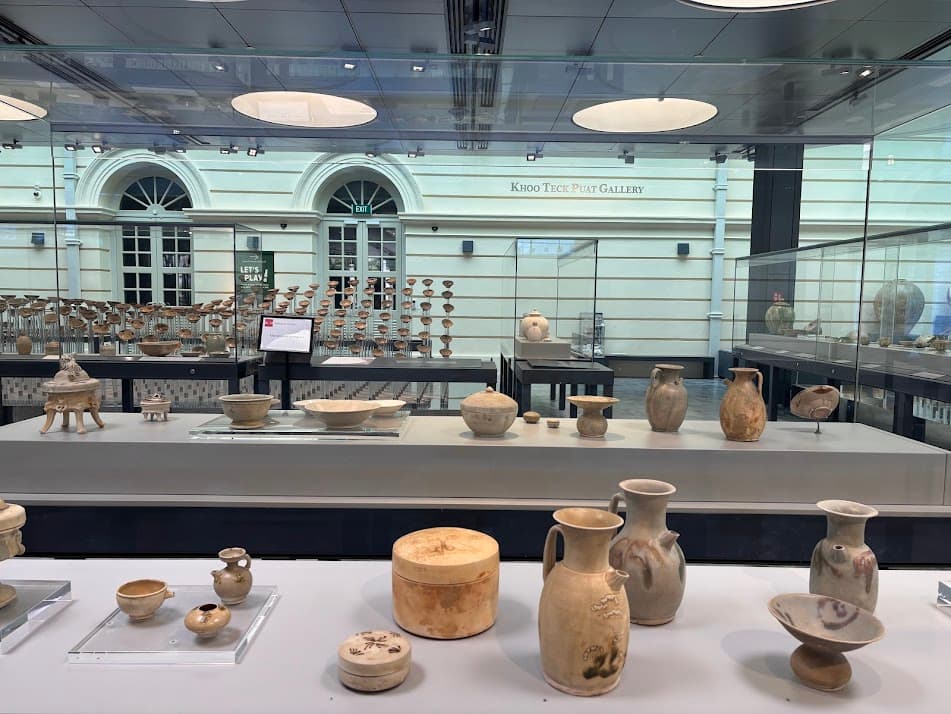
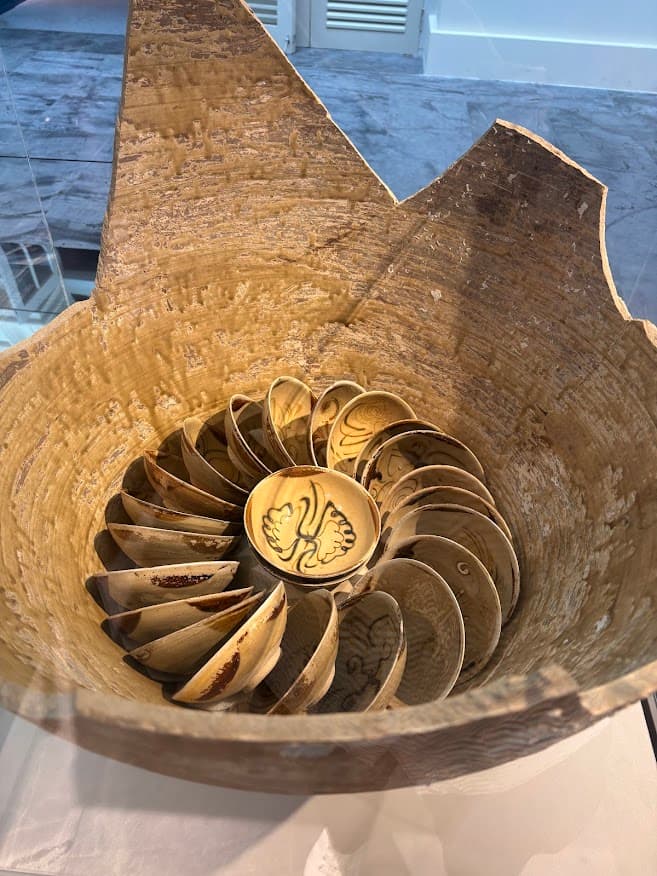
The Tang Shipwreck carried thousands of ceramic bowls, packed about 130 at a time into large storage jars and cushioned with straw. This clever packing method — combined with the seabed silt — protected most of the ceramics from damage and the bowls look like they were only just recently made.
All those ceramics weighed around 25 tons. To keep the ship stable, the cargo had to be balanced with ballast. Too high in the water and the ship risked capsizing; too low and it could be swamped by waves. Lead bars found in the wreck were used as ballast, and these were adjusted at every port as cargo was loaded and unloaded.
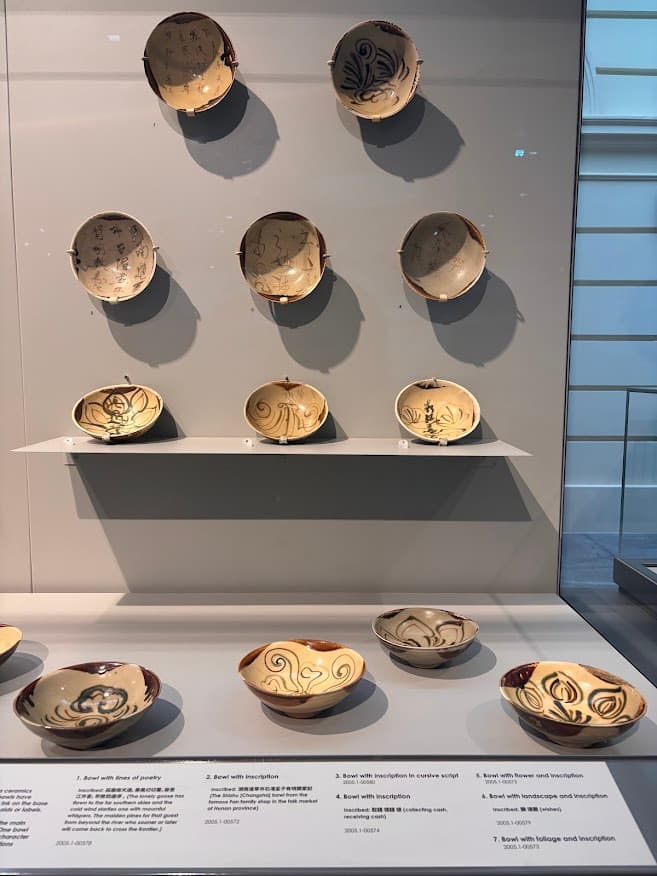
Some of these Changsha bowls are decorated with hand-brushed inscriptions, poetry, or painted motifs. The writings range from a melancholy Tang poem about a lonely goose and a homesick traveller, to practical phrases like “collecting cash,” a merchant’s shop mark from a Hunan folk market, and simple personal sentiments like “wishes.” Others feature decorative designs including flowers, landscapes, and foliage.
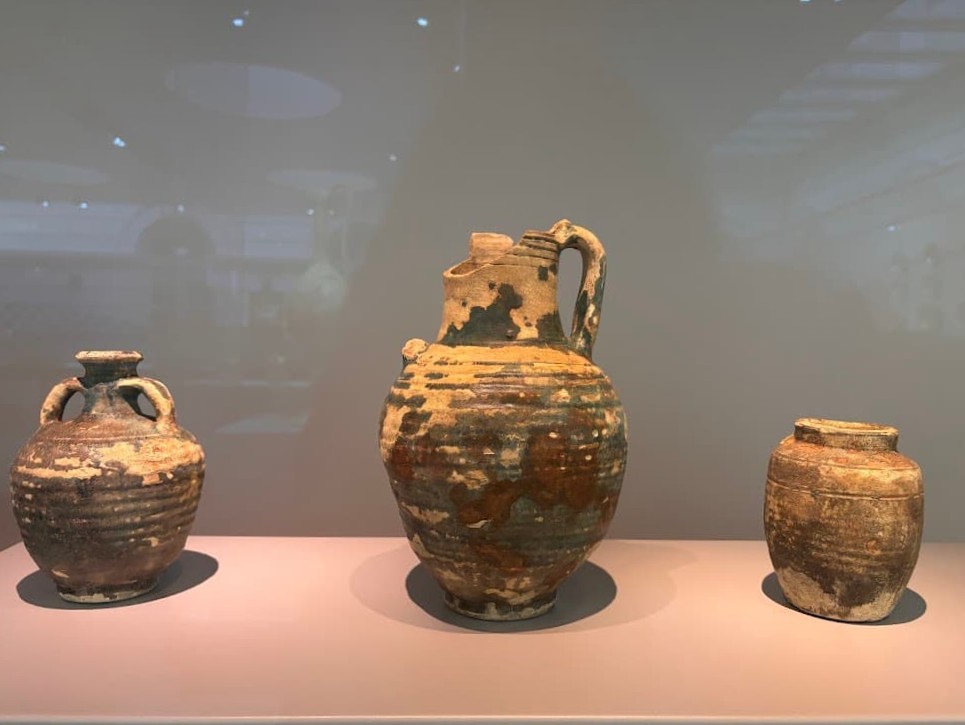
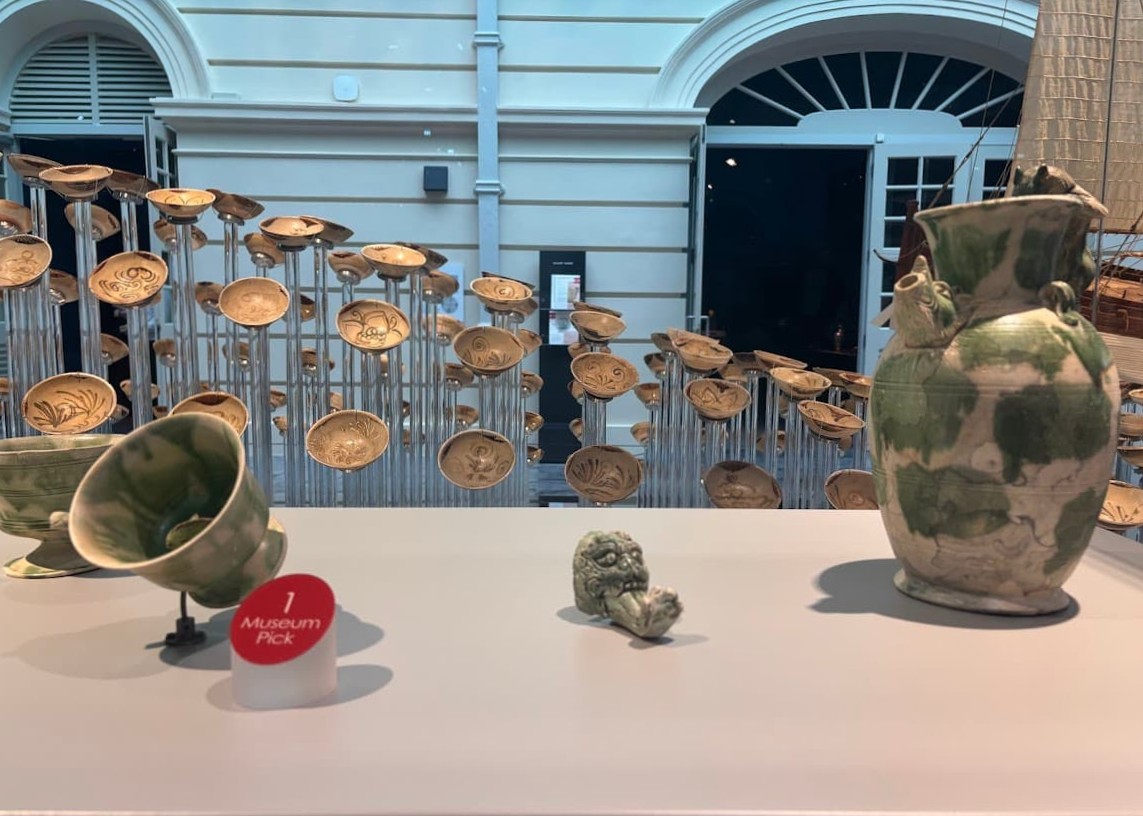
Although the Tang Shipwreck was built in the Middle East, surprisingly few Middle Eastern objects were found on board.
The turquoise-glazed amphorae were likely used to transport date syrup and were widely traded across Asia. Similar vessels have been found in Malaysia, Thailand and even in tombs and Buddhist temples in China.
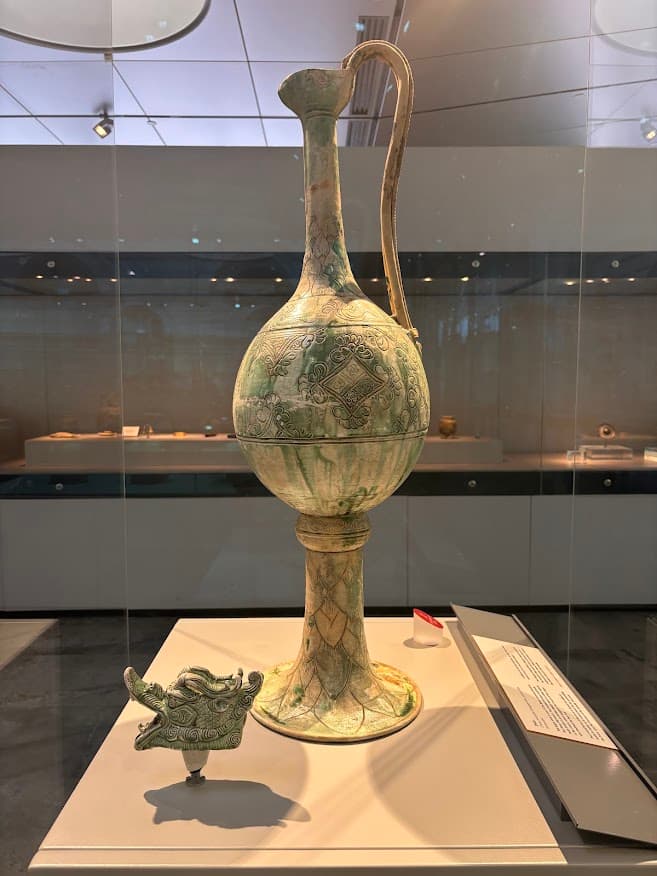
This tall stoneware ewer, made in China around the 830s, is one of the finest pieces recovered from the Tang Shipwreck. Its Iranian-inspired decorative pattern suggests the cargo was bound for the Gulf. Modelled on metal vessels, the ewer’s thin handle makes it tricky to hold — so it was likely decorative rather than functional. It comes with a dragon’s-head stopper that fits the mouth and when placed in, it covers the snake’s head carved on the handle.
Gallery 2: Maritime Trade
The Maritime Trade Gallery continued the story of global exchange through ceramics, furniture, decorative objects and maps of old Asian port cities.
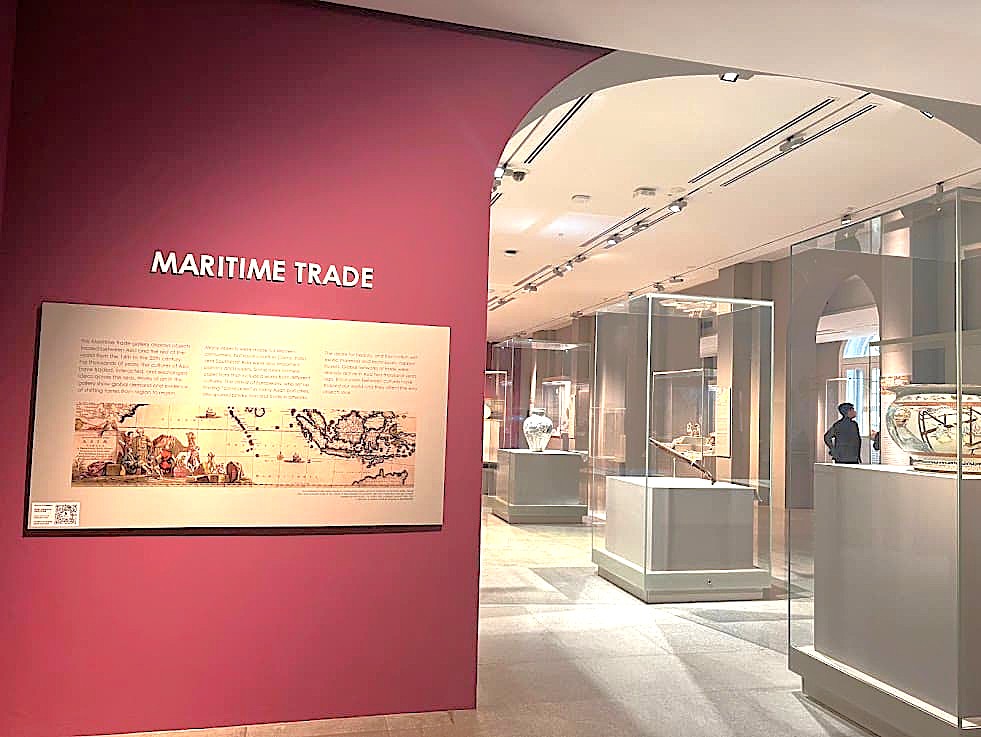
It is interesting how cities like Canton, Shanghai, Hong Kong, Batavia, Nagasaki and Manila were already major cosmopolitan trading hubs before Singapore even existed as a modern city.
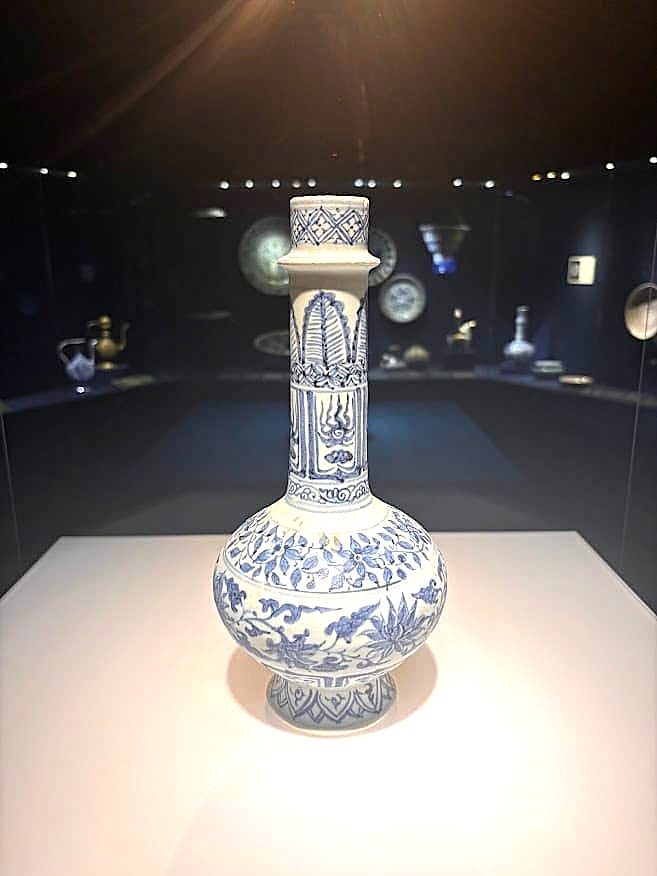
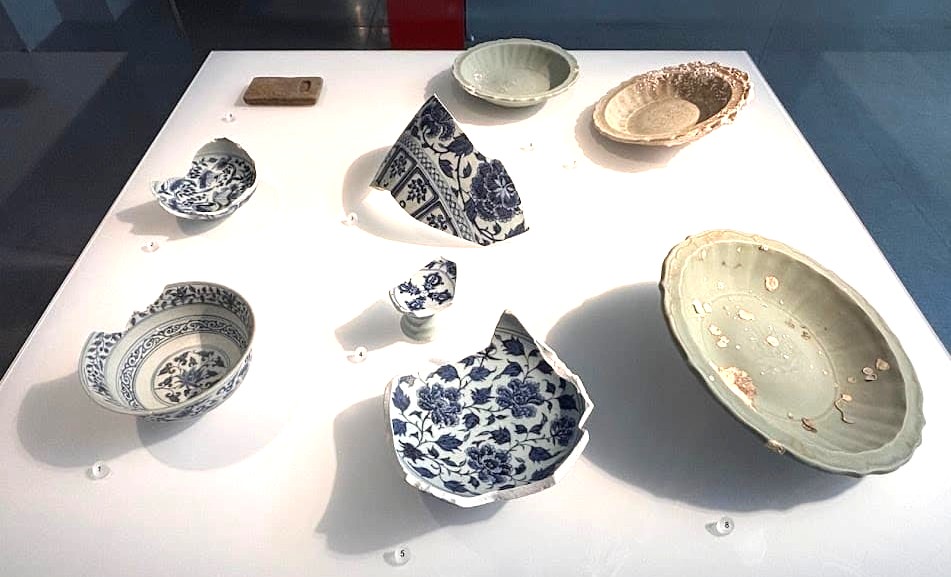
This tall blue-and-white porcelain bottle is the only intact ceramic found in the Temasek Wreck. Made in Jingdezhen in the 14th century, it may have been used as a hookah base. The distinctive inky blue-black spots in the decoration — known as “heaped and piled” — are a telltale sign of Yuan dynasty craftsmanship, caused by potters struggling to control iron levels in the cobalt pigment.
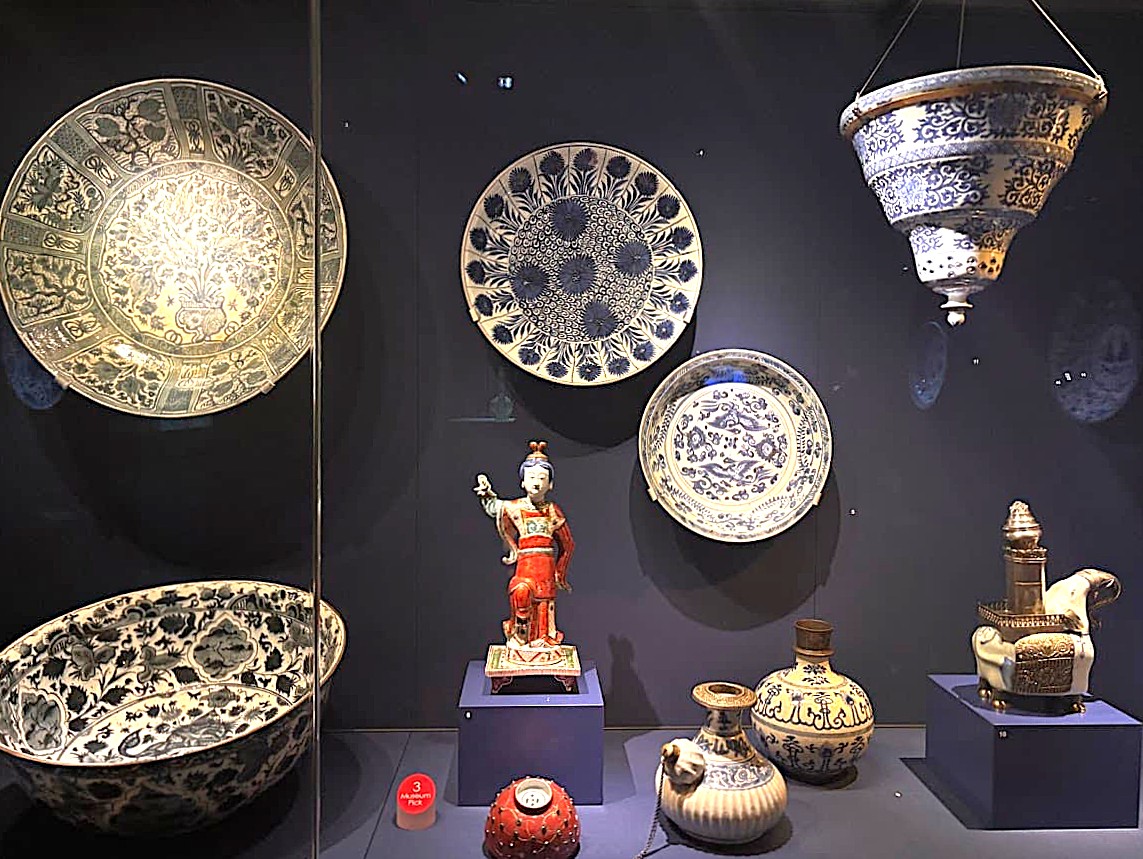
The display on the right show Chinese porcelain put to unexpected uses. An elephant-shaped water pitcher was later fitted with Turkish silver mounts to transform it into a hookah, with the trunk as the smoking tube. A porcelain mosque lamp, designed to hang from the ceiling with an oil lamp inside, was based on an older Middle Eastern design — and similar lamps were used in both mosques and churches across the region.
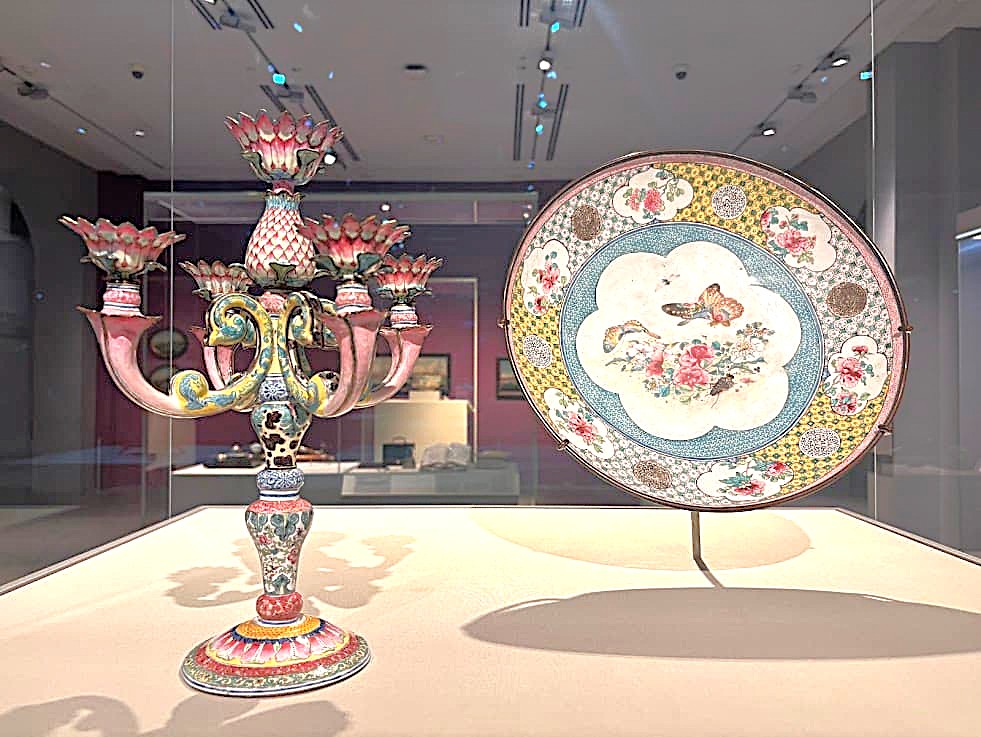
On the left are two 18th-century Guangzhou pieces are made from copper coated with brightly coloured enamel. The candelabra, with its five lotus-shaped holders, was made for European and American dining tables but has a distinctly Chinese decorative style. The dish is painted with delicate watercolour-like flowers and butterflies, with a peony against a yellow “cracked ice” background — a showcase of fine Chinese enamelling craft.
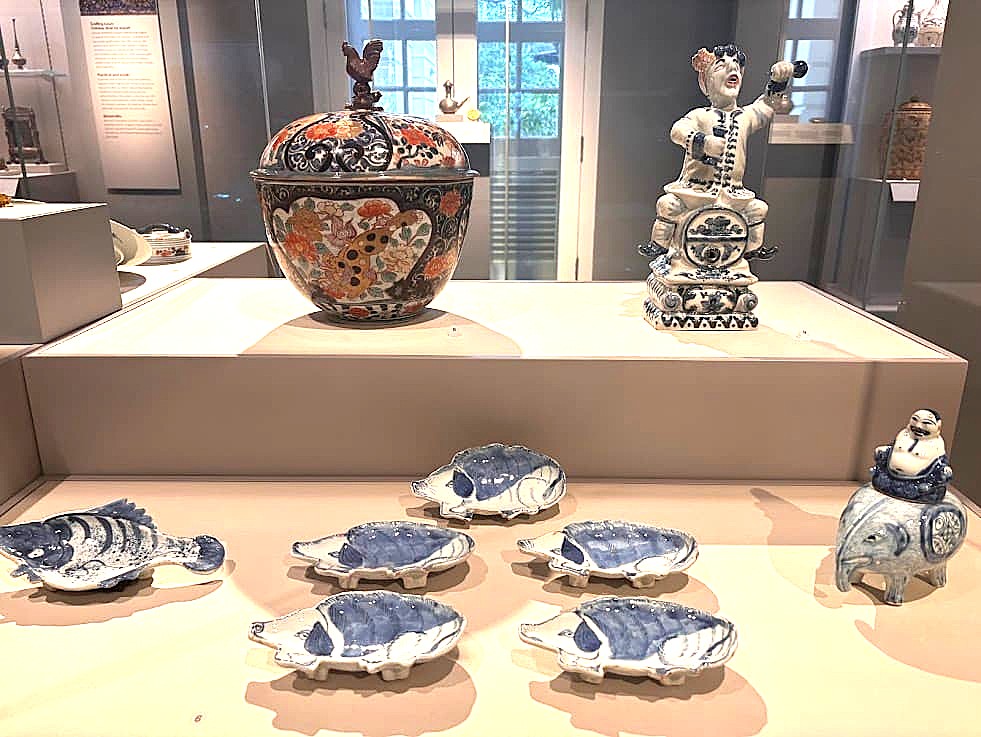
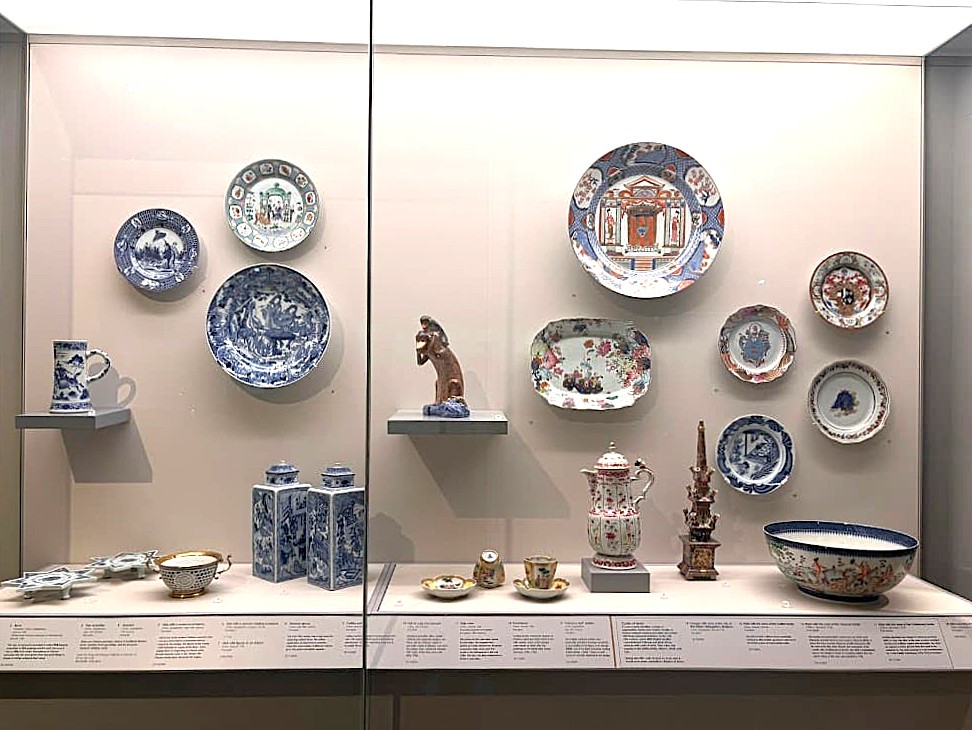
The display on the right shows how Chinese potters adapted their craft for Western markets. From tankards and tulip vases to hunting scene punchbowls and “Tobacco leaf” platters, each piece was shaped or decorated to suit European tastes — while keeping a distinctly Chinese touch.
Many objects here were made for European buyers but Asian royal courts were also major collectors of luxury artworks.
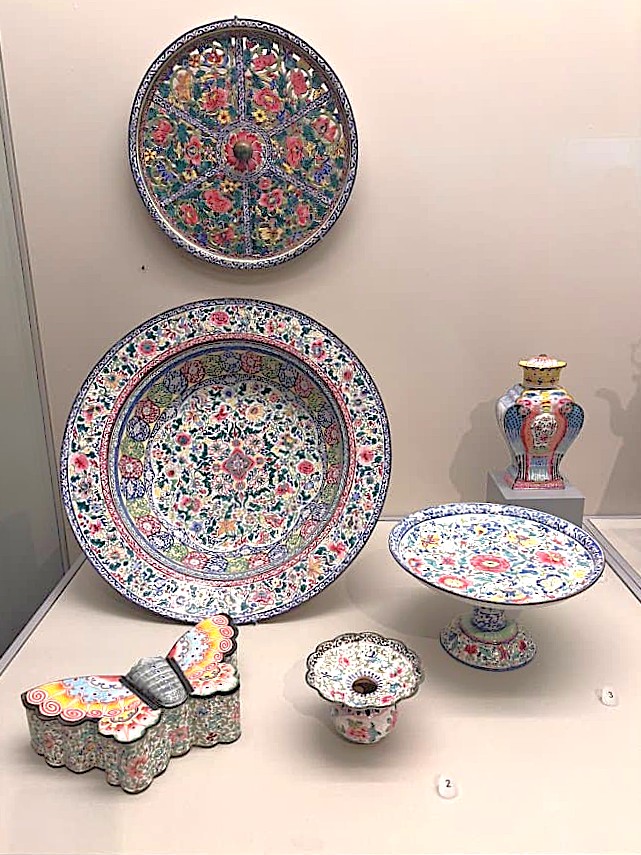
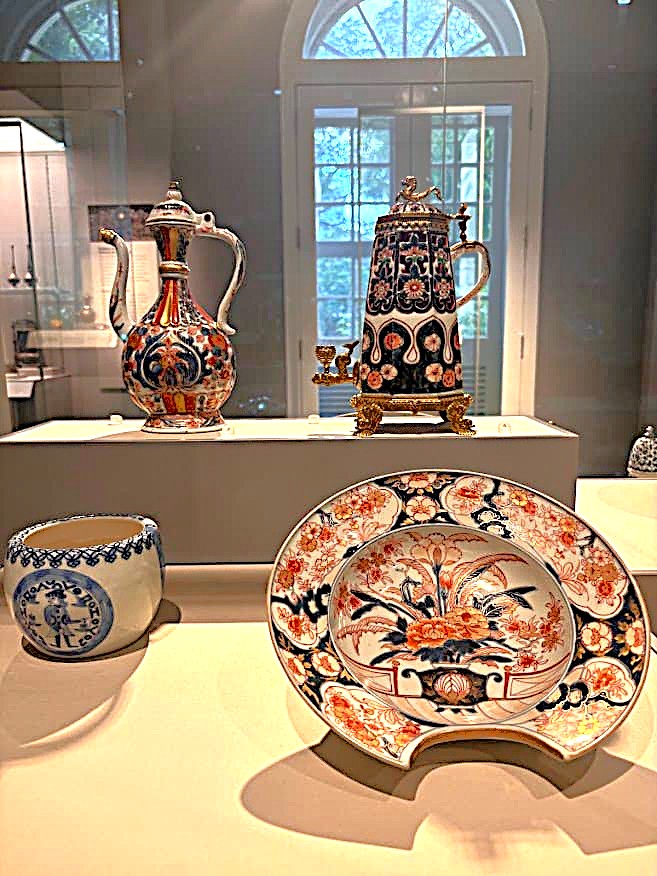
These 18th-century Guangzhou pieces on the left display are all copper coated in painted enamel. Highlights include a butterfly-shaped inkwell with hidden compartments, a richly decorated pedestal dish, a colourful basin in Qianlong-period jewel tones and a tea caddy decorated with double-headed eagles borrowed from European heraldry.
On the right display are some pieces show how Asian ceramics found their way into European daily life. A Japanese tobacco brazier, an Arita shaving basin, and a Chinese “Imari-style” pitcher in blue, red, and gold were all popular exports to Europe. The standout piece is a Japanese coffee pot fitted with German gold mounts — a reminder that when Europe’s coffee craze took off in the 1600s, Asian ceramics were very much part of the trend.
Gallery 3: Court and Company
This gallery looks at how art and trade connected South Asia, Europe, and Southeast Asia — particularly after European traders began arriving around 1500.
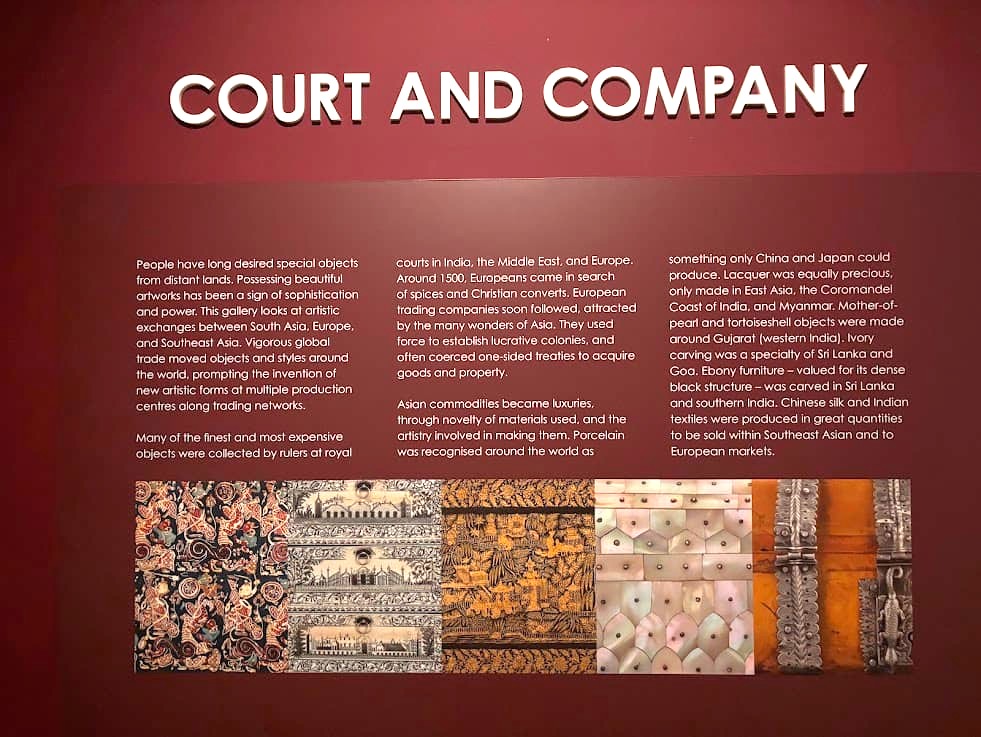
For centuries, beautiful and rare objects from Asia were symbols of wealth and power, collected by rulers and traders across the world. European companies arrived in Asia around 1500, first seeking spices, then setting up colonies to control the lucrative trade. Asian goods — from Chinese porcelain and silk to lacquerware, ivory carvings, and mother-of-pearl objects — became highly sought-after luxuries in Europe and beyond. This global trade didn’t just move goods around the world, it sparked new art forms and craft traditions along the way.
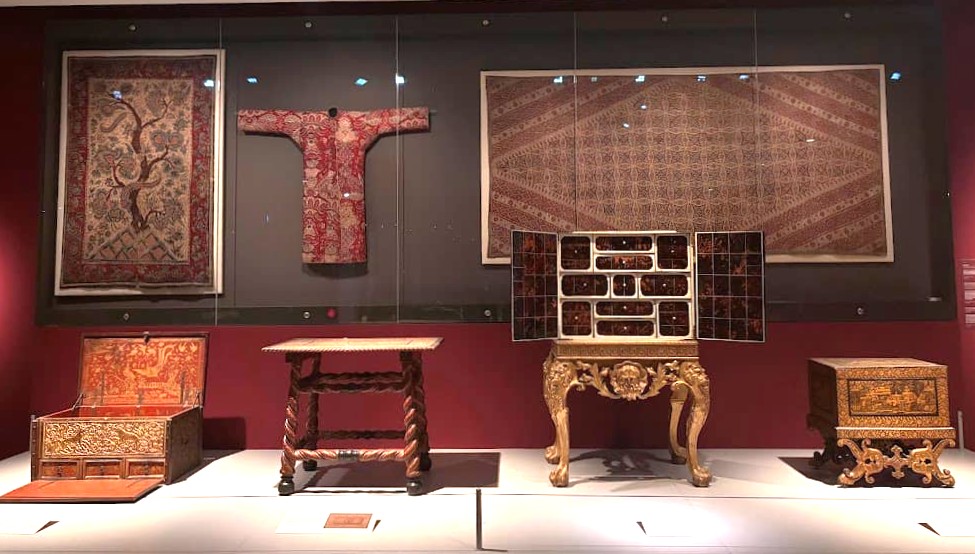
The objects in this gallery are beautifully made. They also reflect a period in history when trade was rarely equal.
Level 2 — Faith and Belief
Level 2 shifted away from trade and focused more on religion, philosophy, rituals, and spiritual beliefs across Asia. This floor explored how different religions spread through trade routes and how local cultures adapted those beliefs into their own traditions. The Islamic Art Gallery was closed on the day I visited.
Gallery 4: Ancestors and Rituals
The Ancestors and Rituals gallery explores the beliefs and traditions of traditional Southeast Asian societies. Many communities held deep reverence for their ancestors, seeing them as protectors and guardians of the living.
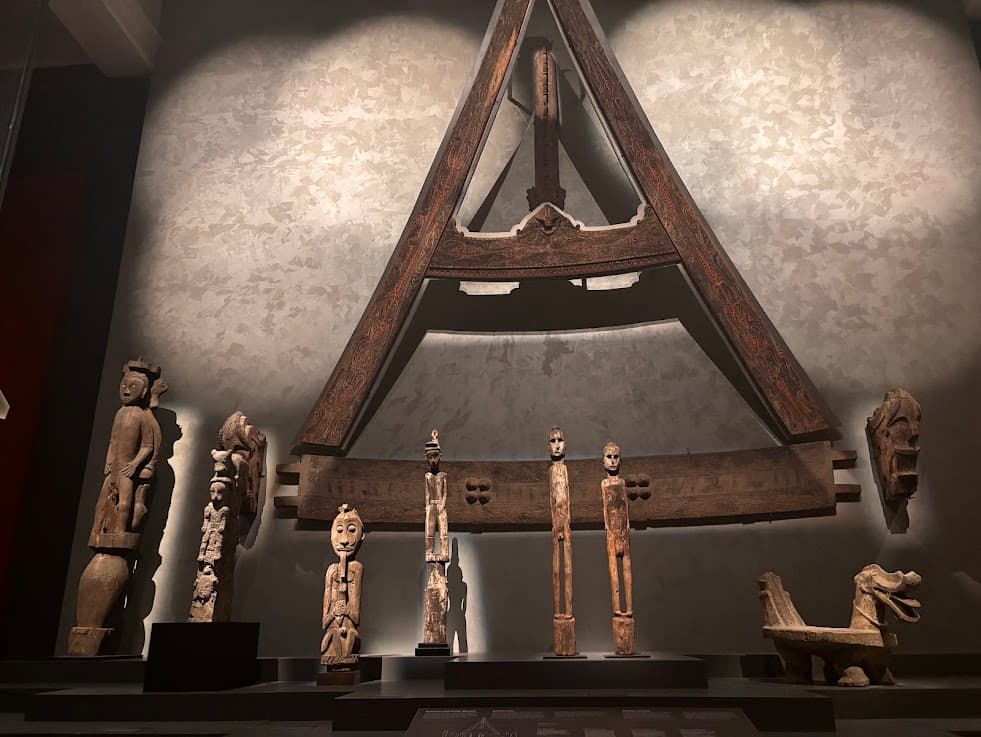
Rituals around fertility — of crops, animals, and people — were equally important, designed to ensure abundance and ward off anything that might disrupt harmony.
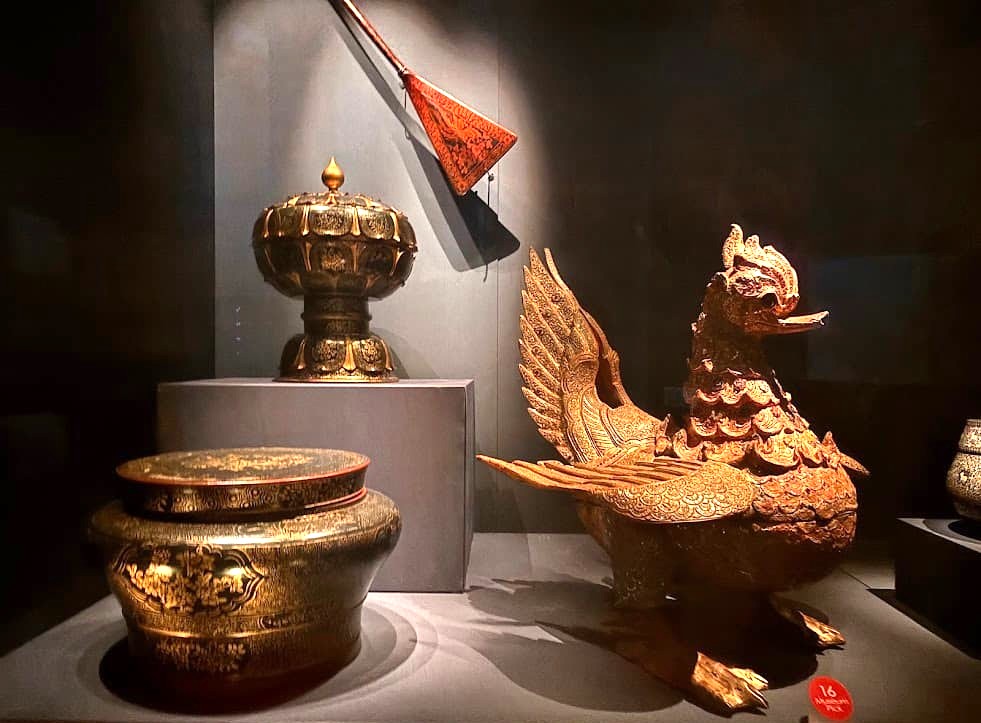
This rare bird-shaped offering vessel showcases the skill of Burmese lacquer makers. A putty-like mixture called thayo was hand-modelled and applied to the surface, then covered in gilding and inlaid with semi-precious stones, glass and mirror pieces — all typical of the lavish decorative style favoured in Mandalay.
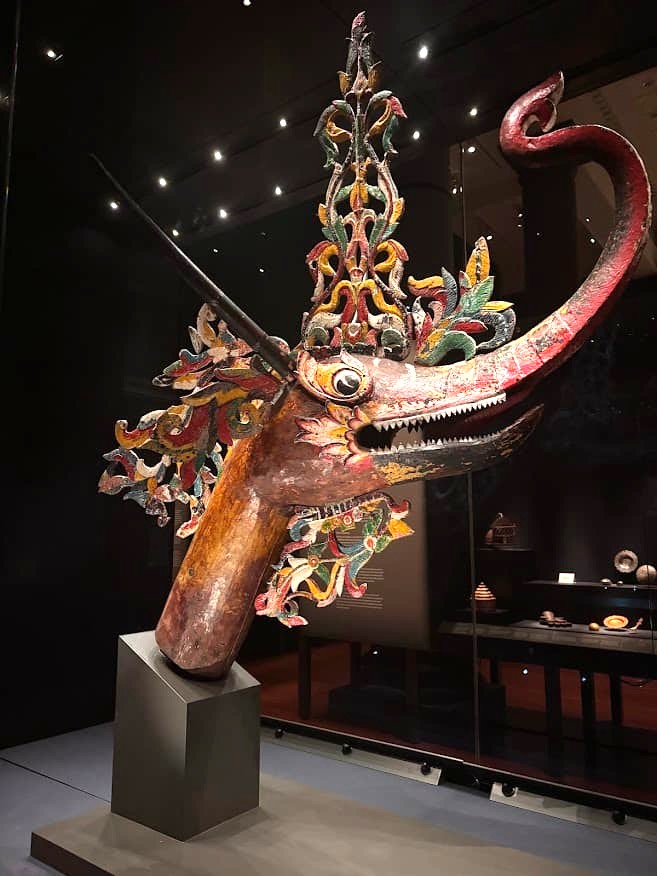
This rare wooden makara is an ornamental piece from a ceremonial palanquin used in processions on the Malay Peninsula. The makara is the mythical vehicle of Ganga, the Hindu river goddess, and is depicted as a fantastical creature combining parts of a crocodile, fish, goat, and elephant. Made in Kelantan, Malaysia in the late 19th or early 20th century, it’s a striking example of Hindu-influenced ceremonial art in the region.
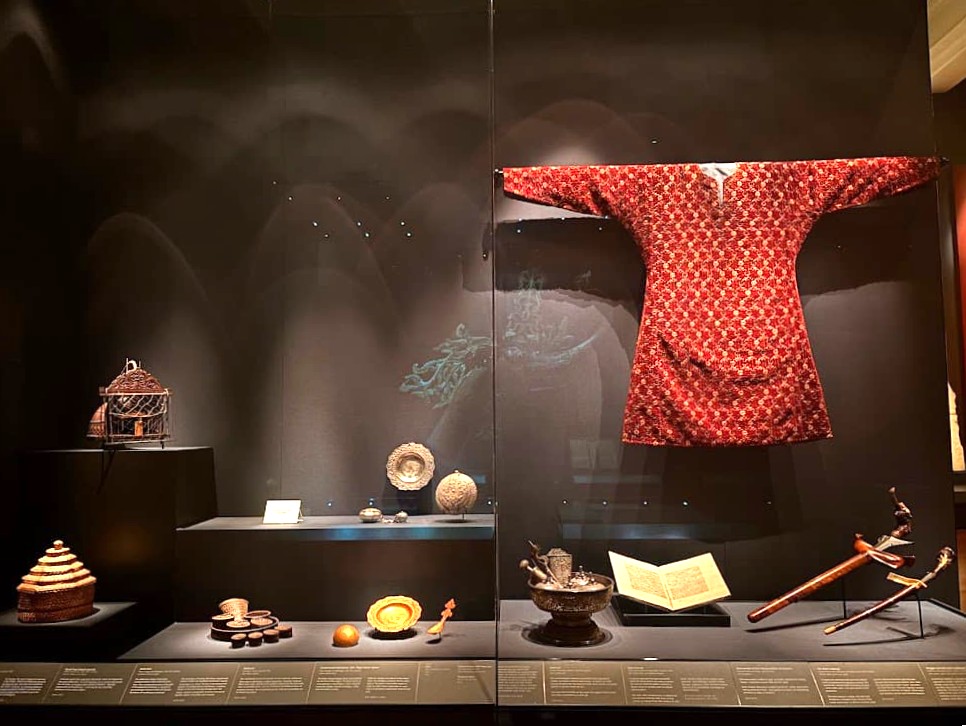
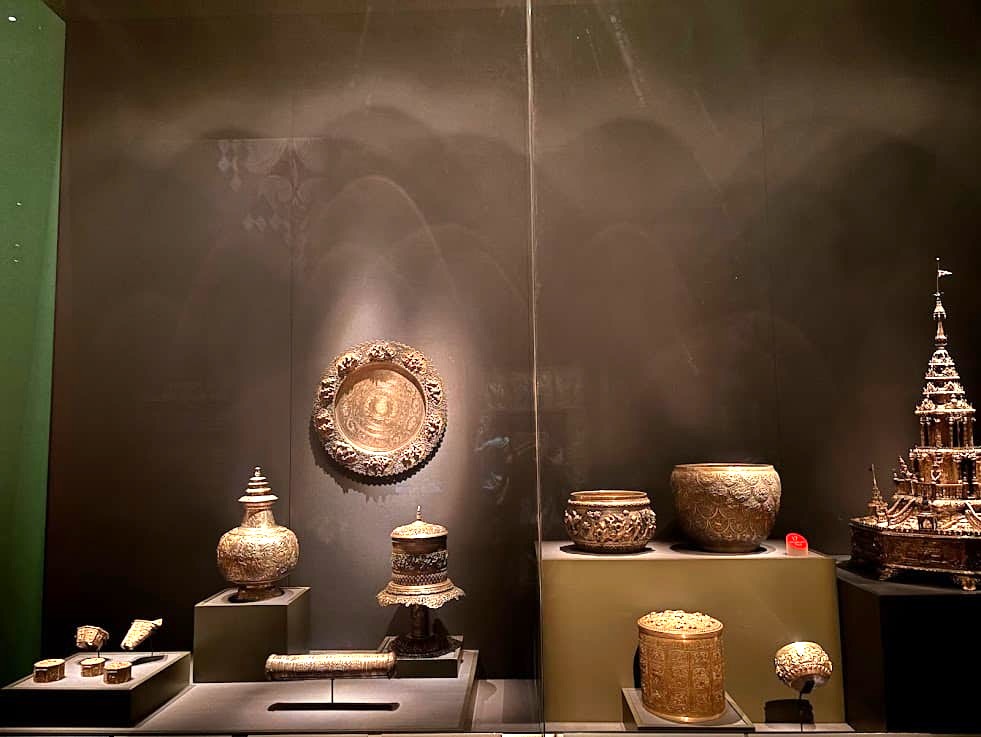
Adat is a core concept in Malay culture meaning “to be proper” — covering laws, rituals, customs, and everyday behaviour. Clothing was a key way to signal rank and status, with yellow reserved strictly for royalty under the 15th-century Laws of Malacca. Betel chewing was considered the height of civility and practised across Asia for over 2,000 years — and offering betel to guests was an important social gesture at both formal and informal occasions.
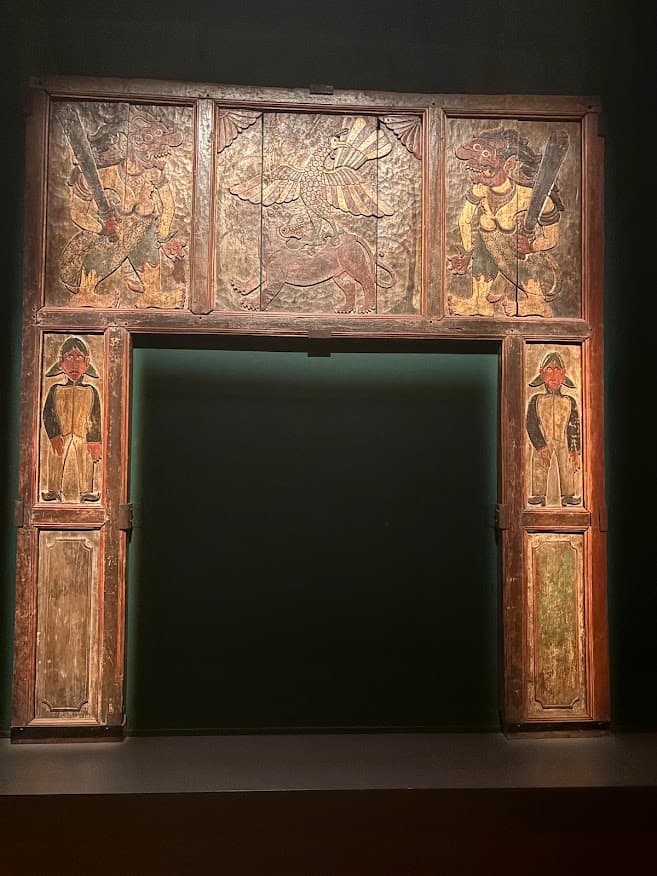
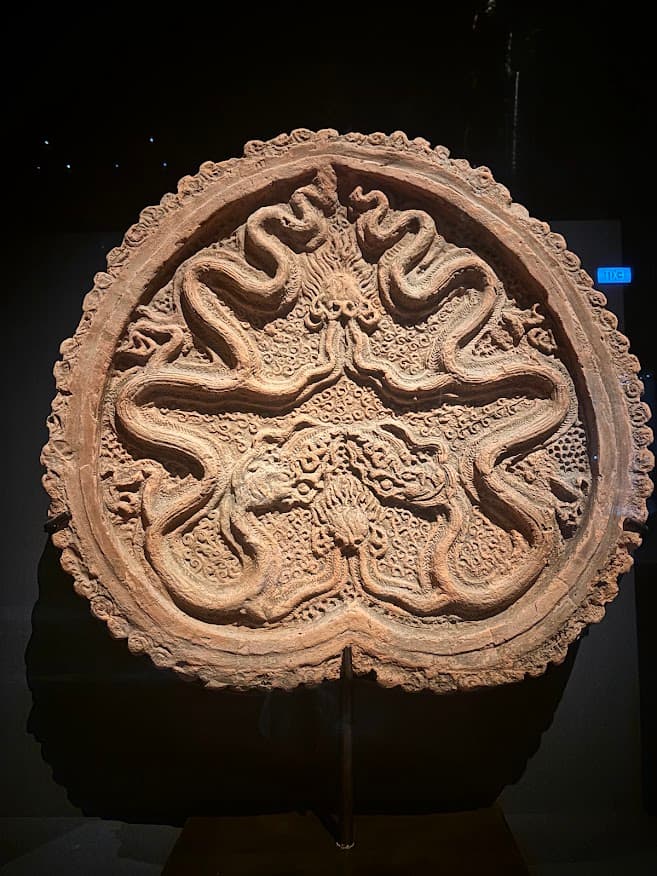
On the right is a 11th-century earthenware tile from northern Vietnam features sinuous dragons moving through swirling clouds — a classic style of the Ly dynasty. Dragons held deep symbolic and ritual meaning across Southeast Asia, and during the Ly dynasty they decorated the temples and palaces of kings. Similar tiles have been found in Hanoi, the ancient royal capital once known as Thang Long — which literally means “rising dragon.”
Gallery 5: Ancient Religions
Located inside the Kwan Im Thong Hood Cho Temple Gallery, this section explored Buddhism, Hinduism, and Jainism as they spread from India across Asia.
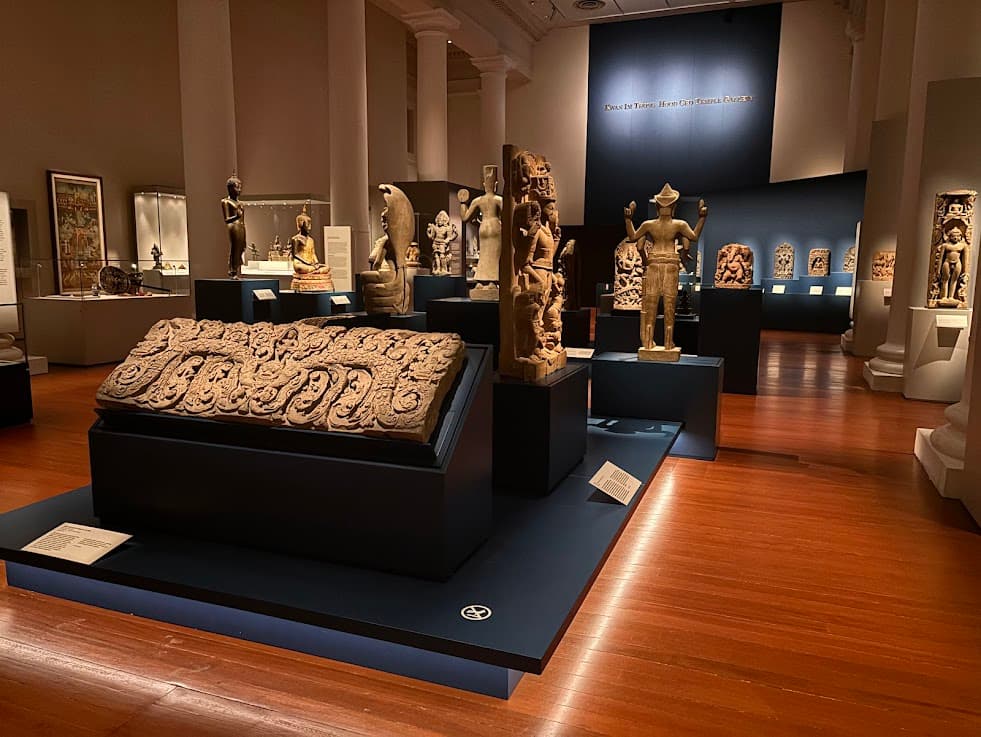
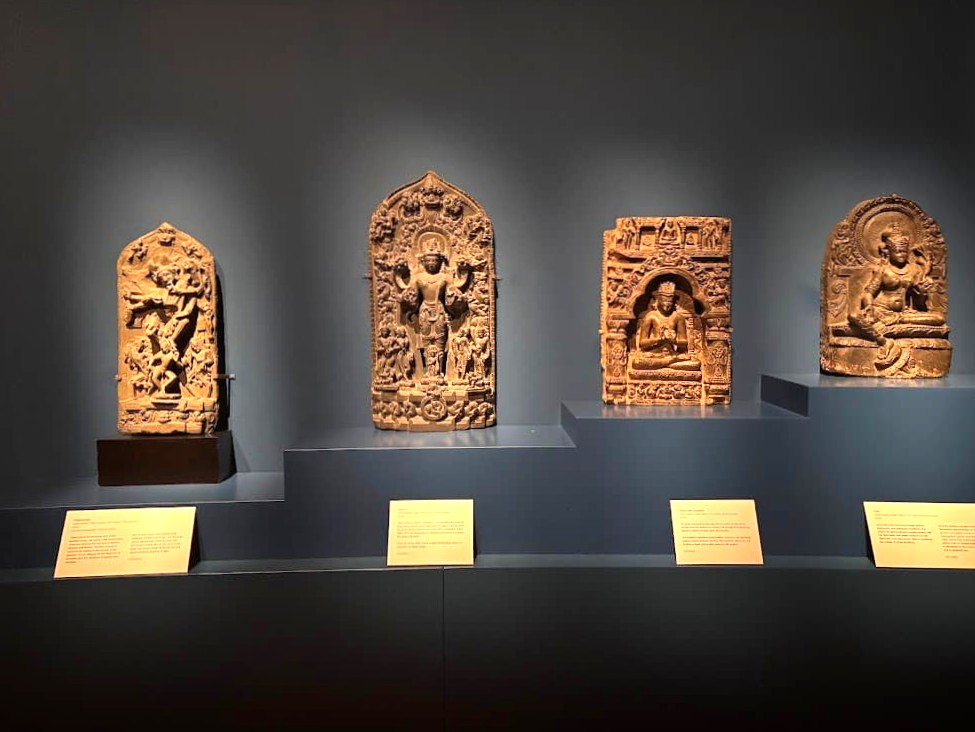
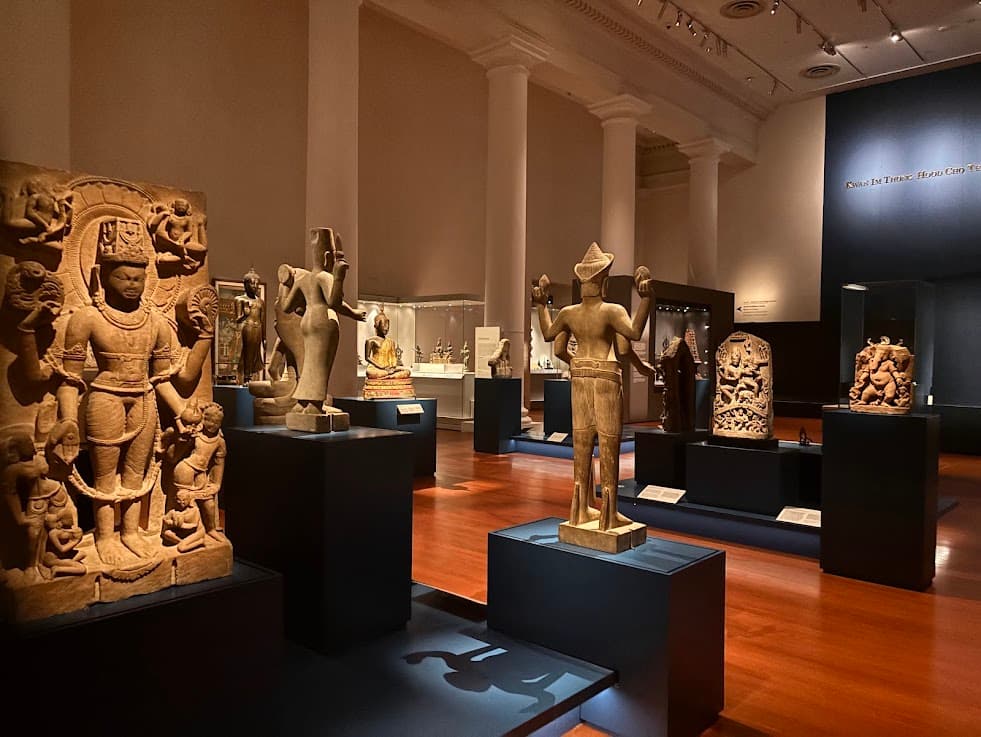
The sculptures and religious artworks were some of the most visually striking pieces in ACM. The gallery explained how religions evolved as they moved through different countries. Artists adapted Indian religious ideas into local styles, creating unique interpretations across Southeast Asia and China.
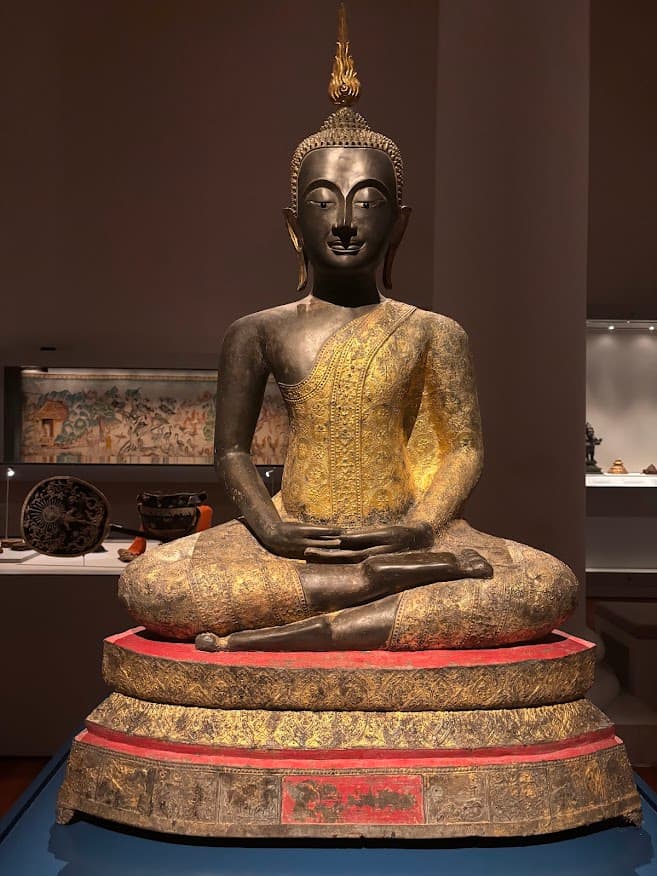
The gallery also explained how Buddhism and Hinduism became widely practised across Southeast Asia by the 8th century, mainly through trade networks and cultural exchange.
Gallery 6: Christian Art
The Christian Art Gallery focused on Christian artworks created in Asia.
The Christian Art Gallery explores how Christianity spread across Asia through trade, starting as early as the 7th century. When Portuguese and Spanish traders arrived in the 16th century, Catholic missionaries came with them, setting up bases in cities like Goa, Malacca, Manila, and Macau.
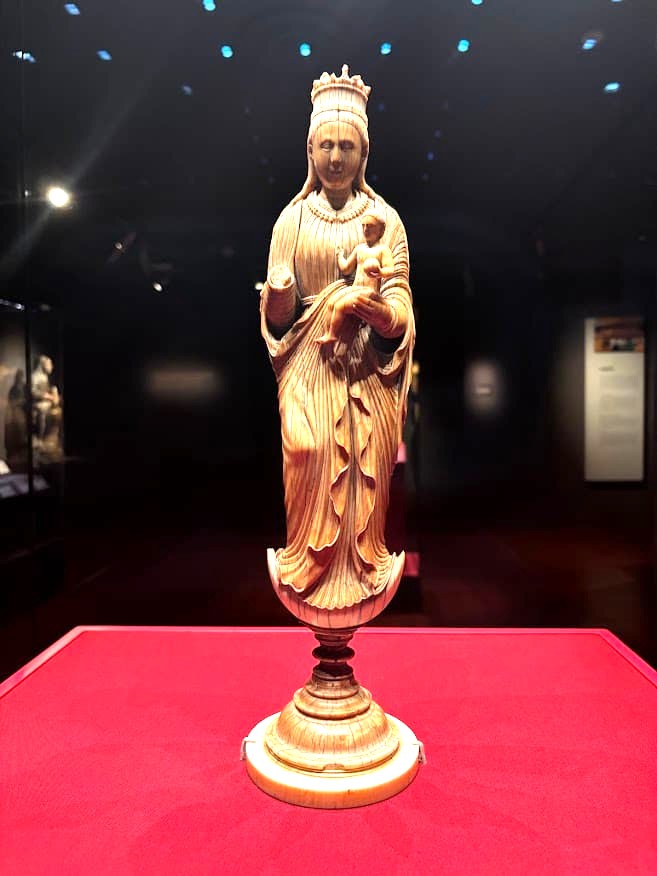
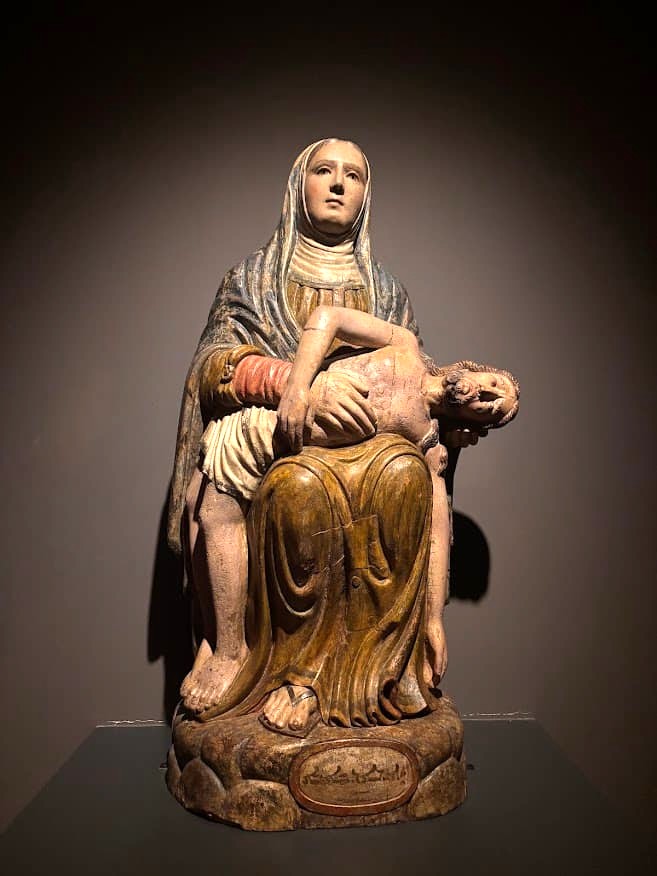
As Christianity took root, new artworks were needed for churches and missionary work — and what emerged was a fascinating blend of Western Christian imagery made using Asian materials and techniques. The results are stunning examples of cross-cultural creativity on display in this gallery.
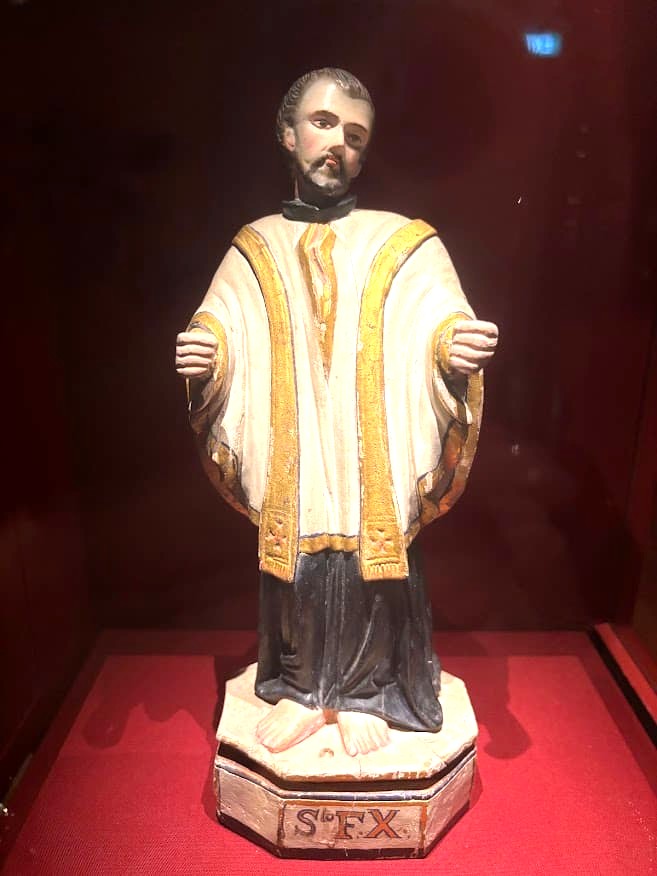
This carved statue on the left depicts one of the most famous miracles of Saint Francis Xavier. While sailing between the Indonesian islands of Ambon and Seram, his ship was caught in a storm. Francis threw his crucifix into the rough seas to calm the waters — and the ship reached safety.
When it docked, a crab appeared on the shore carrying the crucifix in its claws, returning it to him. This beloved story inspired many artworks after his death, and the high quality of this carving suggests it was made for a church.
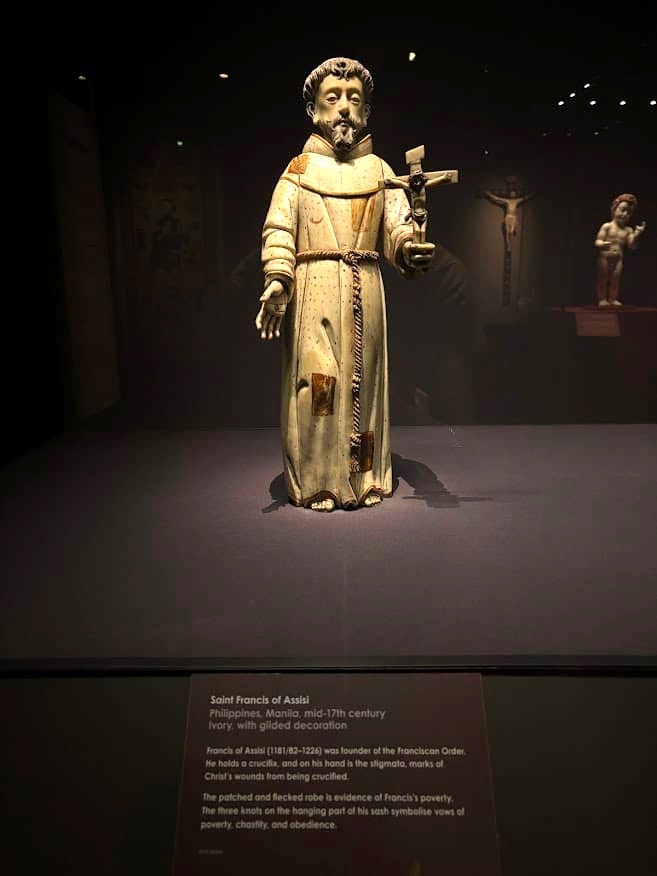
The mid-17th century ivory statue of Saint Francis of Assisi on the right was made in Manila, Philippines. The founder of the Franciscan Order, he holds a crucifix and bears the stigmata — marks of Christ’s wounds — on his hands. His patched robe reflects his vow of poverty, and the three knots on his sash represent the Franciscan vows of poverty, chastity, and obedience.
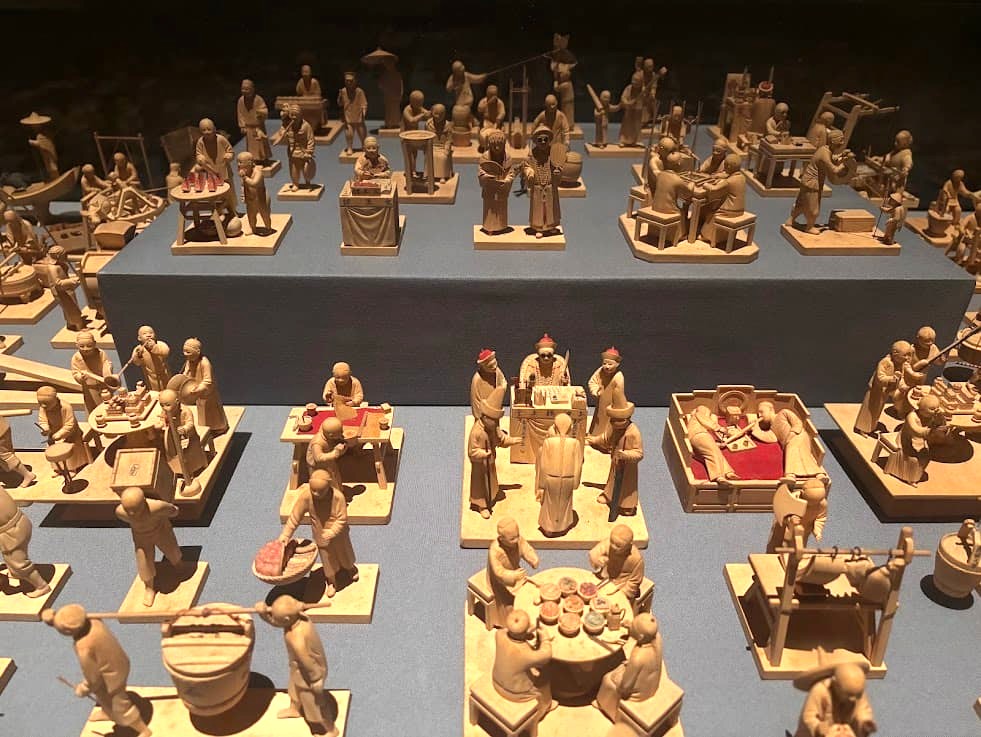
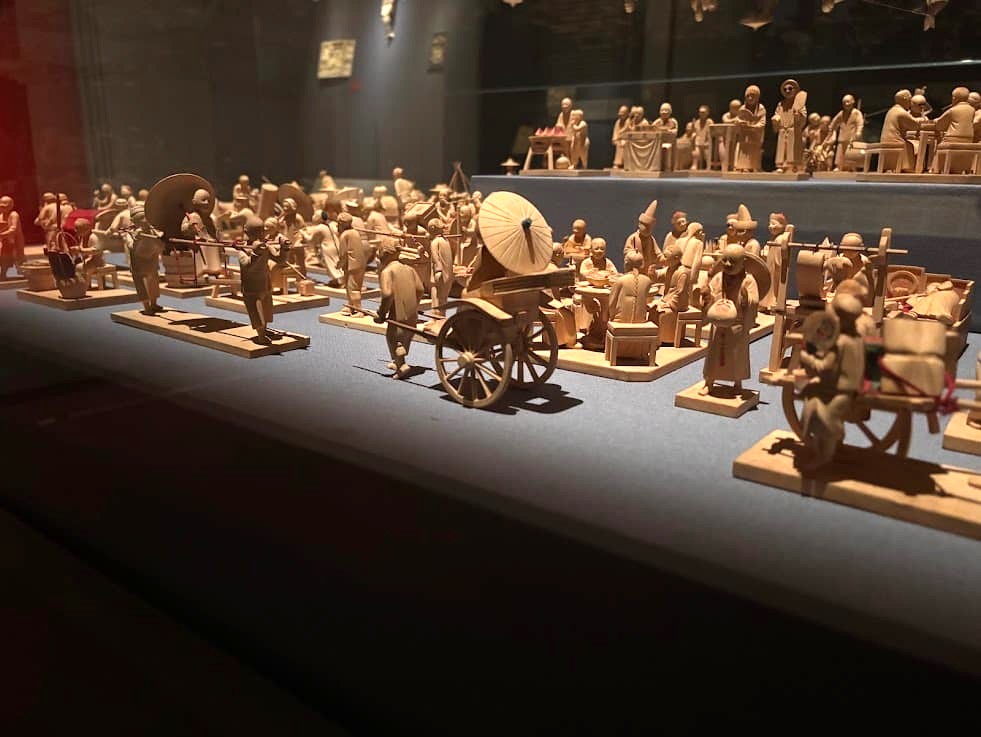
These 109 boxwood figurines were made in 1930s Shanghai as souvenirs for foreign visitors, depicting everyday Chinese life. This particular set has a remarkable backstory — it was gifted to French Admiral Jules le Bigot, who protected millions of refugees during the Japanese attack on Shanghai in 1937 by refusing to surrender the French concession. The Tushanwan Orphanage presented him with the set as a thank you.
Gallery 7: The Scholars Gallery
Located inside the Kwek Hong Png Wing, the Scholars Gallery explored Chinese scholarly culture and Confucian traditions.
The Scholars Gallery explores the arts, beliefs, and traditions of China’s scholarly elite. For centuries, the ideal Chinese scholar was someone who could read classical texts, write, paint, play music, and carry themselves with elegance and grace. This ideal was rooted in the teachings of Confucius, who believed that moral learning and proper conduct were the foundations of a stable society.
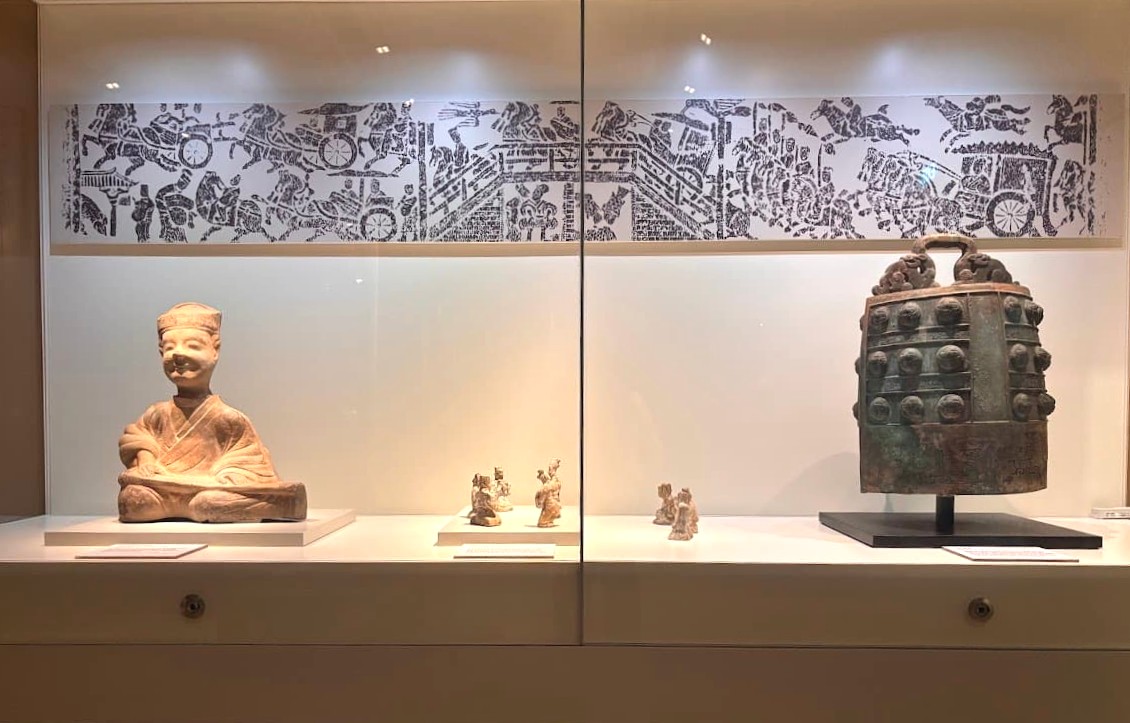
From the Tang dynasty onwards, scholars could rise through the social ranks by passing imperial examinations based on Confucian classics. These scholar-officials, known as mandarins, sat at the very top of Chinese society. The gallery brings this world to life through furniture, calligraphy, paintings and decorative arts that reveal the refined tastes and pursuits of China’s learned class.
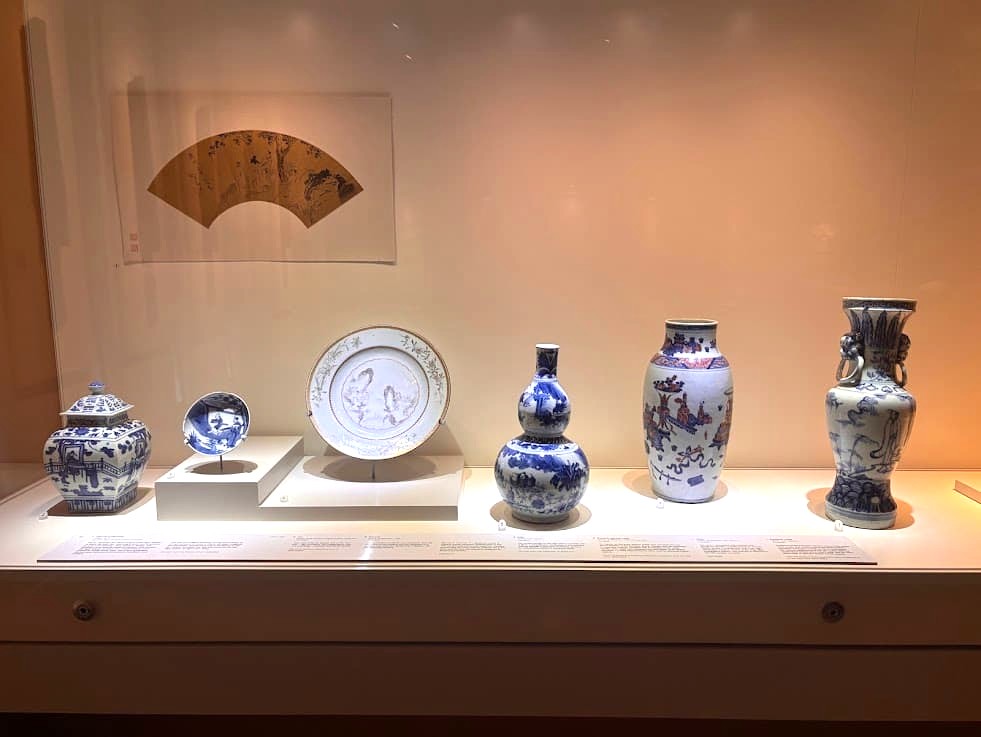
The gallery also explained how Confucian philosophy shaped Chinese society for centuries. During the Tang dynasty, people could rise socially through imperial examinations based on Confucian texts.
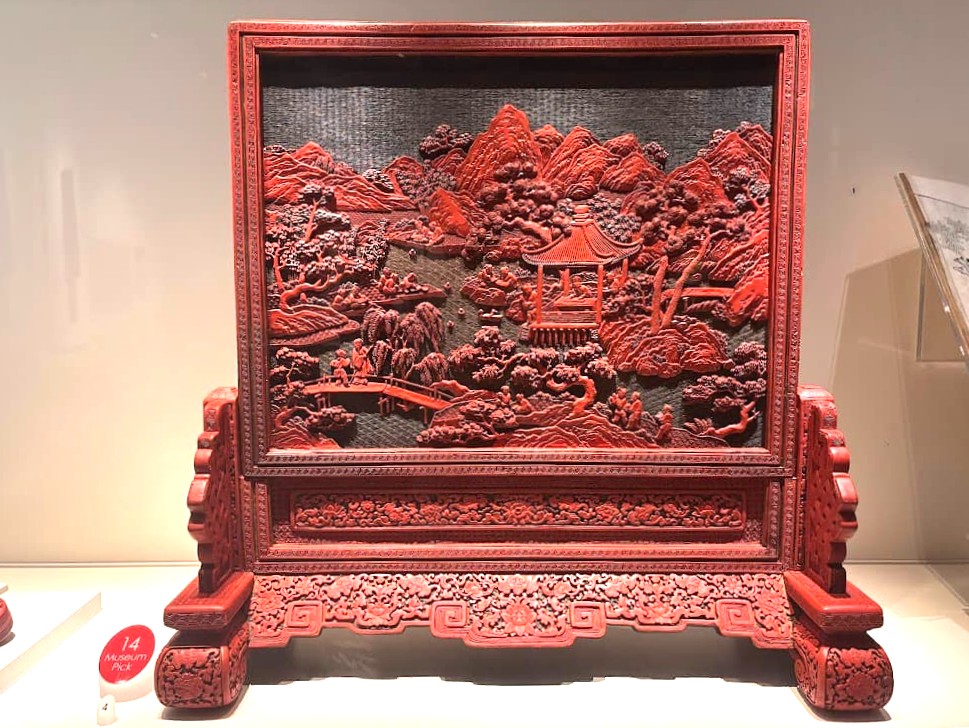
This Qing dynasty lacquered wood table screen depicts the Orchid Pavilion — the site of a famous gathering that inspired Wang Xizhi’s Preface to the Orchid Pavilion, one of the greatest masterpieces of Chinese calligraphy.
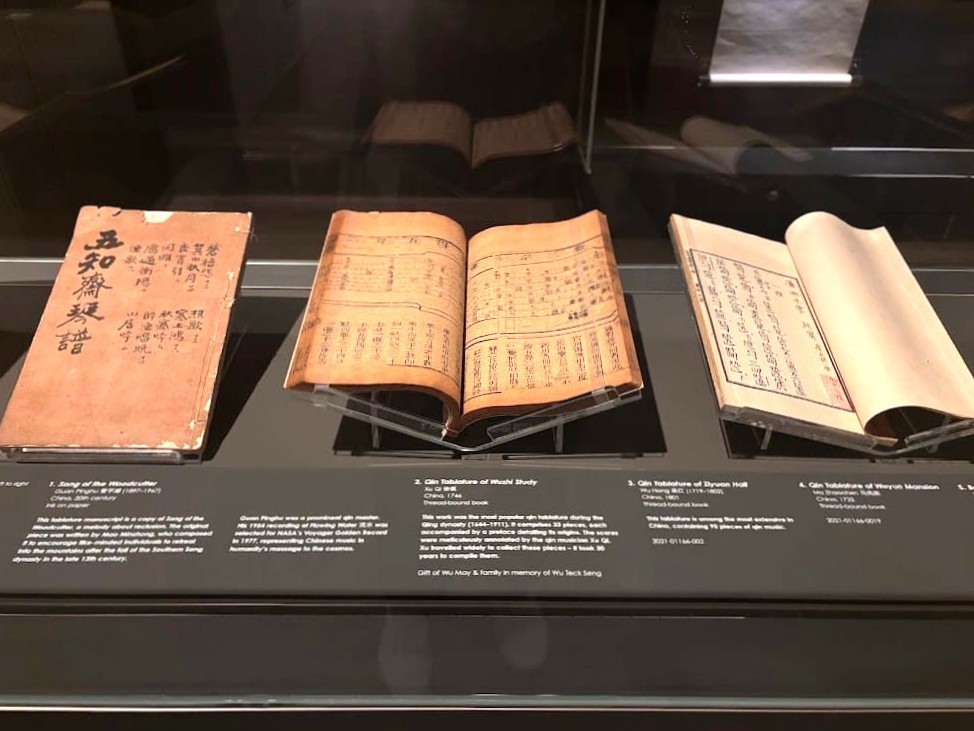
On the right is a display of tablature books, the finest records of traditional Chinese qin music, spanning from the Southern Song dynasty to the Qing dynasty. The most remarkable story connected to this collection is that qin master Guan Pinghu’s recording of Flowing Water was chosen for NASA’s Voyager Golden Record in 1977 — carrying the sound of the Chinese qin into outer space.
Level 3 — Materials and Design
Level 3 focuses on the materials and craftsmanship behind Asian art. This floor showcased how different materials like ceramics and jewellery evolved across Asian cultures. Unfortunately, the Fashion and Textiles Gallery was closed during my visit.
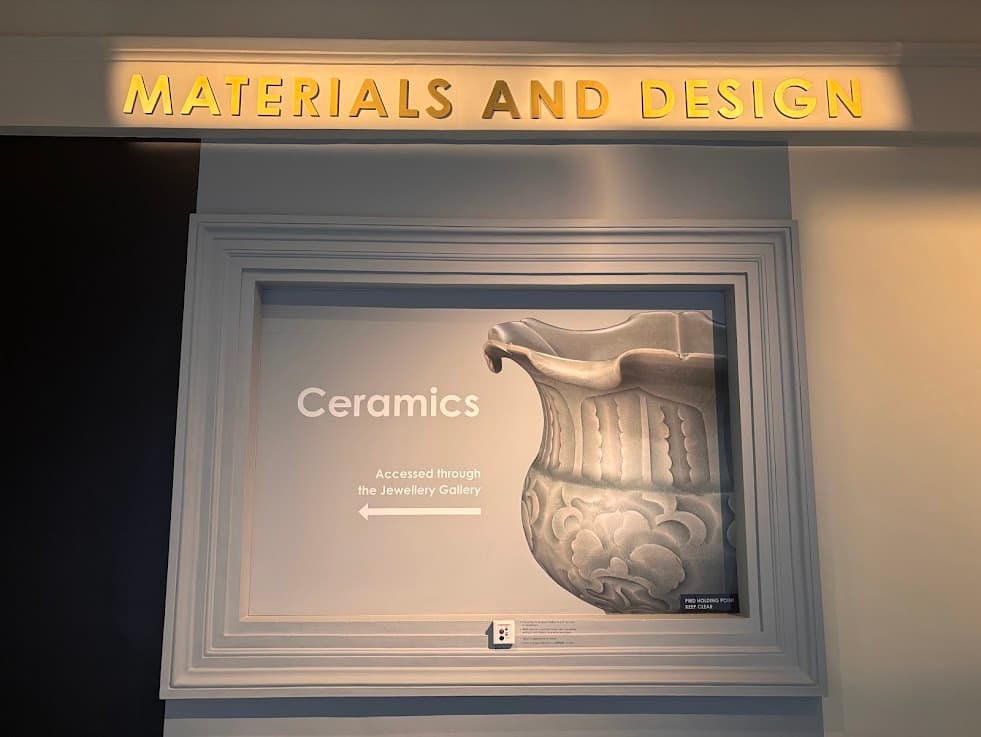
Gallery 8: Jewellery
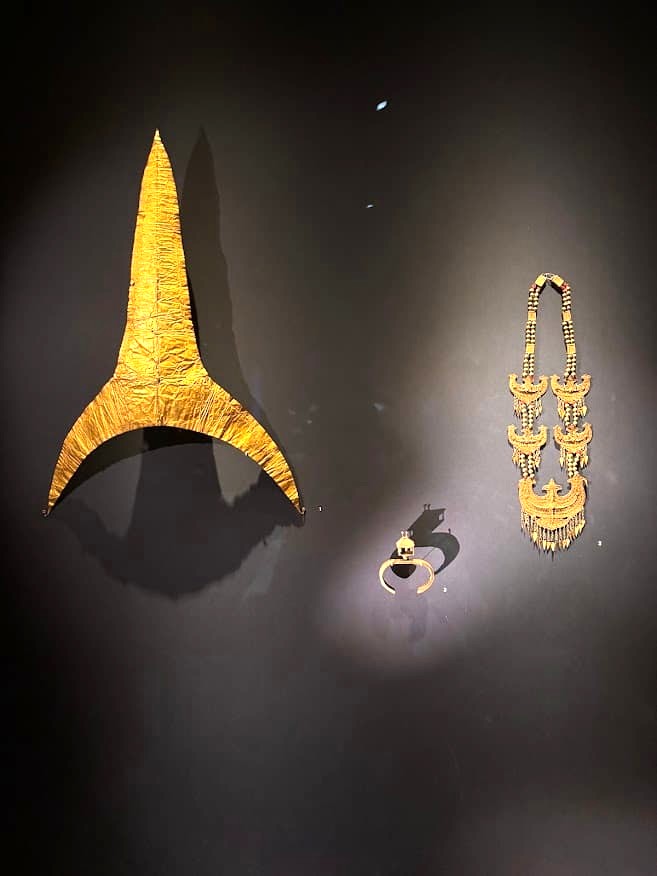
The Mary and Philbert Chin Gallery is the first permanent gallery in the world dedicated to island Southeast Asian jewellery.
Spanning from the Neolithic period to the 20th century, it explores how jewellery has always been more than decoration — communicating beauty, rank, and status, expressing love and devotion.
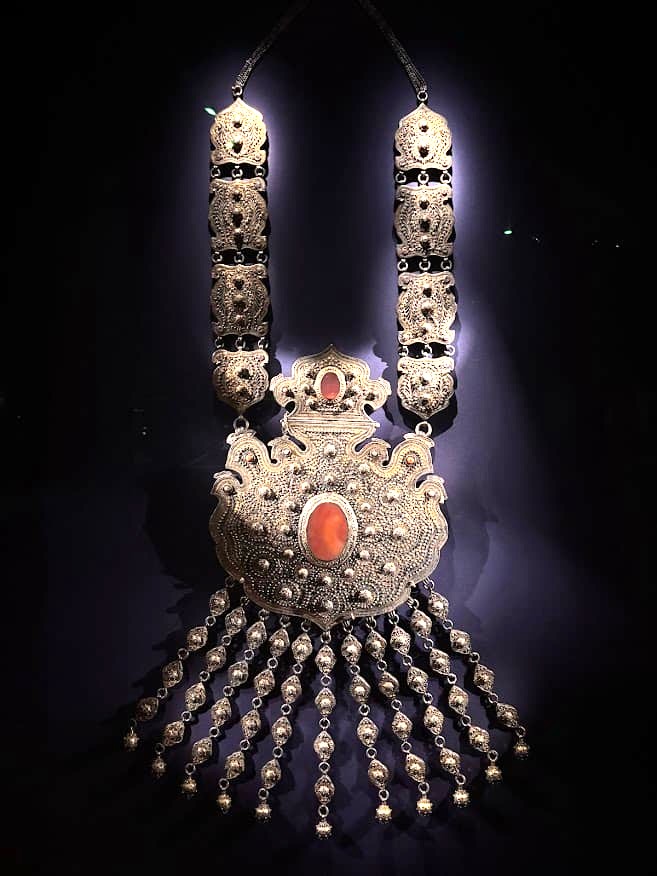
This impressive 19th-century amulet necklace from Bukhara, Uzbekistan is made from gilded silver set with turquoise, coral and agate. The large central amulet box is decorated with intricate filigree and crested bird-head forms and opens to hold Quranic verses or protective items inside. Remarkably, a piece this grand may have been worn around a horse’s neck during special ceremonial processions.
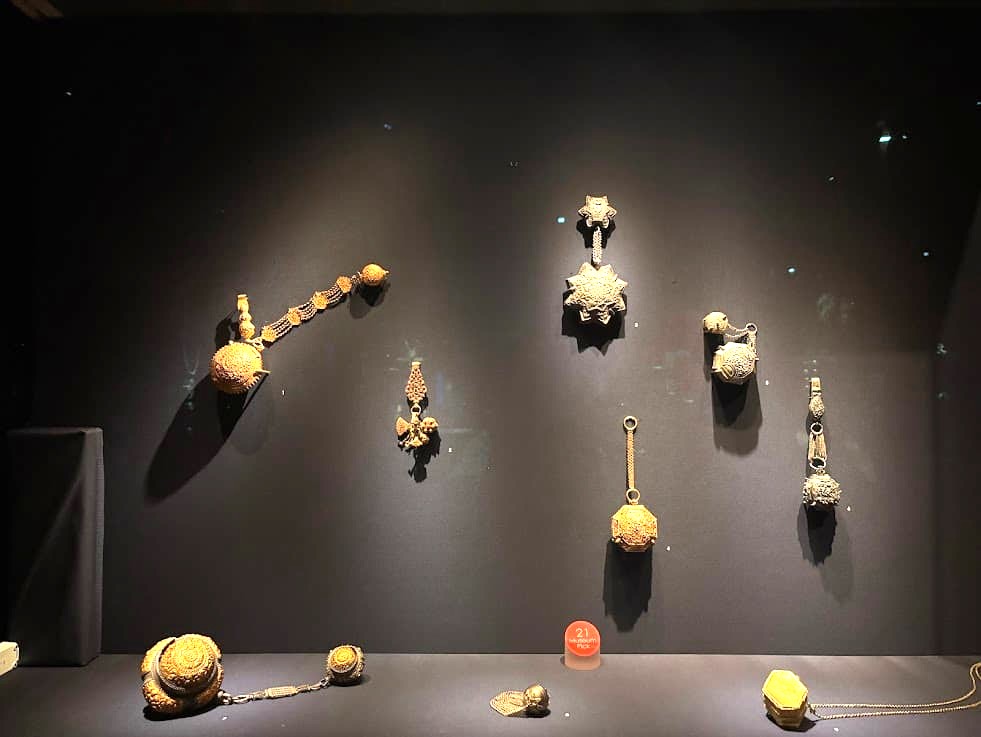
The gallery also highlighted how Southeast Asia absorbed influences from Hindu, Buddhist, Islamic, Persian, Indian, Chinese and Ottoman cultures. These outside influences were adapted into local jewellery styles, creating entirely new artistic traditions unique to the region.
Gallery 9: Ceramics
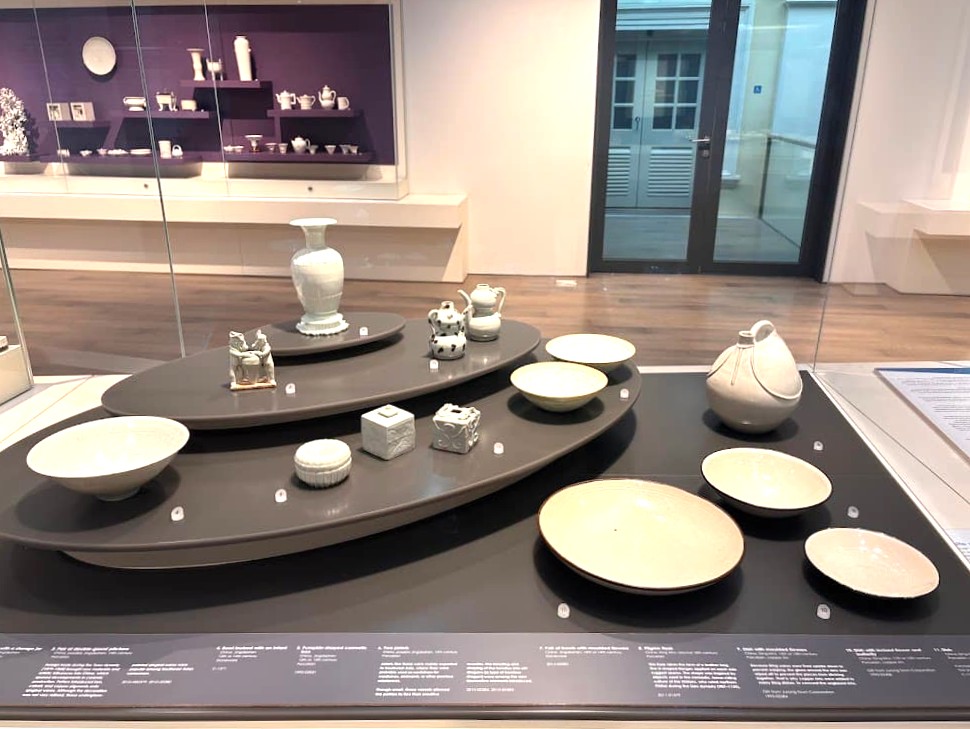
The Ceramics Gallery presented Chinese ceramics from ancient times all the way to the Qing dynasty. If you have an interest in ceramics, this gallery has a lot to look at.
China’s abundant natural resources and centuries of kiln expertise allowed potters to produce ceramics of extraordinary quality. Chinese porcelain was especially prized — pure white, thin enough to let light through, yet strong enough for everyday use.
The method of making it was a closely guarded secret, giving China a monopoly on porcelain trade for centuries. Japan only figured it out in the early 17th century and Europe not until the early 18th century.
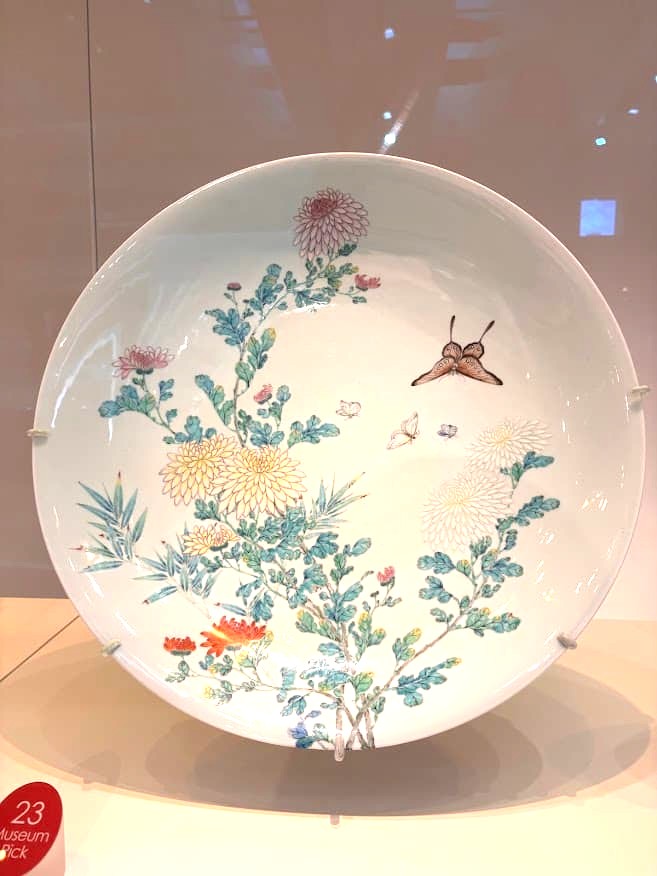
This large porcelain dish on the left was made in Jingdezhen between 1723 and 1735 during the Yongzheng emperor’s reign. It features delicate chrysanthemums — a symbol of autumn — alongside birds and foliage. The soft pastel palette became the defining porcelain style of the Yongzheng period, influenced by both Chinese artistic tradition and European enamelling techniques.
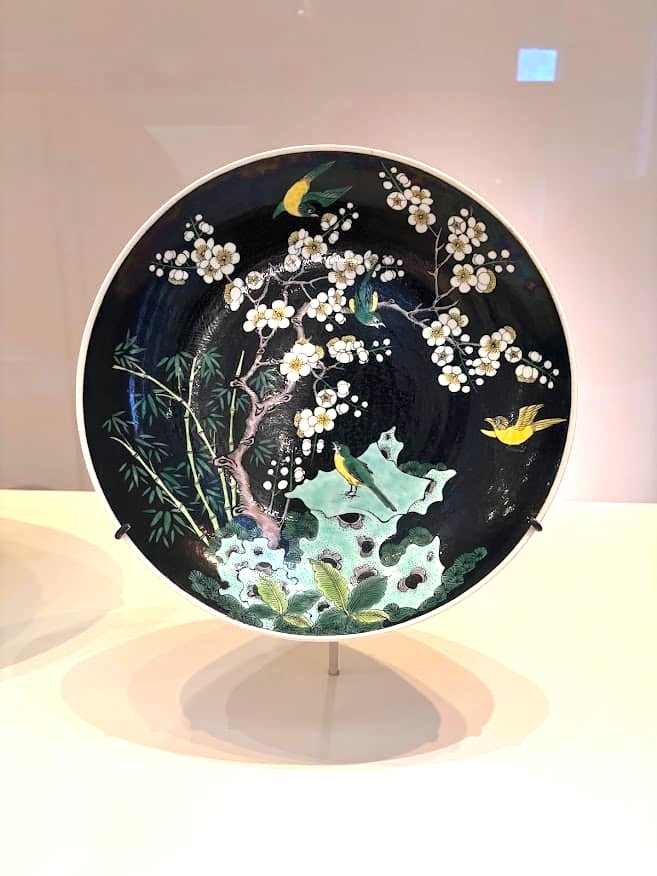
This Qing dynasty porcelain dish on the right features a deep black glaze and the beloved Three Friends of Winter motif — pine, prunus, and bamboo — symbols of resilience that thrive through the harshest winters. The striking black ground was created by layering two types of enamel that fused together during firing, a technique first developed during the Kangxi period.
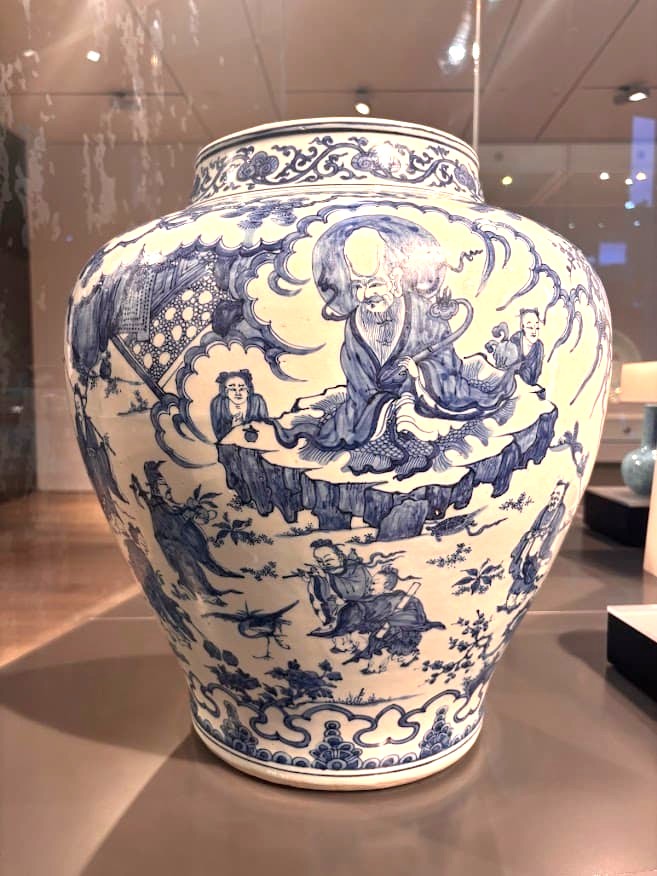
This large Ming dynasty jar on the left depicts Daoist immortals gathered around Shoulao, the Chinese god of Longevity — a reflection of the Jiajing emperor’s obsession with immortality. Made in Jingdezhen during the Jiajing period (1522–66), the rich blue-and-white decoration features classic longevity symbols including lingzhi fungus, pine trees, and cranes.
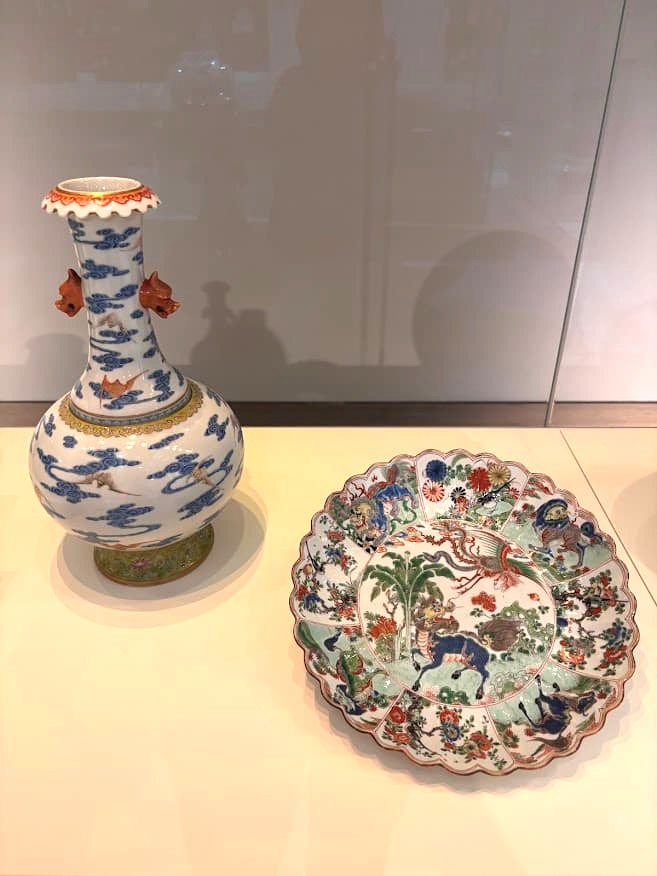
These two Jingdezhen porcelain pieces on the right are full of auspicious symbolism. The Qianlong-period vase is decorated with bats amid clouds — in Chinese, bat sounds like happiness, making it a popular symbol of good fortune. The Kangxi-period dish is painted in vivid wucai colours with a qilin and phoenix, creatures believed to appear only in times of peace and prosperity.
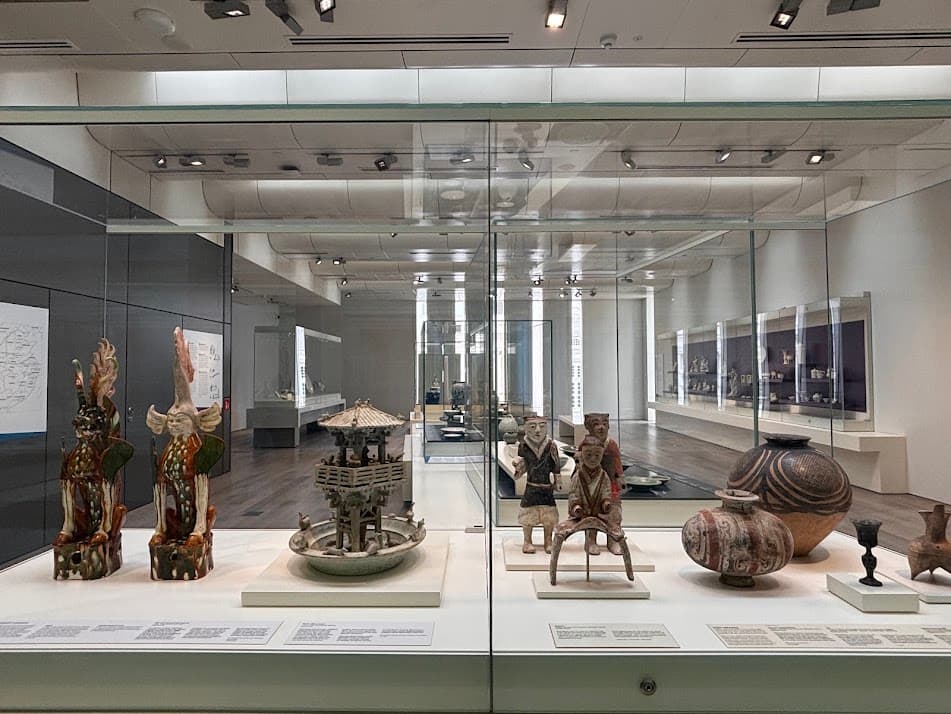
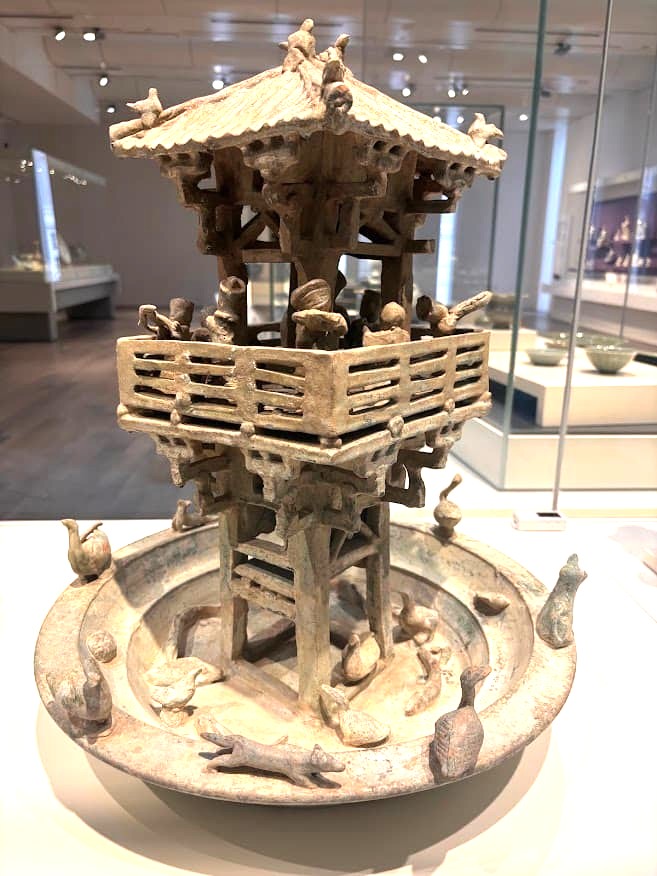
This Eastern Han dynasty earthenware tower with a moat was made as a burial object symbolising wealth and rank. Dancers and musicians fill the upper level, suggesting it may have been a pleasure pavilion — but the figures with crossbows hint it could also have been a defensive watchtower.
Is the Asian Civilisations Museum Worth Visiting?
ACM has a strong collection and the explanations throughout are clear and easy to read. That said, the layout can be a bit confusing to navigate — I found myself walking back and forth a few times after realising I had missed a gallery and had to retrace my steps more than once.
I think the galleries could do with better signage. Good thing is that there are security personnel stationed at each gallery and they were helpful in pointing me in the right direction.
With that said, ACM covers a lot of ground. It is not a museum that relies on interactive displays or high-tech presentations. The focus is on the artefacts and what they tell us. If that suits your style of visiting, you will likely get a lot out of it.
Hopefully this guide has helped you decide what to do at the Asian Civilisations Museum and which galleries to prioritise.
So which of these exhibits would you most like to see up close in person? Is it the famous Tang Shipwreck collection, the elegant ceramics or the fascinating religious artefacts?
And if exploring Singapore’s heritage is your thing, don’t stop here.
What To Do After Visiting ACM
After your visit, continue your journey by wandering through Chinatown’s colourful streets. Did you know that are 20 larger-than-life murals there? If you are keen to explore them all, this blogpost tells you the exact location of each mural and also brings to all the popular must-see attractions all in a single walk.
Or, if you prefer a quieter heritage walk without the usual tourist crowd, then this Tanjong Pagar Guide is for you. It combines some of Singapore’s most distinctive experiences into one route, taking you to a famous hawker centre, heritage shophouses, colourful Peranakan homes and local neighbourhoods that reveal how Singaporeans live today—even including a panoramic city view from a 50th-floor skybridge for just $6.